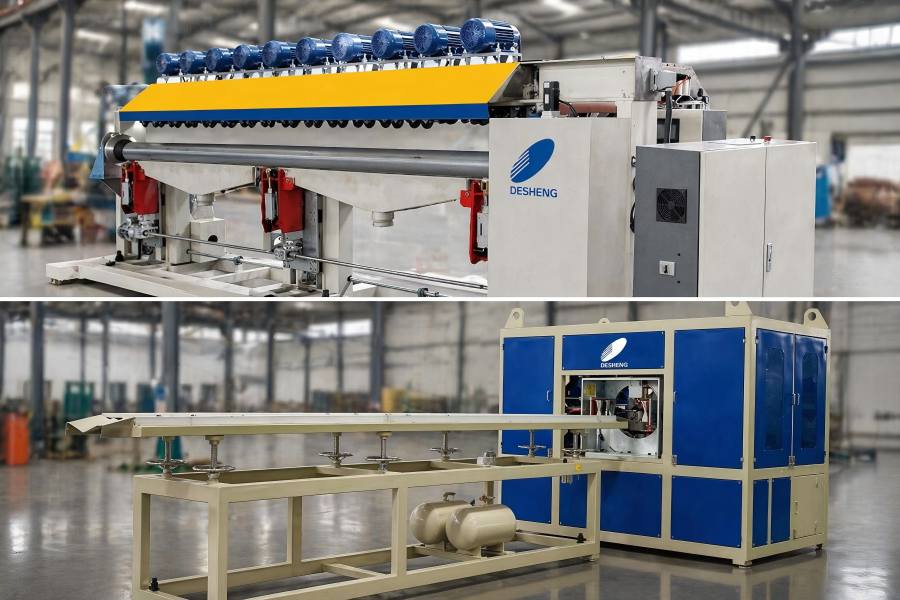
In plastic pipe processing, pipe slotting machines and pipe perforating machines may seem similar, but they serve different purposes. They create different opening shapes and support different product functions. Selecting the appropriate machine is essential for ensuring product performance, production efficiency, and long-term market competitiveness.
A Quick Comparison
| Item | Pipe Slotting Machine | Pipe Perforating Machine |
| Opening Shape | Narrow slots | Round or shaped holes |
| Main Function | Filtration and controlled intake | Drainage, diffusion, ventilation |
| Typical Applications | Well screen, filter, dewatering pipes | Drainage, irrigation, utility pipes |
| Precision Requirement | Higher | Moderate to high |
| Effect on Pipe | Better for fine screening | Better for general flow openings |
| Tooling Type | Slotting blades or cutters | Punches, drills, perforating tools |
| Production Focus | Accuracy and slot consistency | Speed and hole pattern efficiency |
| Customization | Slot width, length, spacing | Hole size, shape, pattern |
| Product Value | More specialized | More general-purpose |
| Best Choice For | Filtration-focused pipe products | Standard perforated pipe products |
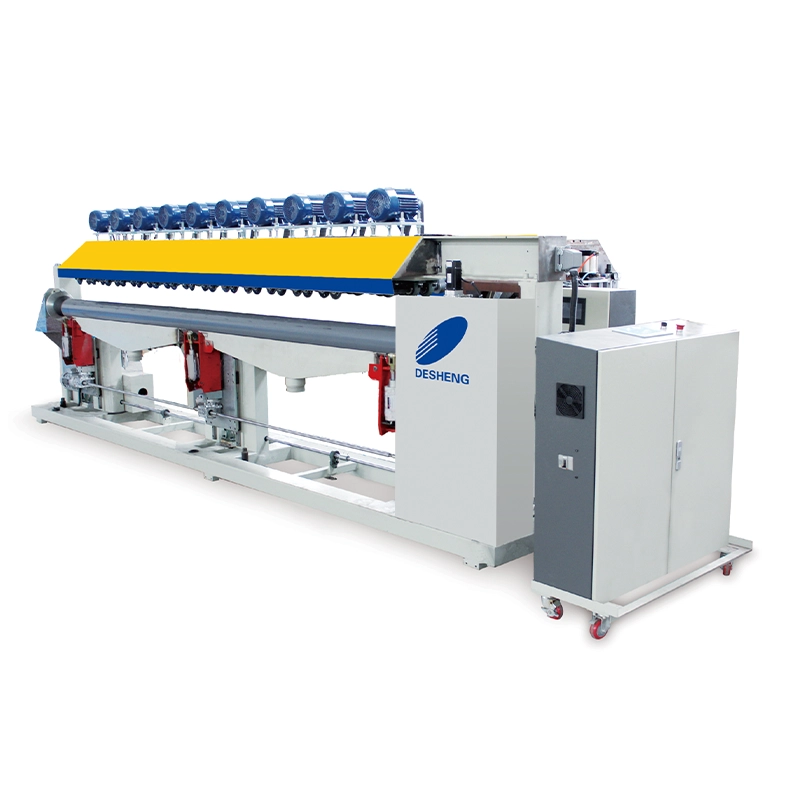
What Is a Pipe Slotting Machine?
A pipe slotting machine is a specialized processing machine used to cut slots into the wall of a pipe. These slots are usually narrow and elongated rather than round. Depending on the product design, the slots may be arranged in straight rows, spiral patterns, staggered patterns, or customized layouts.
The main purpose of a slotted pipe is usually to control intake or filtration. The slots allow water or fluid to enter the pipe while limiting the entry of larger particles, soil, or debris.
Pipe slotting machines are commonly used to process:
- Drainage pipes
- Filter pipes
- Groundwater collection pipes
- Dewatering pipes
- Irrigation pipes
- Well screen pipes
- Agricultural water management pipes
Because slot geometry is closely related to filtration and drainage performance, pipe slotting machines are generally designed for high precision and good consistency.
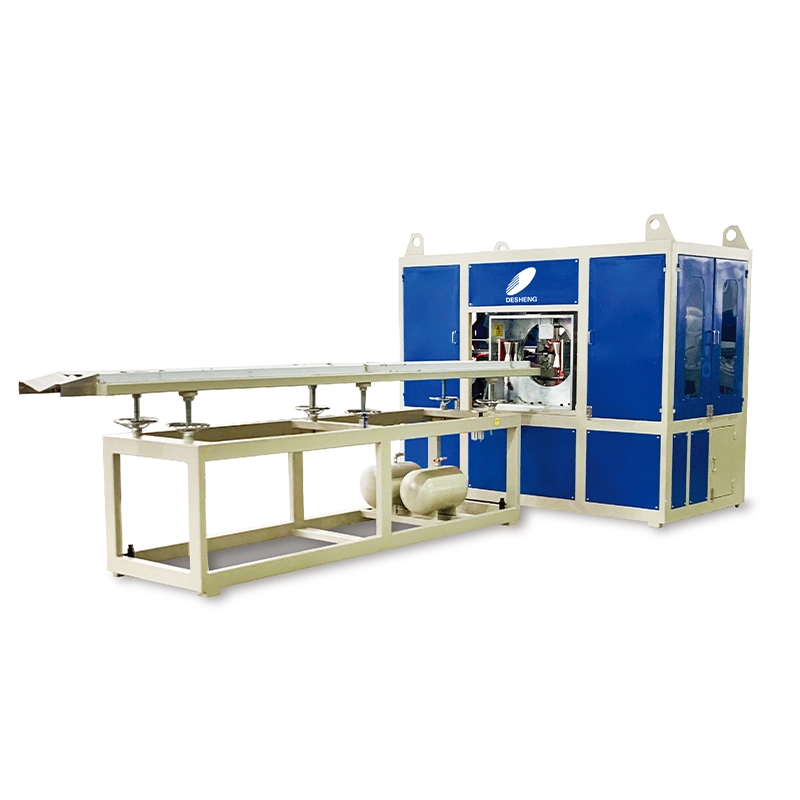
What Is a Pipe Perforating Machine?
A pipe perforating machine is used to create holes in the wall of a pipe. These holes are usually round, but depending on the tooling and machine design, they may also be oval, square, or other shaped perforations.
Unlike slotting, which emphasizes narrow linear openings, perforating focuses on punctured or cut-through holes. These holes may be distributed evenly across the pipe surface according to a specific pattern.
Pipe perforating machines are commonly used to produce pipes for:
- Drainage applications
- Ventilation systems
- Agricultural irrigation
- Cable protection systems
- Water diffusion systems
- Light filtration applications
- Decorative or specialized industrial uses
In general, perforated pipes are often used when round or patterned holes are sufficient for the intended function and extremely narrow filtration control is not required.
The Core Difference: Slots vs Holes
The most direct difference between the two machines is the type of opening they create.
A pipe slotting machine produces slots:
- Narrow
- Long or elongated
- Often linear in shape
- Usually designed for controlled intake or screening
A pipe perforating machine produces holes:
- Usually round
- Sometimes oval or shaped
- More open in geometry
- Often designed for general passage, diffusion, or drainage
This difference in opening shape has a major impact on how the final pipe behaves in use.
Slots are often preferred when the goal is to allow fluid entry while reducing the size of particles that can enter the pipe. Holes are often preferred when filtration precision is less critical and when simpler opening patterns are acceptable.
Difference in Working Principle
Although both machines modify the pipe wall, the way they do it can be very different.
How a pipe slotting machine works
A pipe slotting machine typically uses cutting blades, milling tools, saw-type cutters, or controlled linear cutting mechanisms to remove material from the pipe wall in elongated shapes. The pipe may rotate, move linearly, or do both depending on the machine design. The cutting system is synchronized with pipe movement to create slots with controlled length, width, depth, and spacing.
Because slot geometry must often be precise, the machine usually requires:
- Stable feeding
- Accurate positioning
- Good pipe support
- Consistent cutting depth
- Reliable tool alignment
How a pipe perforating machine works
A pipe perforating machine usually creates holes through punching, drilling, hot piercing, mechanical perforation, or rotary tooling. Depending on the design, the machine may form one hole at a time or multiple holes in a repeated pattern. Some perforating systems operate continuously, while others work in indexed steps.
Compared with slotting, perforation may be structurally simpler in some cases, especially when round holes are being produced in standard repeating patterns.
Difference in Finished Product Function
The machine difference becomes even clearer when you look at how the finished pipes are used.
Function of slotted pipes
Slotted pipes are often chosen for:
- Controlled water intake
- Groundwater collection
- Fine filtration support
- Soil separation
- Better screening performance
- Reduced sediment entry
The narrow slot design helps balance fluid entry and debris exclusion. In many drainage and filtration systems, this is an important performance requirement.
Function of perforated pipes
Perforated pipes are often chosen for:
- Basic drainage
- Water distribution
- Ventilation
- Lower-cost general-purpose applications
- Situations where larger openings are acceptable
- Systems where fine filtration is handled by additional layers or materials
Perforated pipes may not provide the same screening effect as slotted pipes, but they are often easier and more economical to produce for certain uses.
Difference in Typical Applications
Although there is some overlap, slotting machines and perforating machines often serve different product categories.
Common applications of pipe slotting machines
- Well screen pipe production
- Agricultural drainage systems
- Groundwater control systems
- Dewatering systems
- Filtration pipe production
- Subsurface water collection projects
These applications often need narrow and controlled openings to improve filtration performance.
Common applications of pipe perforating machines
- General drainage pipe production
- Ventilated pipe systems
- Irrigation diffusion pipes
- Utility and conduit-related products
- Water discharge systems
- Some decorative or technical plastic pipe products
These applications may prioritize overall flow area, simpler hole patterns, or lower processing complexity.
Difference in Opening Accuracy Requirements
In most cases, pipe slotting requires tighter control than pipe perforating.
A slot has multiple critical dimensions:
- Slot width
- Slot length
- Slot depth
- Slot spacing
- Edge quality
- Pattern alignment
Because slots are elongated, even a small variation in cutting can affect product performance.
Perforated holes also require consistency, but round holes are often easier to standardize than narrow slots. Hole diameter and spacing still matter, but the geometry is generally simpler.
This means a pipe slotting machine often requires:
- More precise cutting control
- Better feeding stability
- Stronger machine rigidity
- Higher alignment accuracy
A perforating machine may still need good precision, but its demands are sometimes lower depending on the hole design and product application.
Difference in Structural Impact on the Pipe
Another important difference is how the openings affect pipe strength.
Slots remove material in longer sections, which may influence pipe strength differently than round holes. If slots are too long, too wide, or too closely spaced, the pipe wall can weaken significantly. For this reason, slotting machine design must balance intake performance with structural integrity.
Perforated holes also weaken the pipe, but the stress distribution may differ because the openings are usually more compact. In many cases, round holes distribute stress more evenly than long narrow slots.
This is why product design matters. A manufacturer cannot simply choose slotting or perforating based on appearance. The machine and opening type must match the required balance between flow function and pipe strength.
Difference in Tooling and Maintenance
Pipe slotting machines and pipe perforating machines also differ in tooling and maintenance needs.
Pipe slotting machine tooling
A slotting machine may use:
- Saw blades
- Milling cutters
- Linear cutting tools
- Slotting knives
- Multi-head customized cutters
Because slotting usually involves repeated cutting along a longer opening path, tool wear can affect slot smoothness, width consistency, and burr formation.
Pipe perforating machine tooling
A perforating machine may use:
- Punching dies
- Drilling heads
- Heated piercing tools
- Rotary perforation tools
- Hole-forming molds or punches
Perforating tools may be simpler in some applications, but wear still affects hole shape, diameter, edge quality, and machine downtime.
In general, slotting machines may require closer attention to blade condition and cutting stability, while perforating machines may require careful monitoring of punching precision, die wear, or thermal consistency depending on the method used.
Difference in Production Speed and Efficiency
Production speed depends on the machine design, pipe material, hole or slot pattern, automation level, and product specification. However, in many cases, perforating machines can achieve simpler high-speed repetition when standard hole patterns are required.
Slotting can be more demanding because each opening is longer and often requires more controlled cutting action. This does not mean slotting machines are always slower, but it does mean the process is usually more sensitive to precision and tool stability.
A manufacturer comparing the two should ask:
- What opening pattern is needed?
- How much precision is required?
- What production volume is expected?
- Is quality or speed the top priority?
The best answer depends on the product, not on the machine label alone.
Difference in Customization Flexibility
Pipe slotting machines are often chosen when customers require customized slot width, slot length, slot quantity, or specific filtration performance. They are especially valuable when the opening design is closely tied to engineering requirements.
Pipe perforating machines may offer strong flexibility as well, especially for different hole diameters and hole arrangements. However, if the application requires very narrow and elongated intake openings, slotting is often the more suitable process.
For manufacturers serving multiple industries, the level of customization supported by the machine is a very important buying factor.
Difference in Product Value Positioning
From a commercial perspective, slotted pipes and perforated pipes may serve different market positions.
Slotted pipes are often associated with:
- More controlled filtration performance
- Higher technical value
- Specialized water management applications
- More demanding engineering requirements
Perforated pipes are often associated with:
- Broader general-purpose use
- Lower-cost applications
- Simpler manufacturing requirements
- Higher-volume standard products in some sectors
This means the choice between a pipe slotting machine and a pipe perforating machine is not just a technical decision. It is also a market strategy decision. The type of machine you invest in helps determine the type of products you can offer and the customers you can serve.
Which Machine Is Better for Plastic Pipe Manufacturers?
A pipe slotting machine is usually the better choice when:
- You need narrow, elongated openings
- Filtration performance matters
- Groundwater or drainage control is important
- Customers require precise slot dimensions
- You produce well-screen or filter-type pipes
A pipe perforating machine is usually the better choice when:
- Round or shaped holes are sufficient
- The application is for general drainage or diffusion
- Simpler hole patterns are acceptable
- Production cost and speed are key priorities
- The market does not require fine screening performance
In some factories, both machine types may be valuable because they support different product lines.