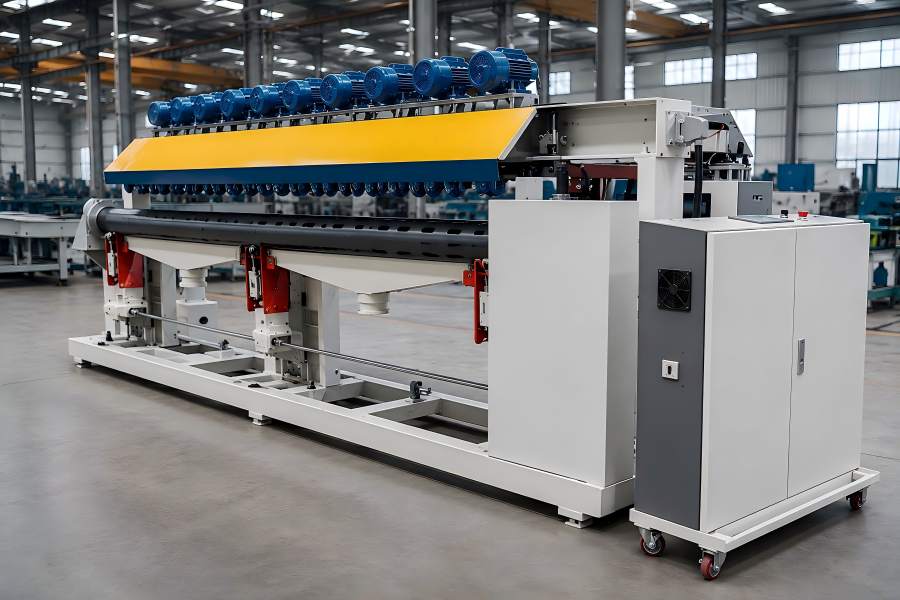
Drainage, irrigation, cable protection, mining, and filtration systems all make extensive use of PVC and PE pipes. Consistent slot patterns directly affect flow capacity, filtration efficiency, pipe strength, and product reliability. With advanced slotting machines, automation, and quality control, manufacturers can improve accuracy, reduce waste, and maintain stable production.
Understanding the Differences Between PVC and PE Materials
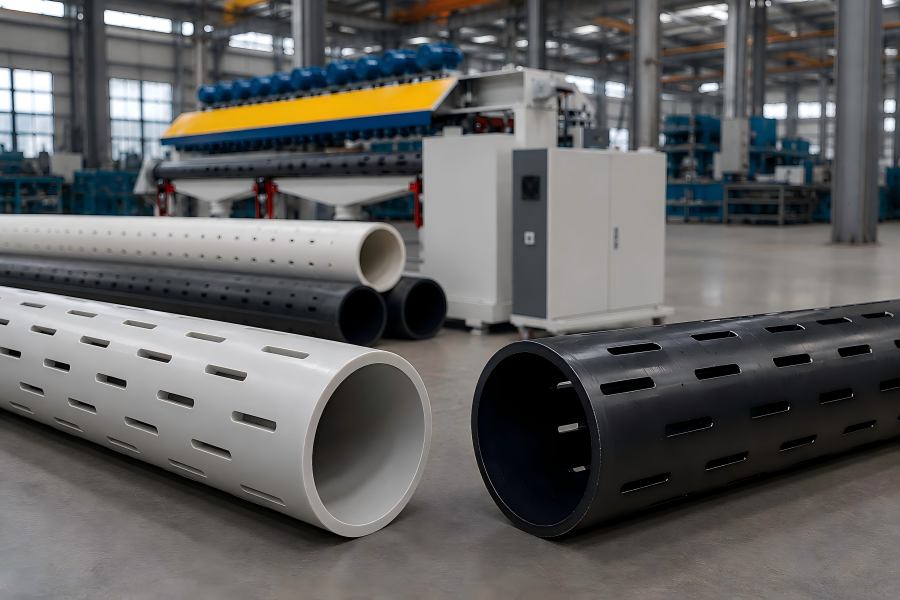
Achieving consistent slot patterns begins with understanding the material being processed. PVC and PE behave differently during slotting operations, requiring different processing strategies.
PVC Pipes
PVC (Polyvinyl Chloride) offers several advantages for slotting applications:
- High rigidity
- Excellent dimensional stability
- Smooth surface finish
- Good machining characteristics
- Strong resistance to deformation
Because PVC is relatively rigid, slotting operations can usually achieve high dimensional accuracy. The material tends to maintain its shape during cutting, which helps produce clean and precise slot edges.
However, PVC can also present challenges. Excessive cutting force, improper tooling geometry, or worn cutting tools may cause cracking, chipping, or edge damage. In colder environments, PVC can become more brittle, increasing the risk of defects during processing.
PE Pipes
PE (Polyethylene), particularly HDPE, presents a different set of manufacturing challenges.
PE materials are:
- More flexible
- Softer than PVC
- More elastic
- More sensitive to thermal expansion
- More prone to deformation under pressure
During slotting, PE may deform slightly around the cutting area if process parameters are not carefully controlled. The material’s flexibility can also make maintaining dimensional consistency more difficult, especially at higher production speeds.
Manufacturers must optimize slotting processes differently for PVC and PE to achieve equally consistent results and avoid material-specific defects.
Selecting the Right Pipe Slotting Machine
The slotting machine itself plays the most important role in achieving repeatable slot patterns.
Modern pipe slotting machines incorporate:
- CNC control systems
- Servo-driven positioning
- Automatic feeding mechanisms
- Precision cutting units
- Real-time monitoring systems
- Programmable slot pattern controls
Compared with manual or semi-automatic equipment, fully automated machines significantly improve pattern accuracy and production efficiency.
Important machine characteristics include:
Positioning Accuracy
Precise positioning ensures every slot is cut exactly at the intended location.
High-quality machines typically achieve positioning tolerances within fractions of a millimeter, ensuring consistent slot spacing throughout the entire pipe length.
Stable Pipe Rotation
For circumferential slot patterns, rotational accuracy is critical.
Any variation in rotational movement may cause:
- Misaligned rows
- Uneven slot distribution
- Pattern distortion
- Inconsistent slot orientation
Servo-controlled rotation systems help maintain precise angular positioning throughout production.
Consistent Feeding Motion
Pipe movement must remain synchronized with cutting operations.
Variable feed rates can lead to:
- Uneven slot spacing
- Pattern drift
- Reduced product quality
- Customer rejection
Automated feeding systems eliminate many of these issues and improve overall production stability.
Maintaining Accurate Tooling
Even the most advanced machine cannot produce consistent slot patterns with worn or damaged tools.
Tool wear gradually affects:
- Slot width
- Slot depth
- Edge quality
- Surface finish
- Cutting accuracy
As cutting edges become dull, slot dimensions begin to vary and surface quality deteriorates.
Common tooling maintenance practices include:
- Scheduled inspections
- Regular sharpening
- Tool replacement programs
- Wear monitoring systems
- Preventive maintenance routines
The choice of tooling material is also important. High-speed steel, carbide, and specialized coated tools can provide different levels of durability depending on production requirements.
Manufacturers that proactively manage tooling often achieve significantly better slot consistency than those that replace tools only after visible defects appear.
Controlling Pipe Dimensions Before Slotting
The quality of slot patterns is heavily influenced by the quality of incoming pipes.
If the pipe itself has dimensional variations, achieving consistent slots becomes far more difficult.
Important pipe characteristics include:
Outside Diameter Consistency
Variations in pipe diameter affect cutting depth and slot positioning.
Even small diameter changes can alter the final slot geometry and affect product performance.
Wall Thickness Uniformity
Uneven wall thickness may cause:
- Variable slot depth
- Structural weakness
- Inconsistent drainage performance
- Reduced product reliability
Pipe Straightness
Bent or warped pipes can create alignment problems during slotting.
Misalignment may lead to irregular slot spacing, pattern deviation, and increased scrap rates.
Manufacturers should inspect pipes before processing to ensure they meet dimensional specifications and quality standards.
Optimizing Cutting Parameters
Slot consistency depends heavily on process settings.
Key parameters include:
Cutting Speed
Excessive cutting speed may create:
- Rough slot edges
- Material tearing
- Increased vibration
- Reduced dimensional accuracy
Too slow a speed can reduce productivity and increase heat generation.
Feed Rate
Feed rate directly influences slot spacing and slot geometry.
Maintaining a stable feed rate ensures repeatable results across the entire production run.
Cutting Depth
Depth must remain consistent to achieve predictable hydraulic performance and structural integrity.
Improper depth settings can lead to:
- Weak pipe structures
- Reduced filtration performance
- Uneven slot appearance
- Customer complaints
Finding the optimal balance between speed, feed rate, and cutting depth is essential for stable production and high-quality results.
Minimizing Machine Vibration
Vibration is one of the most common causes of slot pattern inconsistency.
Even small levels of vibration can significantly affect precision slotting operations.
Excessive vibration can cause:
- Irregular slot widths
- Misaligned slots
- Rough edges
- Dimensional variation
- Reduced tool life
Potential vibration sources include:
- Worn bearings
- Loose machine components
- Improper machine installation
- Unbalanced rotating parts
- Tool wear
- Drive system issues
Modern slotting machines often incorporate rigid machine frames, reinforced support structures, and vibration-reduction designs to maintain cutting stability.
Regular maintenance is equally important for minimizing vibration-related defects and ensuring long-term equipment performance.
Using Automation and Servo Control Systems
Automation has dramatically improved slotting accuracy in recent years.
Advanced control systems provide:
- Precise motion control
- Automatic parameter adjustment
- Real-time feedback
- Pattern repeatability
- Reduced operator dependency
Servo-driven systems offer superior precision compared with conventional mechanical drives.
Benefits include:
- Consistent slot spacing
- Accurate slot positioning
- Improved repeatability
- Higher production speeds
- Reduced human error
- Greater process stability
For manufacturers producing large volumes of slotted pipes, automation often delivers substantial quality improvements while reducing labor requirements and operating costs.
Implementing Real-Time Quality Monitoring
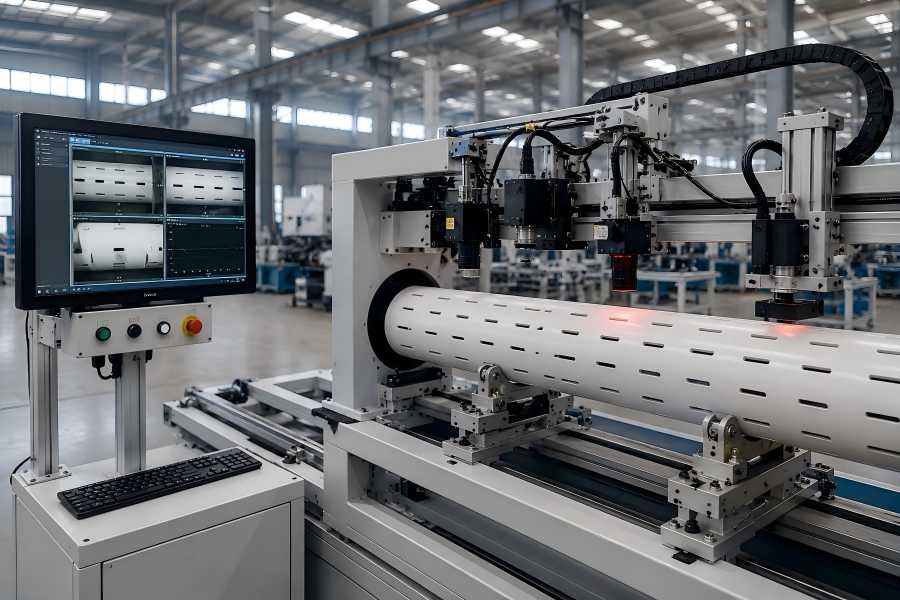
Inspection should not occur only after production is complete.
Modern manufacturers increasingly use real-time monitoring systems that detect quality issues during production, allowing immediate corrective action.
Monitoring technologies may include:
Vision Inspection Systems
High-speed cameras measure:
- Slot width
- Slot spacing
- Pattern alignment
- Surface quality
- Edge condition
Defects can be identified immediately, preventing large quantities of defective products from being produced.
Laser Measurement Systems
Laser sensors provide precise dimensional verification without contacting the pipe surface.
These systems can continuously monitor product dimensions during production.
Automated Data Collection
Production data can be continuously recorded and analyzed to identify trends before quality issues become serious.
Initiatives for continuous process improvement are supported, waste is decreased, and consistency is increased with real-time monitoring.
Maintaining Proper Pipe Support During Processing
Pipe movement during slotting can negatively affect pattern accuracy.
Long pipes are especially susceptible to:
- Sagging
- Deflection
- Vibration
- Alignment errors
Proper support systems help maintain stability throughout the entire slotting process.
Effective solutions include:
- Roller supports
- Adjustable guide systems
- Multi-point support structures
- Automatic centering devices
- Precision clamping systems
Stable pipe positioning ensures that slot patterns remain consistent from one end of the pipe to the other, even when processing large-diameter or long-length products.
Managing Temperature Effects
Temperature can significantly affect both PVC and PE processing.
Even minor temperature fluctuations may influence material behavior and slotting accuracy.
PVC Considerations
PVC generally exhibits good dimensional stability, but excessive heat may cause:
- Surface softening
- Material degradation
- Dimensional variation
- Reduced edge quality
PE Considerations
PE is more sensitive to temperature changes.
Temperature fluctuations can cause:
- Expansion
- Contraction
- Dimensional instability
- Slot size variation
- Material deformation
Maintaining a controlled production environment helps improve consistency.
Many advanced production facilities monitor:
- Ambient temperature
- Material temperature
- Equipment temperature
- Cooling system performance
to minimize process variation and ensure stable slotting results.
Standardizing Production Procedures
Even with advanced machinery, inconsistent operating practices can introduce quality variation.
Standardized procedures help ensure that every production run follows the same process regardless of operator or shift.
Important areas for standardization include:
- Machine setup
- Tool replacement intervals
- Quality inspection methods
- Parameter settings
- Maintenance schedules
- Operator training
- Production documentation
Documented procedures improve repeatability, reduce dependence on individual experience, and make troubleshooting easier when problems occur.
Additionally, quality management systems like ISO standards and certification criteria are supported by standardization.
Training Operators Effectively
Human factors still play an important role in automated production environments.
Well-trained operators can:
- Identify problems early
- Adjust parameters correctly
- Perform preventive maintenance
- Monitor quality trends
- Reduce downtime
- Improve overall equipment effectiveness
Training programs should cover:
- Machine operation
- Material characteristics
- Tool management
- Quality standards
- Troubleshooting techniques
- Safety procedures
Skilled operators contribute significantly to long-term production consistency and help manufacturers maximize the performance of their equipment investments.
Future Trends in Pipe Slotting Technology
The industry is moving toward increasingly intelligent manufacturing systems that combine automation, connectivity, and data-driven decision-making.
Emerging technologies include:
Artificial Intelligence
AI-based systems can analyze production data and automatically optimize operating parameters to maintain slot consistency under changing production conditions.
Maintenance Prediction
Sensors reduce unscheduled downtime and preserve production stability by keeping an eye on machine health and anticipating component problems before they happen.
Twin Digital Technology
Virtual production models allow manufacturers to simulate slotting processes and optimize settings before production begins, reducing setup time and improving efficiency.
Smart Factory Integration
Slotting machines are increasingly connected to plant-wide manufacturing systems for real-time performance monitoring, production scheduling, and quality management.