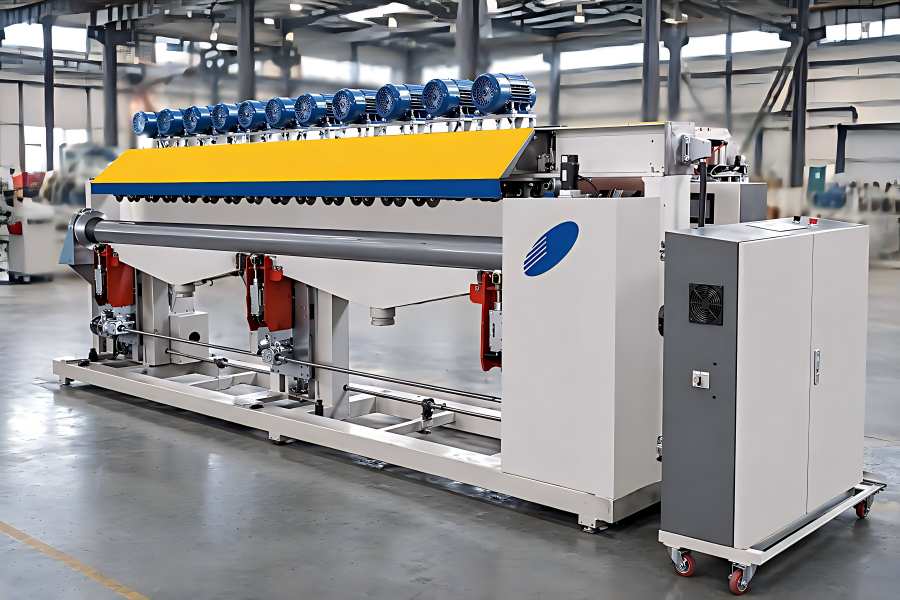
In plastic pipe processing, poor slotting quality can cause uneven slots, burrs, pipe damage, unstable performance, and higher production costs. Understanding common pipe slotting machine problems and their solutions helps manufacturers improve product quality, reduce downtime, and maintain more efficient, reliable, and consistent production.
Inconsistent Slot Size
One of the most common problems in pipe slotting machines is inconsistent slot size. Some slots may be wider, longer, deeper, or narrower than others, even within the same pipe length. This directly affects the functional performance of the finished product.
Common causes
- Worn cutting tools
- Unstable feeding speed
- Poor pipe positioning
- Vibration during slotting
- Incorrect machine settings
- Variations in pipe wall thickness
- Loose mechanical parts
How to solve it
- Inspect and replace worn blades or cutters regularly
- Stabilize feeding speed and avoid sudden changes
- Check pipe clamping and alignment before operation
- Tighten loose transmission or cutting components
- Calibrate slotting parameters for each pipe size
- Ensure the incoming pipe has stable dimensional quality
For high-volume production, automatic control systems can help reduce human error and improve repeatability.
Burrs and Rough Slot Edges
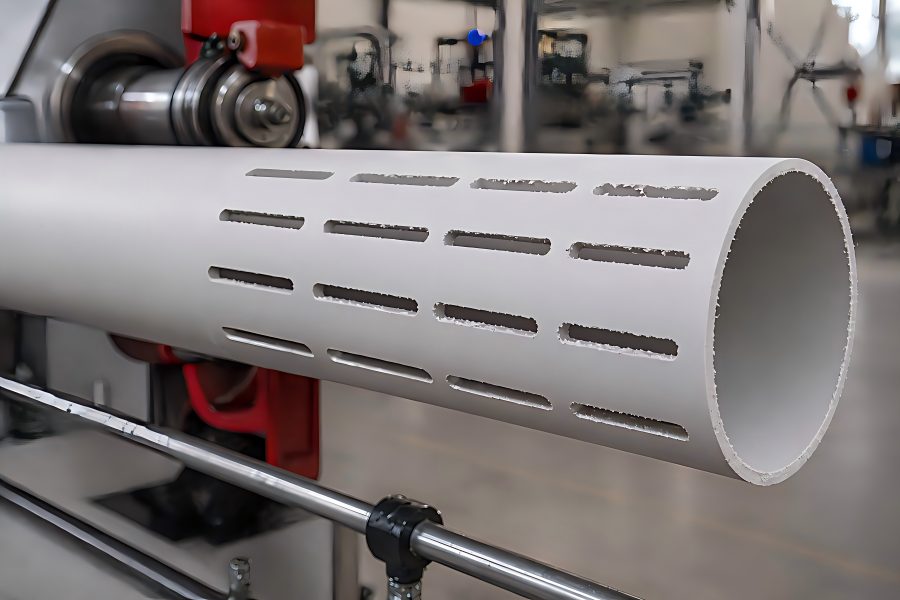
Burrs or rough edges around the slots are another common issue. In plastic pipes, rough slot edges can affect appearance, reduce flow performance, and create weak points that may crack later. In some applications, burrs can also trap debris and reduce the effectiveness of the slotted pipe.
Common causes
- Dull blades
- Incorrect cutting speed
- Excessive heat during processing
- Improper blade angle
- Poor-quality plastic material
- Unstable pipe movement during slotting
How to solve it
- Keeping cutting tools sharp
- Optimizing cutting speed and feed rate
- Avoiding excessive frictional heat
- Using suitable tooling for the pipe material
- Improving pipe support during cutting
- Checking whether the material is too soft or improperly cooled before slotting
In some cases, adjusting the timing between extrusion, cooling, and slotting can improve edge quality significantly.
Pipe Deformation During Slotting
Plastic pipes are more flexible than metal, which means deformation can become a serious issue during secondary processing. If the pipe is squeezed too hard, fed incorrectly, or cut under poor support conditions, it may become oval, bent, or locally distorted.
Common causes
- Excessive clamping force
- Inadequate pipe support
- Poor feeding alignment
- Overheating during cutting
- Weak pipe wall structure
- Slotting before the pipe has fully stabilized after extrusion
How to solve it
- Use proper clamping pressure matched to pipe size and material
- Add stable support rollers or guiding structures
- Align the pipe carefully before slotting
- Prevent overheating in the cutting area
- Confirm the pipe is fully cooled and dimensionally stable
- Adjust slotting parameters for thinner-wall pipes
A machine designed specifically for plastic pipes usually performs better than one adapted from metal pipe processing equipment.
Incorrect Slot Spacing
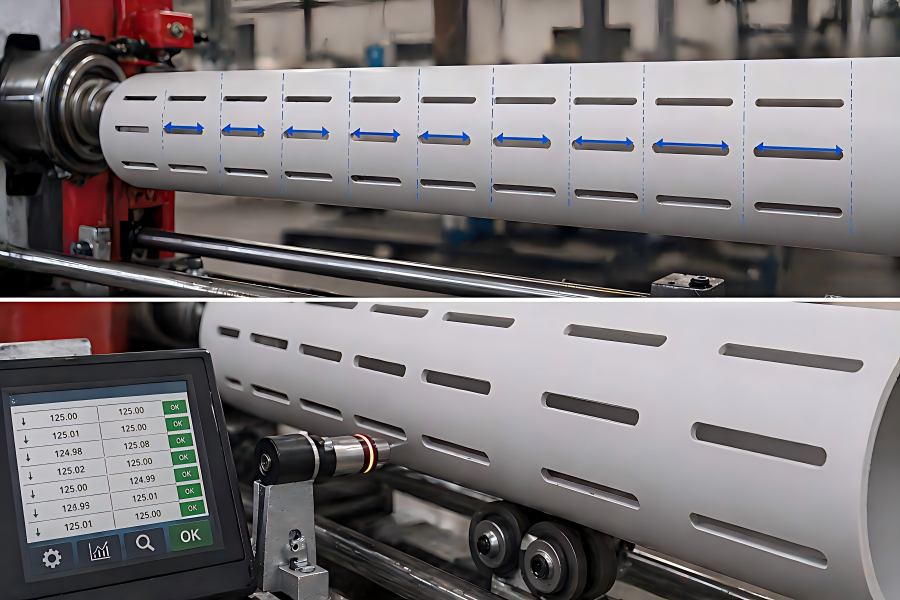
In many slotted pipe products, spacing between slots is just as important as slot size. Uneven spacing can reduce flow balance, create structural weakness in certain sections, or make the product fail to meet design requirements.
Common causes
- Feeding instability
- Encoder errors
- Poor synchronization between feeding and cutting
- Software or control system faults
- Slippage in the drive system
- Operator input errors during setup
How to solve it
- Regularly checking feed drive accuracy
- Calibrating encoders and sensors
- Inspecting belts, rollers, and transmission parts for slippage
- Verifying control program parameters before production
- Using servo-driven feeding systems for higher precision
- Testing sample pipes before full production begins
For manufacturers serving stricter markets, automated measurement systems may be useful for verifying slot spacing inline.
Frequent Blade Wear
Blade wear is a normal part of operation, but excessive or unusually fast wear creates higher maintenance costs and unstable production. As cutting tools wear down, slot quality gradually declines.
Common causes
- Unsuitable blade material
- Poor blade quality
- Incorrect cutting speed
- Excessive friction
- Processing abrasive-filled plastic materials
- Improper tool installation
- Lack of regular maintenance
If the tooling is not matched to the application, wear will increase quickly.
How to solve it
- Use blades designed for the specific plastic material
- Select appropriate cutting speeds
- Reduce unnecessary friction and vibration
- Install blades correctly and securely
- Set a preventive maintenance schedule
- Keep spare tools ready for quick replacement
Tracking blade life by production hours or output quantity can help operators replace tools before major quality problems appear.
Machine Vibration and Unstable Operation
Excessive vibration is a major source of poor slot quality. It can affect slot size, edge smoothness, spacing accuracy, and machine lifespan. Vibration also increases noise and may indicate deeper mechanical issues.
Common causes
- Loose machine components
- Unbalanced rotating parts
- Worn bearings
- Poor installation foundation
- Feeding instability
- Excessive machine speed
- Inconsistent pipe contact with support rollers
How to solve it
- Tighten bolts and structural connections
- Check rotating components for balance
- Replace worn bearings in time
- Ensure the machine is installed on a stable base
- Match speed settings to machine capability
- Improve pipe guidance and support
Routine inspection is important because vibration tends to worsen gradually rather than appear all at once.
Pipe Surface Scratches and Damage
Another frequent issue is visible scratching or marking on the pipe surface during slotting. Even if the slots themselves are acceptable, external surface damage can reduce product value and lead to rejection, especially in commercial markets where appearance matters.
Common causes
- Rough or dirty guide components
- Improper pipe handling
- Sharp edges on supports or clamps
- Debris buildup inside the machine
- Poor alignment that causes rubbing
- Excessive pressure on contact surfaces
How to solve it
- Clean guide rails, rollers, and contact points regularly
- Remove sharp edges from machine-contact areas
- Use smooth, material-friendly support components
- Align the pipe carefully to avoid dragging
- Keep the work area free from chips and debris
- Check clamps for excessive pressure or damage
For higher-end products, manufacturers may add protective handling steps after slotting as well.
Slotting Depth Problems
Some slotting machines may cut too shallow or too deep. Shallow slots may not meet functional requirements, while overly deep slots can weaken the pipe wall and increase the risk of cracking or failure.
Common causes
- Poor machine calibration
- Worn cutters
- Pipe diameter variation
- Pipe wall thickness inconsistency
- Improper setup for the product specification
- Sensor or control errors in automatic machines
How to solve it
- Calibrate depth settings regularly
- Inspect cutters for wear
- Check incoming pipe dimensional consistency
- Use sample inspection during startup
- Adjust settings for each pipe specification rather than using one general setup
- Maintain sensor accuracy in automated systems
This is particularly important for thin-wall or small-diameter plastic pipes, where even small depth errors can have a major impact.
Low Production Efficiency
Sometimes the problem is not slot quality but productivity. A pipe slotting machine may produce acceptable slots, but the output is too low, changeovers are too slow, or downtime is too frequent. In a competitive manufacturing environment, this becomes a serious commercial problem.
Common causes
- Frequent manual adjustments
- Slow feeding speed
- Repeated blade changes
- Long setup time between products
- Operator dependence
- Poor maintenance planning
- Unstable machine performance causing stops and restarts
How to solve it
- Use standardized setup procedures
- Train operators more thoroughly
- Reduce unnecessary manual intervention
- Prepare tools and spare parts in advance
- Improve maintenance routines to prevent breakdowns
- Consider higher-automation models for larger production volumes
Efficiency is not only about machine speed. It also depends on stability, repeatability, and ease of operation.
Excessive Downtime
Downtime is one of the most costly problems in any manufacturing process. When a pipe slotting machine stops unexpectedly, production schedules are disrupted and delivery times may be affected.
Common causes
- Poor preventive maintenance
- Delayed replacement of worn parts
- Electrical faults
- Sensor failures
- Blade breakage
- Feeding jams
- Lack of trained operators
How to solve it
- Creating a preventive maintenance plan
- Replacing high-wear components before failure
- Keeping critical spare parts in stock
- Training operators to identify early warning signs
- Checking electrical and control systems regularly
- Recording fault history to identify recurring patterns
A machine with lower purchase cost may actually become more expensive if downtime is frequent and service support is weak.
Poor Synchronization with Upstream and Downstream Equipment
In many factories, a pipe slotting machine is part of a larger production line rather than a stand-alone unit. Problems can occur if the slotting machine does not coordinate well with extrusion, cutting, conveying, or collection systems.
Common causes
- Mismatched line speed
- Unstable pipe transfer
- Communication issues between machines
- Poor buffer design
- Timing errors in automated systems
How to solve it
- Match slotting speed with upstream production rate
- Use stable conveying and positioning systems
- Coordinate control logic across machines
- Add buffering where necessary
- Test the full line under real production conditions
A pipe slotting machine should be evaluated not only as an individual machine but as part of the complete production process.
Preventive Strategies for Long-Term Stable Slotting
While solving problems after they appear is necessary, preventing them is even more important. A strong preventive approach can reduce waste, improve uptime, and make product quality more stable.
Key preventive strategies include:
- Using a machine suited to the specific pipe material and size range
- Performing regular maintenance and lubrication
- Replacing worn blades before quality declines seriously
- Checking pipe alignment and support conditions
- Monitoring slot quality throughout production
- Keeping the machine clean and free of debris
- Standardizing operating procedures
- Maintaining stable incoming pipe quality
Manufacturers that treat slotting as a precision process rather than a simple cutting task usually achieve better results.