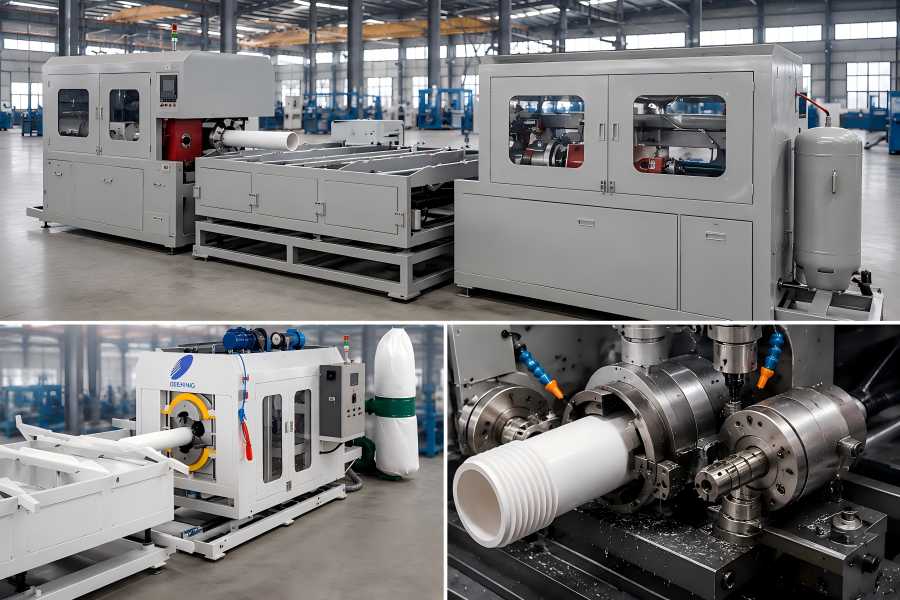
Because plastic pipes are lightweight, resistant to corrosion, and have a long service life, they are widely employed in modern industry, agriculture, and infrastructure. Growing demand requires efficient production. Pipe threading is key for secure connections using machines from manual to CNC to ensure accuracy and prevent damage.
Why Specialized Plastic Pipe Threading Machines Are Necessary
When excessive pressure or heat is applied, plastic pipes may experience:
- Surface melting
- Cracking
- Burr formation
- Deformation
- Ovality
- Poor thread accuracy
For example, PVC pipes are relatively rigid but can become brittle under improper machining conditions. HDPE pipes are more flexible and may deform if clamping pressure is too high. PPR materials require precise cutting parameters to maintain dimensional stability.
Therefore, plastic pipe threading machines are designed with:
- Lower cutting forces
- Specialized threading tools
- Optimized spindle speeds
- Precision clamping systems
- Material-specific controls
These features ensure clean, accurate threads while protecting pipe integrity.
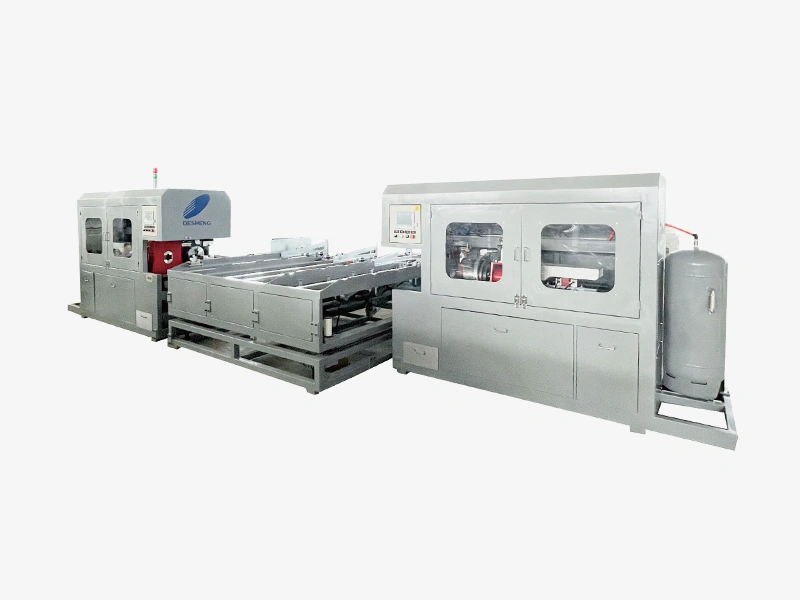
Main Types of Plastic Pipe Threading Machines
Manual Pipe Threading Machines
Manual threading machines are the simplest and most economical type of plastic pipe threading equipment.
Operators manually rotate the threading die or pipe to create threads. These machines are commonly used for small-scale operations, maintenance work, and field installations.
Key Features
- Hand-operated mechanism
- Portable structure
- Low investment cost
- Easy operation
- Minimal maintenance
Advantages
- Affordable purchase price
- Lightweight design
- Suitable for occasional use
- No complex controls required
- Easy transportation
Limitations
- Lower productivity
- Greater dependence on operator skill
- Limited consistency
- Not suitable for mass production
Typical Applications
- Small workshops
- Maintenance departments
- Plumbing repairs
- Agricultural installations
- On-site pipe modifications
Manual machines remain practical for users with limited threading requirements.
Electric Pipe Threading Machines
Electric threading machines use motor-driven systems to automate the threading process.
These machines significantly increase productivity compared to manual equipment while maintaining high thread quality.
Key Features
- Electric motor drive
- Adjustable threading speed
- Automatic lubrication
- Improved precision
- Multiple pipe size capability
Advantages
- Faster threading cycles
- Reduced labor effort
- Better consistency
- Improved thread quality
- Higher productivity
Limitations
- Higher initial investment
- Requires power supply
- More maintenance than manual systems
Typical Applications
- Pipe fabrication workshops
- Plastic pipe distributors
- Construction projects
- Utility contractors
- Medium-volume production facilities
Electric threading machines are among the most commonly used solutions for plastic pipe processing.
Bench-Mounted Pipe Threading Machines
Bench-mounted machines are fixed installations designed for workshop and factory environments.
Their rigid construction provides greater stability during threading operations.
Key Features
- Heavy-duty frame
- Stable operation
- High accuracy
- Large pipe capacity
- Long service life
Advantages
- Improved thread precision
- Better vibration control
- Consistent production quality
- Suitable for continuous operation
- Increased durability
Limitations
- Limited portability
- Requires dedicated workspace
Typical Applications
- Manufacturing plants
- Fabrication centers
- Industrial workshops
- Pipe processing facilities
Bench-mounted systems are ideal for companies performing threading operations on a daily basis.
Portable Pipe Threading Machines
Portable threading machines are designed for mobility and field applications.
These compact systems allow operators to perform threading operations directly at installation sites.
Key Features
- Lightweight construction
- Compact dimensions
- Easy transport
- Quick setup
- Mobile operation
Advantages
- Excellent flexibility
- Reduced transportation costs
- On-site threading capability
- Faster installation work
- Lower handling requirements
Limitations
- Lower throughput
- Smaller pipe capacity
- Reduced automation
Typical Applications
- Construction sites
- Utility maintenance
- Irrigation projects
- Telecommunications installations
- Field repairs
Portable machines are particularly valuable when moving large pipes is impractical.
Semi-Automatic Pipe Threading Machines
Semi-automatic machines combine manual operation with automated threading functions.
Operators load and unload pipes while the machine performs the threading cycle automatically.
Key Features
- Automatic spindle rotation
- Controlled threading process
- Digital controls
- Faster cycle times
- Consistent operation
Advantages
- Improved efficiency
- Reduced labor intensity
- Better repeatability
- Moderate investment cost
- Higher productivity
Limitations
- Still requires operator involvement
- Less efficient than fully automatic systems
Typical Applications
- Medium-volume manufacturing
- Pipe processing workshops
- Plastic pipe distributors
- Custom fabrication facilities
Semi-automatic machines often provide the best balance between cost and productivity.
Fully Automatic Pipe Threading Machines
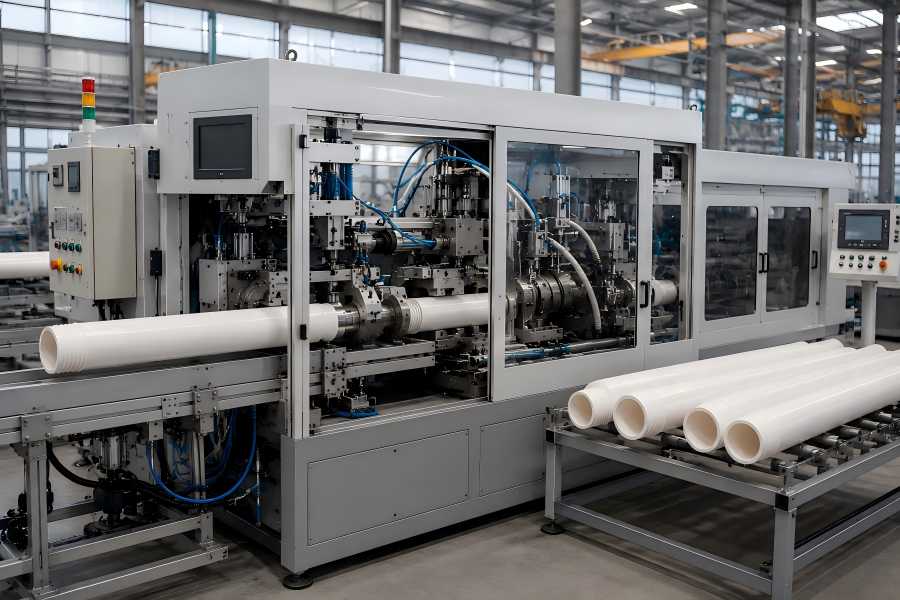
Fully automatic machines are designed for high-volume production environments.
They integrate feeding, positioning, threading, inspection, and unloading into a continuous workflow.
Key Features
- Automatic pipe feeding
- Programmable controls
- Automatic clamping
- Thread monitoring systems
- High-speed operation
Advantages
- Maximum productivity
- Reduced labor costs
- Consistent quality
- Continuous operation
- High production capacity
Limitations
- Higher investment cost
- More complex installation
- Greater maintenance requirements
Typical Applications
- Large pipe manufacturing plants
- Industrial production lines
- Infrastructure supply factories
- High-volume processing centers
As labor costs rise worldwide, fully automatic systems are becoming increasingly attractive.
CNC Pipe Threading Machines
CNC plastic pipe threading machines represent one of the most advanced threading technologies available.
These systems use computerized controls to achieve precise, repeatable threading operations.
Key Features
- Computer-controlled machining
- Programmable threading parameters
- Automatic tool positioning
- Multi-size processing capability
- High precision
Advantages
- Outstanding accuracy
- Excellent repeatability
- Reduced human error
- Flexible production
- High-quality thread formation
Limitations
- Significant capital investment
- Skilled programming required
- More sophisticated maintenance
Typical Applications
- Precision pipe manufacturing
- Industrial processing plants
- Specialized engineering projects
- Custom pipe production
CNC systems are often selected when strict dimensional tolerances are required.
Pipe Thread Rolling Machines
Unlike traditional cutting machines, thread rolling machines create threads through material deformation.
The pipe surface is compressed and shaped using precision rollers rather than cutting tools.
Key Features
- Chip-free operation
- Smooth thread surface
- Material displacement process
- High consistency
- Reduced waste generation
Advantages
- Stronger threads
- Better surface finish
- Reduced material loss
- Improved fatigue resistance
- Faster production cycles
Limitations
- Limited compatibility with some plastic materials
- Higher tooling requirements
- Specialized setup procedures
Typical Applications
- Precision plastic components
- Specialized pipe systems
- High-performance fittings
- Industrial fluid transport systems
Thread rolling technology is increasingly used where thread durability is a priority.
Multi-Station Pipe Threading Machines
Multi-station machines perform several operations within a single production cycle.
These systems can integrate threading, chamfering, cutting, inspection, and marking functions.
Key Features
- Multiple processing stations
- Continuous workflow
- Integrated controls
- High throughput
- Reduced handling requirements
Advantages
- Increased productivity
- Lower labor costs
- Improved process consistency
- Reduced floor space requirements
- Enhanced production efficiency
Limitations
- Higher equipment cost
- More complex maintenance
Typical Applications
- Large-scale manufacturing
- Automated production lines
- Infrastructure pipe production
Multi-station machines help maximize factory output while minimizing manual intervention.
Comparison of Different Plastic Pipe Threading Machine Types
| Machine Type | Automation Level | Productivity | Precision | Mobility | Investment Cost |
| Manual | Low | Low | Moderate | High | Low |
| Electric | Medium | Medium | High | Medium | Moderate |
| Bench-Mounted | Medium | High | High | Low | Moderate |
| Portable | Low-Medium | Medium | Moderate | High | Moderate |
| Semi-Automatic | Medium-High | High | High | Low | Moderate-High |
| Fully Automatic | Very High | Very High | High | Low | High |
| CNC | Very High | Very High | Very High | Low | Very High |
| Thread Rolling | High | High | High | Low | High |
| Multi-Station | Very High | Very High | High | Low | High |
Plastic Pipe Materials Compatible with Threading Machines
Different threading machines may be optimized for different plastic materials.
PVC (Polyvinyl Chloride)
Water supply, drainage, electrical conduit, and industrial uses all make extensive use of PVC. It offers excellent rigidity and dimensional stability, making it one of the easiest plastics to thread.
UPVC (Unplasticized PVC)
UPVC provides greater strength and chemical resistance. Specialized tooling helps prevent cracking during threading.
CPVC (Chlorinated PVC)
CPVC is commonly used in hot-water and industrial systems. Accurate temperature and cutting control are essential.
HDPE (High-Density Polyethylene)
HDPE is highly flexible and impact-resistant. Proper clamping systems help prevent deformation during threading.
PPR (Polypropylene Random Copolymer)
PPR pipes are widely used in heating and plumbing systems. Threading machines must ensure dimensional consistency.
PP and Other Engineering Plastics
Various industrial applications utilize polypropylene and specialty plastics that require customized threading parameters.
Considerations for Selecting a Plastic Pipe Threading Machine Pipe
Pipe Diameter Range
Choose equipment that can handle your current pipe sizes while also supporting future production needs. A wider diameter range improves flexibility and reduces the need for additional machines later.
Production Volume
Production capacity should match your daily output requirements. Manual machines suit low-volume work, while semi-automatic or fully automatic systems are better for continuous, high-volume manufacturing.
Thread Accuracy Requirements
High-precision applications require machines with stable clamping, accurate tool positioning, and consistent cutting control. CNC or automatic systems are ideal when strict thread tolerances must be maintained.
Material Compatibility
Different plastics have different machining properties. PVC, HDPE, PPR, and CPVC require suitable cutting tools, clamping force, and processing parameters to prevent cracking or deformation.
Automation Requirements
Increased automation can speed up production, lower labor costs, and enhance uniformity. However, businesses should balance automation benefits with investment budget and operator training needs.
Maintenance Support
Reliable maintenance support helps reduce downtime and extend machine service life. Spare parts availability, technical service, and operator training should be considered before purchasing equipment.
Future Expansion Plans
Choose a machine that can support future product changes, larger pipe sizes, or higher production capacity. Expandable equipment helps manufacturers avoid frequent upgrades and unnecessary investment.