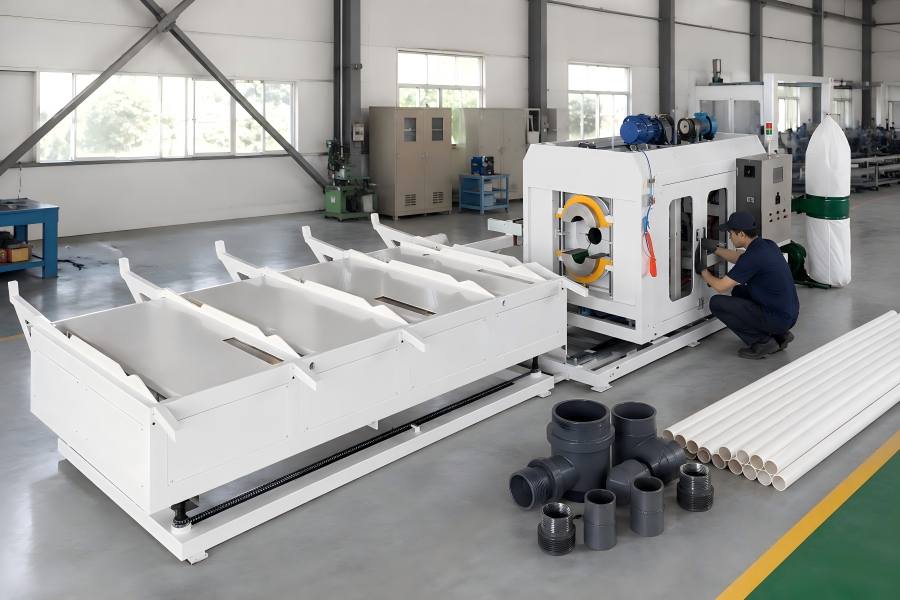
Pipe threaders create accurate pipe-end threads for secure connections in plumbing, construction, irrigation, oil and gas, and plastic pipe processing. During operation, poor thread quality, wrong size, die wear, slipping, burrs, overheating, or vibration can reduce efficiency, increase scrap, and damage connections.
1. Poor or Rough Thread Quality
One of the most common problems with pipe threaders is poor thread quality. The finished thread may look rough, uneven, torn, incomplete, or irregular. In some cases, the thread surface may have visible scratches, burrs, or broken edges. Poor thread quality can make assembly difficult and may affect sealing performance.
Possible Causes:
- Worn, dull, or damaged threading dies
- Incorrect die size or wrong thread standard
- Insufficient cutting oil or poor lubrication
- Incorrect cutting speed or feed speed
- Pipe material too hard or unsuitable for the selected die
- Pipe end not cut square before threading
- Machine vibration during operation
- Plastic pipe deformation during threading
Solutions:
- Check the dies regularly: Inspect the cutting edges for wear, cracks, broken teeth, or dull surfaces. Replace worn dies before they affect thread quality.
- Use the correct die set: Make sure the die matches the pipe diameter, pipe material, and required thread standard.
- Improve lubrication: For metal pipes, use proper threading oil to reduce friction and improve surface finish.
- Adjust cutting speed: If the thread surface is rough or torn, reduce the speed and feed rate.
- Prepare the pipe end properly: Cut the pipe end straight and remove any deformation before threading.
- Reduce vibration: Ensure the pipe is securely clamped and properly supported.
- For plastic pipes: Use sharp tools and controlled cutting parameters to avoid tearing, melting, or cracking.
2. Incorrect Thread Size or Thread Pitch
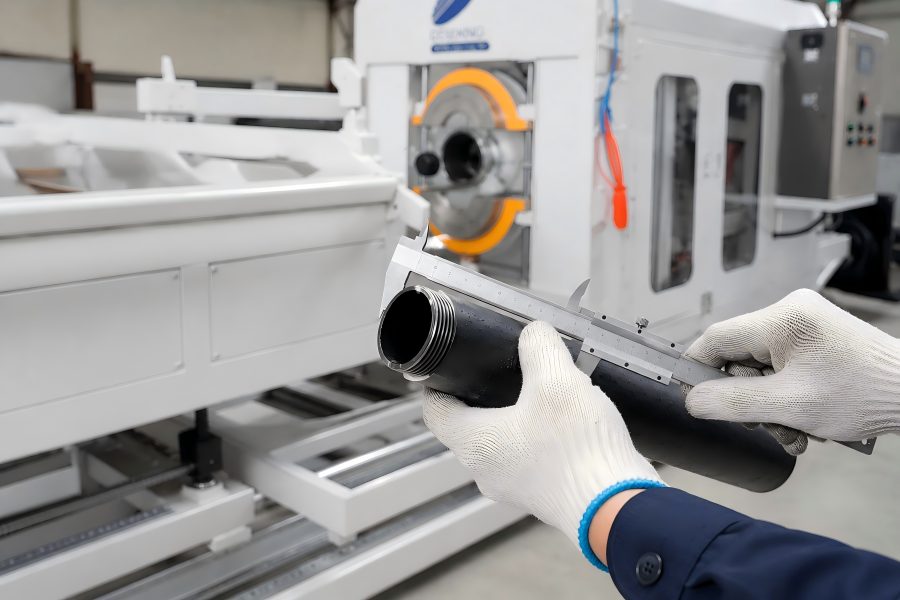
Another common issue is incorrect thread size or pitch. The pipe may be threaded too deep, too shallow, too loose, or too tight. Sometimes the thread may not match the fitting at all. This can lead to assembly failure, leakage, or unstable pipe connections.
Possible Causes:
- Wrong die head or wrong die size
- Incorrect thread standard, such as NPT, BSPT, BSPP, metric, V-thread, or T-thread
- Incorrect machine parameter setting
- Die head not adjusted correctly
- Pipe outer diameter not within tolerance
- Worn dies causing thread profile changes
- Operator error during manual adjustment
- Inconsistent pipe wall thickness or material hardness
Solutions:
- Confirm the thread standard before production: Check whether the required thread is tapered, straight, metric, V-type, T-type, or another specification.
- Use thread gauges: Do not rely only on visual inspection. Use standard gauges to check thread accuracy.
- Adjust thread depth carefully: If the thread is too shallow, adjust the die head or cutting depth. If it is too deep, reduce the cutting depth.
- Check the pipe diameter: Make sure the pipe outer diameter matches the machine and die requirements.
- Replace worn dies: Worn dies can change thread profile and lead to poor fitting connection.
- Record machine settings: For batch production, keep standard parameters for each pipe size and material.
- Test before mass production: Produce a sample thread and test it with the matching fitting before running a full batch.
3. Die Wear or Die Damage
Threading dies are the core cutting components of a pipe threader. After extended use, the dies may become dull, chipped, cracked, or show uneven wear. Once the dies lose sharpness, the machine needs more force to cut the thread, and the final thread quality becomes unstable.
Possible Causes:
- Long-term cutting without timely die replacement
- Processing hard materials beyond the die’s capacity
- Lack of cutting oil or poor lubrication
- Incorrect cutting speed or excessive feed force
- Dirty pipe surface with rust, sand, oil, or foreign particles
- Using one die set for different materials without adjustment
- Overheating during continuous threading
- Poor-quality die material or improper heat treatment
Solutions:
- Inspect dies frequently: Check for dull edges, broken teeth, uneven wear, and surface cracks.
- Replace dies on time: Do not wait until serious thread defects appear. Timely replacement protects the machine and improves output quality.
- Use proper die material: Stainless steel, carbon steel, PVC, PP, and PE pipes may require different die materials and cutting geometries.
- Keep enough lubrication: For metal threading, cutting oil helps reduce friction and extend die life.
- Clean pipe surfaces: Remove rust, dust, sand, and oil before threading.
- Avoid overload operation: Do not force the machine to process materials beyond its rated capacity.
- Prepare spare dies: For continuous production, keeping spare die sets can reduce downtime.
4. Pipe Slipping or Poor Clamping
Pipe slipping happens when the pipe moves, rotates, or shifts during threading. This can create uneven threads, damage the pipe surface, or cause the threading operation to fail. In severe cases, pipe slipping may also create safety risks for operators.
Possible Causes:
- Insufficient clamping force
- Worn chuck jaws or clamping blocks
- Oil, dust, or water on the pipe surface
- Pipe not aligned with the machine centerline
- Excessive cutting resistance from dull dies
- Long pipe not supported properly
- Clamping pressure too high or too low for plastic pipes
- Incorrect fixture design for the pipe diameter
Solutions:
- Clean the pipe before clamping: Remove oil, dust, water, and plastic powder from the pipe surface.
- Check the chuck and clamps: Replace worn jaws, clamping blocks, or fixtures.
- Align the pipe correctly: The pipe should be centered with the spindle and die head.
- Support long pipes: Use roller stands or support frames to prevent sagging and vibration.
- Adjust clamping pressure: The pipe should be held firmly without being crushed or deformed.
- Reduce cutting resistance: Replace dull dies and apply proper lubrication.
- Use suitable fixtures: For plastic pipes, use fixtures that provide stable holding without damaging the pipe wall.
5. Excessive Burrs, Chips, or Threading Debris
Burrs and chips are common during pipe threading. Some small chips are normal, but excessive burrs or uncontrolled debris can affect the thread surface, damage fittings, block the die head, or create cleaning problems after production.
For metal pipes, chips may become sharp and dangerous. For plastic pipes, long shavings may wrap around the pipe or tool, reducing threading stability.
Possible Causes:
- Dull or damaged dies
- Incorrect cutting angle or thread profile
- Too fast feed speed
- Poor lubrication during metal threading
- Plastic material tearing instead of cutting cleanly
- Chips not removed during operation
- Die head clogged with debris
- Pipe end not chamfered before threading
Solutions:
- Use sharp dies: A sharp cutting edge produces cleaner threads and fewer burrs.
- Control feed speed: Slower and more stable feeding can reduce tearing and burr formation.
- Apply proper cutting oil: For metal pipes, lubrication helps chips separate cleanly.
- Add a deburring step: Use manual deburring tools, chamfering tools, or automatic deburring devices after threading.
- Clean chips regularly: Remove chips from the die head, chuck, guide rails, and machine base.
- Improve chip removal: Use air blowing, chip collection, or automatic cleaning systems for continuous production.
- Chamfer pipe ends: A properly chamfered pipe end helps the thread start smoothly.
6. Overheating, Vibration, or Motor Overload
Overheating, vibration, and motor overload are warning signs that the pipe threader is under stress. If these problems are ignored, they can damage the motor, gearbox, bearings, dies, spindle, or electrical system.
Possible Causes:
- Dull dies increasing cutting resistance
- Threading pipe sizes beyond machine capacity
- Cutting depth too large
- Insufficient lubrication or coolant
- Long continuous operation without cooling
- Loose bolts, worn bearings, or poor machine foundation
- Pipe misalignment or poor support
- Gearbox oil shortage or contamination
- Motor overload from excessive torque demand
Solutions:
- Stop the machine when abnormal signs appear: Do not continue operation if there is strong vibration, burning smell, serious noise, or overheating.
- Replace worn dies: Dull dies increase load on the motor, shaft, and gearbox.
- Check machine capacity: Make sure the pipe diameter, wall thickness, and material are within the rated range.
- Reduce cutting depth or feed speed: Avoid forcing the machine to cut too aggressively.
- Improve lubrication: Use enough cutting oil for metal pipes and keep the lubrication system clean.
- Inspect mechanical parts: Check bearings, bolts, belts, chains, couplings, and the machine base.
- Check gearbox oil: Maintain proper oil level and replace contaminated oil according to the maintenance schedule.
- Support the pipe properly: Long or heavy pipes should be supported to prevent vibration and misalignment.
7. Thread Misalignment
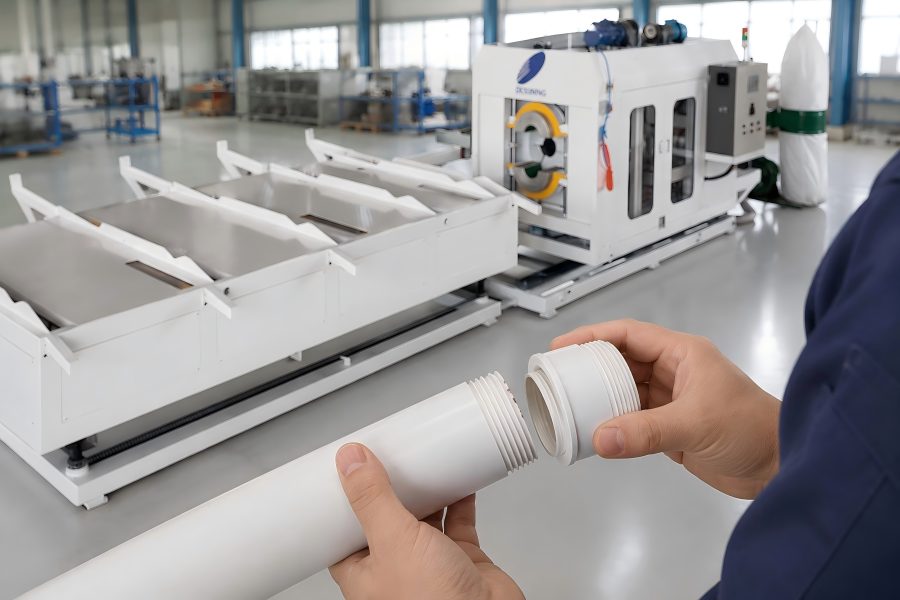
Thread misalignment occurs when the thread is not cut straight or concentric with the pipe centerline. The pipe may look threaded, but the fitting may not connect smoothly or may leak after installation.
Possible Causes:
- Pipe is not aligned with the die head or spindle
- Pipe end is not cut square before threading
- Long pipe sections are not properly supported
- Worn guide sleeves, chuck jaws, or fixtures
- Pipe moves slightly during the threading process
- Machine centerline is not properly adjusted
Solutions:
- Check pipe alignment before threading: Make sure the pipe is centered with the machine spindle and die head.
- Cut the pipe end square: An uneven pipe end can cause the thread to start at an angle.
- Support long pipes properly: Use roller stands or support frames to prevent sagging.
- Inspect guide parts and fixtures: Replace worn guide sleeves, chuck jaws, or clamping parts.
- Test with fittings or gauges: Check whether the finished thread connects smoothly and evenly.
- Calibrate the machine regularly: For automatic pipe threaders, keep the feeding and clamping system accurately aligned.
8. Thread Cracking or Pipe End Damage
Thread cracking or pipe end damage is especially common when threading plastic pipes such as PVC, PP, or PE pipes. The pipe end may crack, chip, deform, or become rough after threading.
Possible Causes:
- Pipe material is brittle or too cold during processing
- Dies are dull or unsuitable for plastic pipes
- Cutting speed or feed speed is too aggressive
- Excessive clamping pressure deforms the pipe end
- Thread depth is too large for the pipe wall thickness
- Pipe end is not properly chamfered before threading
- Plastic material overheats during cutting
Solutions:
- Use dies suitable for plastic pipes: PVC, PP, and PE pipes require sharp tools and proper cutting geometry.
- Control cutting speed and feed rate: Avoid aggressive cutting that may crack or tear the pipe.
- Adjust clamping pressure: Hold the pipe firmly without crushing or deforming it.
- Chamfer the pipe end first: A smooth starting edge helps reduce cracking.
- Check pipe temperature: Avoid threading very cold plastic pipes, as they may become more brittle.
- Avoid excessive thread depth: Make sure the thread design matches the pipe wall thickness.
- Inspect samples before mass production: Test several pieces first to confirm thread quality and pipe strength.