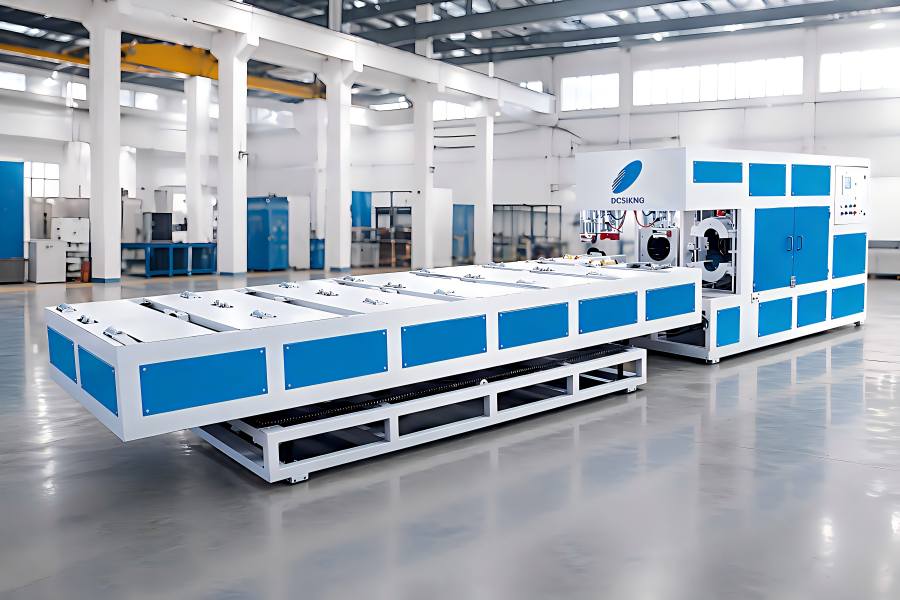
Connection quality is as important as pipe quality in plastic pipe production. Different socket types affect sealing, installation, and performance. Understanding these designs helps manufacturers choose the right pipe belling machine, tooling, and process to ensure reliable connections and consistent product quality.
Main Factors That Define a Socket Type
Before looking at the most common socket types, it helps to understand what actually makes one socket different from another.
A socket type may vary according to the following:
- Whether it is plain or includes a sealing groove
- Whether it uses solvent cement or a rubber ring
- The shape of the inner profile
- The insertion depth
- The wall thickness distribution after forming
- The pressure and sealing requirements of the final system
- The pipe standard used in the target market
In practical terms, the socket type created by a pipe belling machine directly determines how the pipe will connect, seal, and perform in real-world applications.
Plain Socket
One of the simplest and most common socket types is the plain socket. This is an enlarged pipe end with a relatively simple internal profile and no integrated rubber ring groove.
Main characteristics
- Simple expanded end
- Smooth internal shape
- No special groove for sealing ring
- Usually used with solvent cement or adhesive connection
- Common in basic PVC pipe systems
| Pros | Cons |
| Simpler machine setup | No integrated rubber ring sealing |
| Lower tooling complexity | Less suitable for flexible sealed joints |
| Lower production cost | Not ideal for higher-pressure applications |
| Suitable for high-volume standard products |
Common applications
- PVC drainage pipes
- Electrical conduit pipes
- Low-pressure pipe systems
- Building drainage and waste systems
- Some glue-joined plumbing applications
U-Type Socket
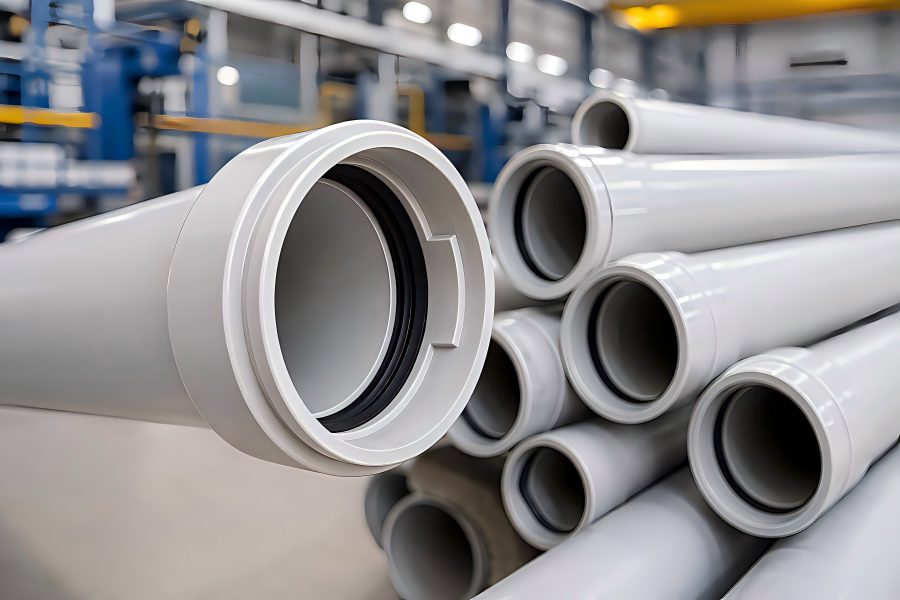
The U-type socket is a common bell-end design used in many plastic pipe systems, especially those that use a rubber sealing ring. It usually has a profile shaped to receive the pipe spigot end and accommodate a seal in a more structured way than a plain socket.
Main characteristics
- More defined internal socket profile
- Often designed for rubber ring sealing
- Good alignment and insertion support
- Common in PVC and UPVC pipe systems
- Widely used in standardized pipeline applications
| Pros | Cons |
| Better sealing performance | More complex than plain sockets |
| Suitable for rubber ring systems | Requires more precise forming |
| Reliable connection quality | Higher tooling and process demands |
| Good installation performance |
Common applications
- PVC drainage systems
- Sewer pipes
- Underground pipe systems
- Water discharge applications
- Municipal pipe networks
Rieber Socket
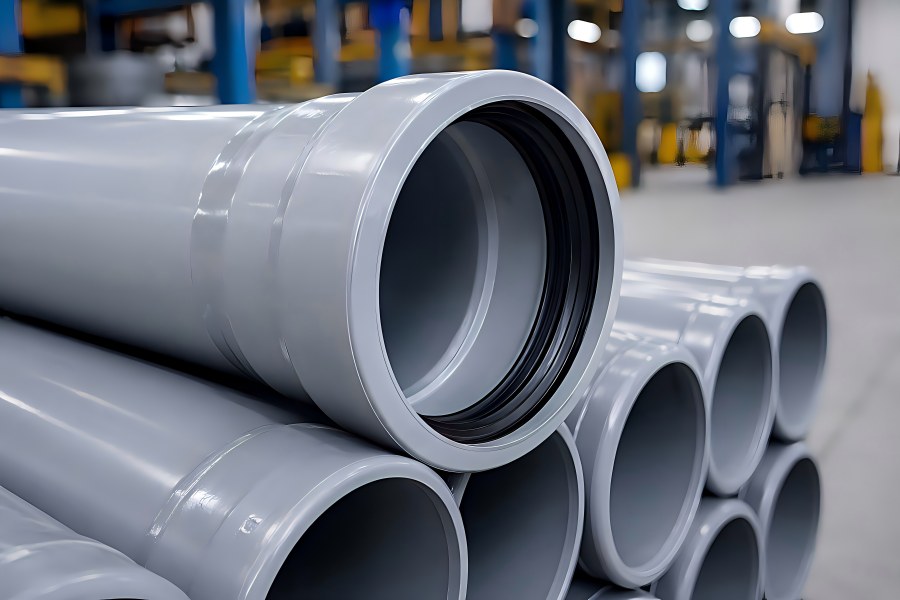
The Rieber socket is one of the most advanced socket types used in plastic pipe belling. It includes an integrated rubber ring sealing system formed during the belling process. This design is widely recognized for providing strong sealing performance and reliable joint quality.
Main characteristics
- Integrated rubber ring sealing structure
- Formed during the socket-making process
- Designed for strong, reliable sealing
- Often used in higher-performance pipe systems
- Requires specialized belling technology
| Pros | Cons |
| Excellent sealing performance | Higher machine complexity |
| Strong joint reliability | Higher production cost |
| Efficient installation | Requires precise process control |
| Suitable for demanding applications | Often needs specialized equipment |
| High market value |
Common applications
- PVC pressure pipes
- Water supply systems
- Sewer systems
- Infrastructure projects
- Municipal and utility pipe networks
Rubber Ring Socket
A rubber ring socket is a broader category that includes sockets designed to work with an elastomer sealing ring. In some cases, this may overlap with U-type or Rieber-style designs, but the key feature is that the socket is intended to create a sealed joint through the use of a rubber ring.
Main characteristics
- Socket designed for elastomeric sealing
- Better leak resistance than adhesive-only systems
- Usually supports push-fit connection
- Common in drainage, sewer, and water pipe applications
| Pros | Cons |
| Better sealing than glued sockets | More complex than plain sockets |
| Easier field installation | Requires accurate groove control |
| Good joint flexibility | Seal performance depends on proper seating |
| Suitable for large pipe systems |
Common applications
They are common in:
- Underground drainage systems
- Sewer networks
- Water pipelines
- Infrastructure projects
- Utility pipe installations
Solvent Cement Socket
A solvent cement socket is designed specifically for adhesive joining rather than rubber ring sealing. In this type of connection, the socket and spigot are joined using solvent cement that chemically bonds the PVC or similar plastic surfaces.
Main characteristics
- Simple internal socket profile
- No elastomeric seal required
- Intended for cemented joining
- Common in smaller pipe systems and building services
| Pros | Cons |
| Simple and economical | Not ideal for all underground systems |
| No rubber ring required | Joint quality depends on adhesive application |
| Easy to produce | Less flexible than rubber ring systems |
| Widely used in building applications |
Common applications
- Plumbing systems
- Electrical conduit
- Small-diameter PVC pipe systems
- Building service pipes
- Indoor drainage and utility systems
Straight Socket
A straight socket generally refers to a more direct expanded-end design without a highly complex internal contour. Depending on the market and application, the term may overlap somewhat with plain socket, but it usually emphasizes a straightforward enlargement shape.
Main characteristics
- Simple expansion profile
- Minimal internal contour variation
- Usually used in basic connection systems
- Easier to manufacture than more advanced socket types
| Pros | Cons |
| Easy to form | Limited sealing features |
| Lower tooling cost | Less suitable for advanced joint systems |
| Good for basic product lines | Lower connection performance than ring-seal sockets |
Common applications
- Simple drainage systems
- Conduit pipes
- Lower-complexity plastic pipe products
- Certain custom pipe connections
Double Socket or Coupling-Style Formed End
In some production contexts, manufacturers may create socket forms that resemble coupling ends or special joining structures. While not always considered a standard bell type in the same sense as plain or Rieber sockets, these designs are used in certain systems where connection structure needs to be adapted.
Main characteristics
- May support special insertion depth
- Can be used in coupling-like systems
- Often application-specific
- May require customized tooling
| Pros | Cons |
| Supports special customer needs | Higher development complexity |
| Adds customization value | Less standardized |
| Expands product range | More project-specific |
Common applications
- Special industrial pipe systems
- Customized fittings
- Non-standard product lines
- OEM-specific pipe production
How Socket Type Affects Belling Machine Selection
The choice of socket type has a direct influence on the type of pipe belling machine a manufacturer should use. Many buyers focus first on diameter range or automation level, but socket type is just as important.
Tooling requirements
Different socket types require different molds, mandrels, and forming heads. A machine that works well for plain sockets may not be suitable for Rieber sockets without major changes.
Heating precision
More advanced socket types often require tighter control of heating temperature and heating length. Uneven heating can lead to poor socket shape or weak sealing performance.
Cooling method
The cooling system must stabilize the final socket shape without distortion. This is especially important for sockets with grooves or more detailed internal profiles.
Automation needs
Complex socket types benefit more from automatic process control because dimensional repeatability is more critical.
Changeover flexibility
If a manufacturer produces several socket types, fast tooling change and easy machine adjustment become important advantages.
How Socket Type Affects Market Positioning
Socket type is not only a technical decision. It also affects a company’s product positioning and market competitiveness.
Plain and simple sockets
These are often suitable for:
- Lower-cost products
- Building drainage
- Conduit systems
- Simpler installation markets
Rubber ring and U-type sockets
These are often suitable for:
- Standard municipal systems
- Underground drainage
- Sewer applications
- Better-sealed joint markets
Rieber sockets
These are often suitable for:
- Higher-end infrastructure products
- Pressure pipe systems
- Municipal water supply
- Premium utility markets
The more advanced the socket type, the more value it may add to the finished pipe product, but also the more demanding the machine and process become.
Common Problems When the Wrong Socket Type Is Used
If the socket type does not match the actual application, several problems may occur:
- Difficult installation
- Poor joint sealing
- Leakage risk
- Loose or overly tight fit
- Incompatibility with fittings or standards
- Lower customer satisfaction
- Higher rejection rates
For example, using a basic plain socket in an application that requires a rubber ring seal can create serious field-performance issues. Likewise, choosing a complex socket type when a simple glued system is enough may increase cost without adding useful value.