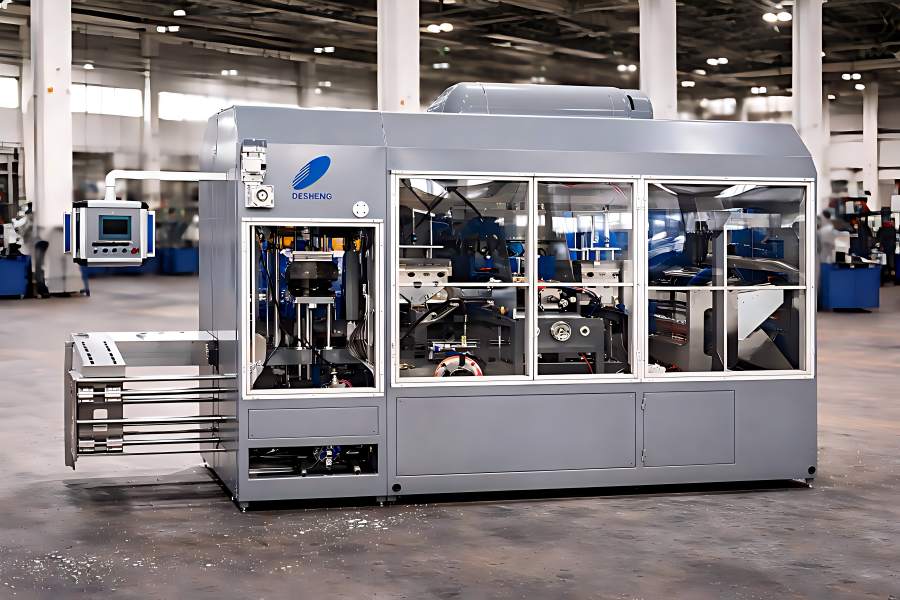
For plastic pipe machinery buyers, pipe bending machine price is a key concern. But cost varies widely based on machine structure, automation, output, and configuration. A cheaper machine may reduce upfront spending, while a higher-priced one can offer better precision, reliability, efficiency, and stronger long-term value.
Understanding Pipe Bending Machine Cost Components
Machine Type and Bending Method
One of the biggest factors affecting pipe bending machine cost is the machine type and the bending method it uses.
Different plastic pipes require different bending processes. Some machines rely on heating before forming, while others are designed for more specialized bending techniques depending on the material and the product shape.
Common machine categories include:
- Manual or semi-automatic pipe bending machines
- Fully automatic pipe bending machines
- Hot bending machines
- Inline pipe bending systems
- Offline pipe bending units
- Customized bending machines for special-shaped products
| Machine Type | Automation Level | Typical Speed | Application Complexity | Reference Price (USD) |
| Manual / Basic | Low | 2–4 pcs/min | Simple bends | 1,000–3,000 |
| Semi-automatic | Medium | 4–8 pcs/min | Standard bends | 5,000–12,000 |
| Fully automatic | High | 8–15 pcs/min | Complex, repeatable bends | 10,000–25,000 |
| Inline bending system | High | 10–20 pcs/min | Continuous production lines | 18,000–40,000 |
| Customized bending machine | Varies | 3–12 pcs/min | Special shapes or sizes | 15,000–50,000+ |
A simple semi-automatic machine generally has a lower initial price because it uses fewer control components and requires more manual operation. A fully automatic system, by contrast, usually costs more because it includes automated feeding, positioning, heating, bending, and cycle control.
The bending method itself also matters. Machines designed for stable heat control, accurate forming, and repeatable angle consistency often require more advanced engineering, which increases the price.
Automation Level
Automation is one of the most important pricing factors in modern pipe machinery.
As machines become more automated, their cost generally increases because automation adds:
- Servo motors
- PLC control systems
- Touchscreen interfaces
- Automatic feeding systems
- Positioning devices
- Temperature monitoring systems
- Program storage and recipe management
- Safety interlock systems
A basic machine may require the operator to manually load the pipe, position it, start the heating process, perform the bending cycle, and unload the finished product. This type of equipment is often more affordable at the beginning, but it also depends more heavily on operator skill and labor availability.
An automatic pipe bending machine reduces manual intervention and improves consistency, especially in batch production. While the purchase price is higher, the machine may lower labor costs, reduce human error, and improve productivity over time.
For many manufacturers, the real question is not whether automation raises the upfront cost, but whether it lowers the total production cost in the long run.
Pipe Diameter Range
The diameter range a machine can handle has a direct impact on cost.
A pipe bending machine designed for a narrow size range is usually simpler and less expensive than one built to process multiple diameters. When buyers need flexibility to bend pipes of different sizes, the machine often requires:
- Adjustable clamping systems
- Replaceable molds or tooling
- More advanced positioning mechanisms
- Wider heating adaptability
- Stronger frame design for larger pipes
Machines for small plastic pipes are typically less complex than machines designed for large-diameter products. Larger pipes need more forming force, more stable support, and more precise temperature distribution to prevent deformation, flattening, or cracking during bending.
In general, the broader the machine’s diameter range, the more versatile it becomes, but the higher the cost may be.
Pipe Material Compatibility
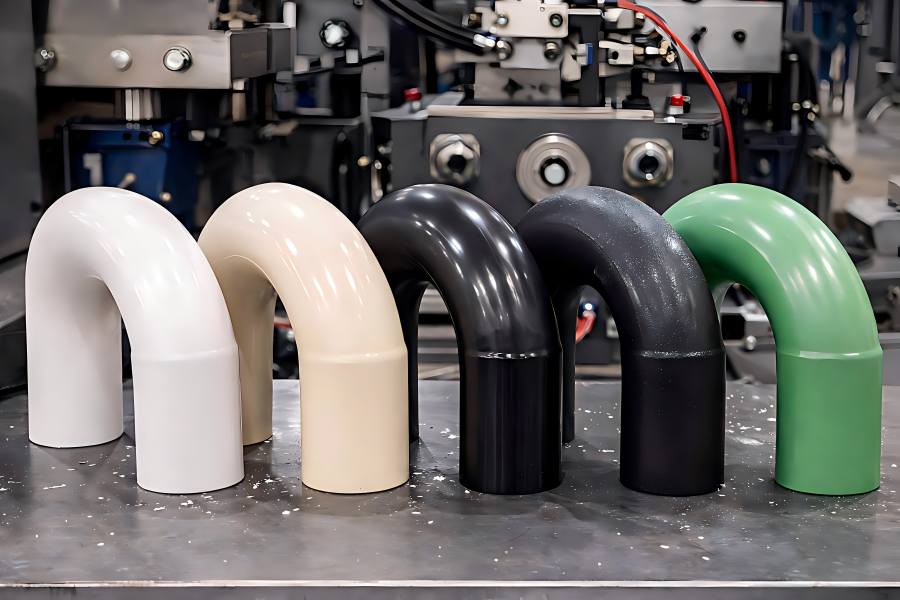
Not all plastic pipes behave the same during bending. Material compatibility is another major factor that affects machine design and cost.
| Pipe Material | Typical Processing Temperature | Bending Difficulty | Scrap Risk | Relative Cost Impact |
| PVC | 120–150°C | Low | Low | Low |
| CPVC | 140–170°C | Medium | Medium | Medium |
| PE | 110–140°C | Medium | Medium | Medium |
| HDPE | 120–150°C | High | Medium to High | Me |
| PPR | 130–160°C | Medium | Medium | Medium |
Each material has different thermal behavior, flexibility, wall structure, and bending sensitivity. Some materials are easier to form, while others require more precise temperature control and shaping support.
A pipe bending machine designed only for one standard material may be relatively straightforward. But if the buyer wants the machine to handle multiple materials, the equipment may need:
- More accurate heating control
- Adjustable processing parameters
- Better mold adaptability
- Enhanced cooling or support systems
- Wider process stability range
This added flexibility often increases the machine price, but it can also make the equipment more valuable for manufacturers serving diverse market demands.
Bending Angle and Product Complexity
The complexity of the required bend shape also affects the cost of the machine.
Some customers need only simple bends such as 45-degree or 90-degree angles. Others require more customized shapes, compound bends, or product-specific geometries. As bending complexity increases, the machine may require:
- More precise positioning
- Special mold design
- Multi-step bending control
- Higher repeatability
- Better process stability
Machines built for standard repetitive angles are usually more economical than machines designed for flexible angle programming and customized product output.
If a customer needs a pipe bending machine for diverse products or special project requirements, the machine will likely need a more advanced control system and customized tooling, both of which add cost.
Heating System Quality
For many plastic pipe bending processes, heating is one of the most critical functions. The quality of the heating system strongly affects both machine performance and machine cost.
If heating is unstable or uneven, the pipe may suffer from:
- Surface damage
- Deformation
- Uneven bending radius
- Cracking
- Poor angle consistency
- Reduced product quality
A higher-quality pipe bending machine often includes a better heating system with:
- Accurate temperature control
- Even heat distribution
- Faster response time
- Adjustable settings for different materials
- Stable performance during continuous production
More advanced heating systems cost more, but they also help protect product quality and reduce reject rates. For manufacturers producing high-value or appearance-sensitive products, this factor is especially important.
Tooling and Mold Configuration
Tooling is a major part of pipe bending machine pricing.
The molds and bending tools determine what pipe sizes, wall thicknesses, radii, and angles the machine can produce. Standard tooling is usually more cost-effective, while customized tooling adds cost.
Pricing can change based on:
- Number of molds included
- Mold material quality
- Changeover design
- Size range coverage
- Surface finish requirements
- Customization level
If a buyer wants one machine for several pipe sizes or several bending shapes, more tooling sets may be required. This increases the total project price.
It is also important to ask whether the quoted price includes standard molds only or a full tooling package. In some cases, the machine price seems attractive at first, but the required tooling is quoted separately, increasing the total investment.
Production Capacity and Cycle Speed
Output capacity is one of the most direct factors that affects equipment cost.
A machine designed for low-volume production is generally more affordable than one built for continuous, high-speed industrial use. To support higher production capacity, the machine often needs:
- Stronger mechanical structure
- Faster automation response
- More durable components
- Better cooling or forming efficiency
- Stable operation over long shifts
High-speed machines are typically more expensive because they must maintain accuracy and stability while producing more parts per hour. Buyers who need large-scale output should not compare such equipment directly with lower-capacity machines designed for workshop-level use.
When evaluating price, it is helpful to consider not only the machine cost, but also cost per finished product and expected daily output.
Control System and Electrical Components
The brand and quality of the control system have a strong influence on price.
Machines equipped with well-known PLCs, servo systems, sensors, and electrical components often cost more than machines using lower-cost alternatives. This is because premium components usually provide:
- Better accuracy
- More reliable operation
- Easier troubleshooting
- Longer service life
- Better spare parts availability
- Stronger international compatibility
For export-oriented customers or factories with strict quality requirements, high-grade electrical configurations are often preferred, even if the initial price is higher.
A lower-cost machine may use basic electrical parts that reduce the quotation, but buyers should consider the possible trade-offs in long-term reliability, maintenance convenience, and technical support.
Customization Requirements
Customization is one of the most common reasons machine prices vary from project to project.
In the plastic pipe industry, buyers often need machines designed around specific:
- Pipe diameters
- Wall thicknesses
- Product shapes
- Bending radii
- Plant layouts
- Production line speeds
- Connection needs with upstream or downstream equipment
A standard machine usually has a more stable and predictable price. A customized machine requires additional engineering, design time, testing, and special manufacturing. This can significantly increase the cost.
However, customization often creates more value by ensuring the machine fits the buyer’s real production needs. A cheaper standard machine that does not match the application may create inefficiency, waste, or product quality problems later.
Integration with Existing Production Lines
If the pipe bending machine will be integrated into an existing extrusion or pipe processing line, the price may be affected by the level of system integration required.
Integrated solutions may involve:
- Synchronization with extrusion speed
- Online feeding or discharge systems
- Coordination with cutting units
- Communication with other PLC systems
- Customized conveyors or transfer devices
- Special space-saving layouts
An inline pipe bending system is usually more complex and more expensive than a simple standalone machine because it must work smoothly with the rest of the production process.
For buyers seeking a complete automation solution, the quotation may include more than the bending unit itself. It may also cover system design, software communication, installation coordination, and line testing.
Frame Structure and Mechanical Strength
A pipe bending machine’s structural design affects both performance and cost.
Machines built with stronger frames, better machining accuracy, and more durable mechanical assemblies usually cost more to manufacture, but they also offer better stability and service life.
A well-built frame helps the machine:
- Maintain accuracy during repeated operation
- Resist vibration
- Handle larger or thicker pipes
- Reduce wear over time
- Support continuous industrial production
When buyers compare quotations, it is important to understand whether the price difference reflects real differences in structure and material quality, not just branding or appearance.
Safety Configuration
Safety systems can also influence machine pricing.
Industrial buyers increasingly expect machinery to include proper safety protection, especially for export markets and professional manufacturing environments. Safety-related features may include:
- Emergency stop systems
- Protective covers
- Interlock mechanisms
- Over-temperature alarms
- Sensor-based stop protection
- Electrical protection systems
Machines with more complete safety configurations may cost more, but they reduce operational risk and may help the buyer meet internal safety standards or market compliance requirements.
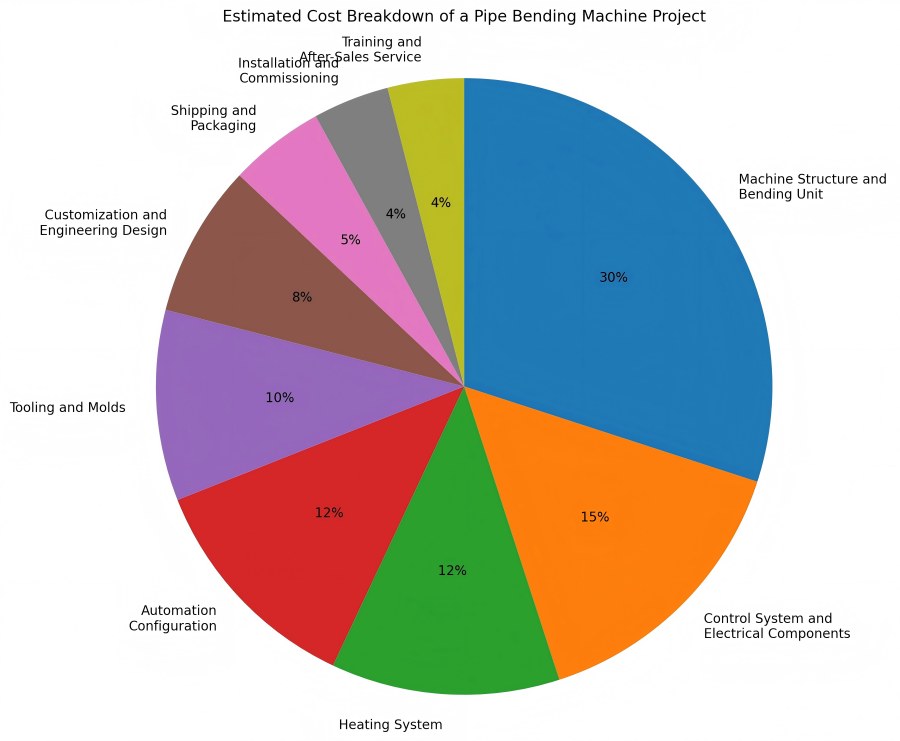
Shipping, Installation, and After-Sales Service
The total cost of buying a pipe bending machine includes more than the equipment price alone.
Buyers should also consider:
- Packaging costs
- Shipping charges
- Insurance
- Installation service
- Commissioning
- Operator training
- Spare parts packages
- Remote or on-site technical support
- Warranty terms
Sometimes two suppliers offer similar machine prices, but one quotation includes more service value. In other cases, a low equipment price may exclude important items, leading to higher total project cost later.