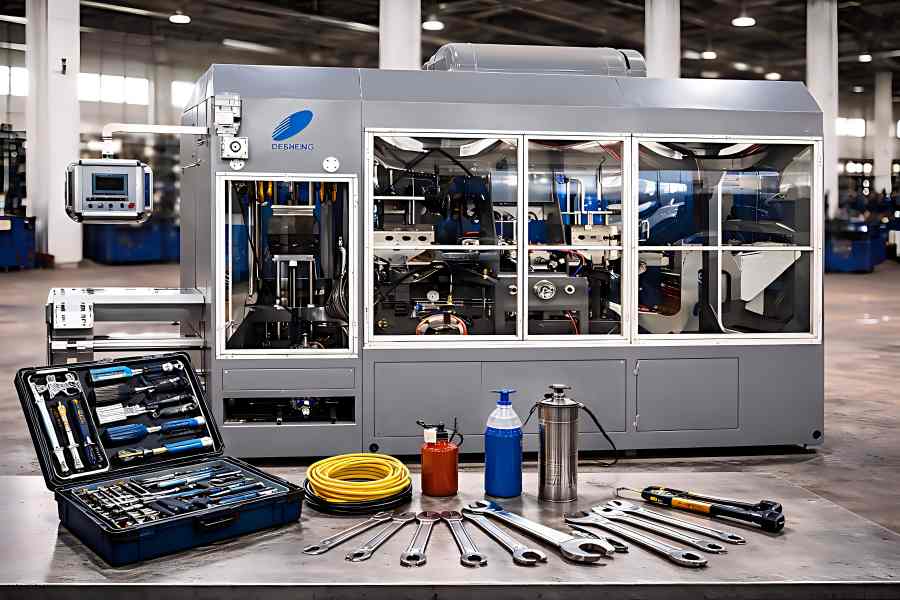
In plastic pipe manufacturing, a pipe bending machine directly affects product quality, efficiency, and delivery reliability. Routine maintenance helps ensure bending accuracy, minimize defects and downtime, and prolong the service life of the machine. Without proper care, small issues can grow into costly problems that affect both performance and long-term production stability.
Follow a Preventive Maintenance Schedule
One of the best ways to protect long-term machine performance is to build a preventive maintenance schedule rather than waiting for breakdowns.
Reactive maintenance is usually more expensive than planned maintenance. When a machine fails unexpectedly, the result may include urgent repairs, lost production time, delayed shipments, and damaged customer confidence. A preventive schedule reduces this risk by ensuring routine checks are completed before serious wear develops.
A typical maintenance plan may include:
- Daily cleaning and inspection
- Weekly lubrication and fastener checks
- Monthly alignment and heating system review
- Quarterly electrical inspection
- Periodic calibration of bending accuracy
- Annual deep inspection and component replacement review
The exact schedule depends on machine type, production volume, material being processed, and working environment. A high-output automatic pipe bending machine typically requires more frequent maintenance than a lightly used workshop unit.
The key point is consistency. Maintenance should become part of production management, not an occasional response to visible problems.
Keep the Machine Clean
Cleaning is one of the simplest but most important maintenance practices.
During normal operation, a pipe bending machine may accumulate dust, plastic residue, oil buildup, and debris around heating zones, molds, rollers, clamping units, and moving components. If this material is allowed to build up, it can interfere with machine movement, affect sensor performance, reduce heat transfer efficiency, and increase wear.
Daily cleaning should focus on:
- Mold surfaces
- Heating areas
- Clamping devices
- Guide rails
- Rollers and support points
- Sensor surfaces
- Operator panels and ventilation areas
Clean equipment is easier to inspect, easier to service, and less likely to hide developing problems. It also helps maintain product appearance, especially when bending visible or high-finish plastic pipe products.
However, cleaning should be done correctly. Operators should avoid using methods or chemicals that may damage electrical parts, protective coatings, or sensitive sensors. Safe cleaning procedures should be included in the machine’s maintenance instructions.
Inspect and Maintain the Heating System
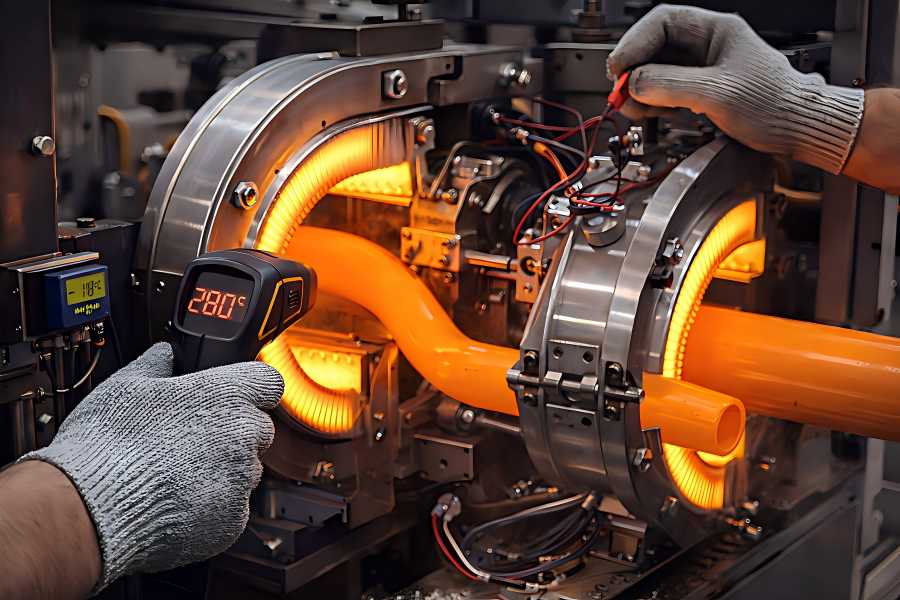
In many plastic pipe bending processes, the heating system is one of the most critical machine sections. If temperature control becomes unstable, bending quality will often decline immediately.
Poor heating performance can cause:
- Uneven bends
- Pipe flattening
- Surface burn marks
- Cracking
- Inconsistent angle formation
- Reduced process repeatability
To maintain the heating system properly, manufacturers should regularly check:
- Heating element condition
- Temperature sensor accuracy
- Heat distribution consistency
- Wiring and electrical connections
- Temperature controller response
- Signs of overheating or insulation damage
If the machine uses multiple heating zones, each zone should be checked to ensure balanced performance. A small temperature difference can affect material softening and create bending inconsistency.
It is also important to confirm that the heating system remains matched to the pipe materials being processed. Changes in product range may require updated heating parameters, and failure to adjust settings can place unnecessary stress on both the material and the machine.
Lubricate Moving Parts Properly
A pipe bending machine relies on many moving parts working together smoothly. Guide rails, bearings, shafts, slides, hinges, chain drives, and mechanical linkages can all suffer wear if lubrication is neglected.
Insufficient lubrication may lead to:
- Increased friction
- Noisy operation
- Reduced motion accuracy
- Component overheating
- Premature wear
- Higher energy consumption
At the same time, over-lubrication or improper lubricant selection can also create problems, especially if excess oil reaches molds, pipe surfaces, or heating zones.
Good lubrication practice includes:
- Following the manufacturer’s lubrication intervals
- Using the correct lubricant type
- Cleaning old grease or oil when necessary
- Monitoring for leakage or contamination
- Checking whether lubrication points are accessible and functional
A structured lubrication chart is often helpful, especially in larger factories where multiple operators and technicians work with the same equipment.
Check Mold and Tooling Condition
The quality of the bend depends heavily on the condition of the mold and tooling. Even if the rest of the machine is functioning well, worn or damaged tooling can still produce poor results.
Over time, molds may develop:
- Surface wear
- Small cracks
- Deformation
- Edge damage
- Poor fit with pipe size
- Residue buildup affecting contact quality
These issues can reduce bending accuracy and damage product appearance. For example, worn tooling may create inconsistent bend radii, pressure marks, or slight dimensional variation from one product to another.
Tooling maintenance should include:
- Visual inspection before production
- Cleaning after use
- Checking for signs of wear or misfit
- Proper storage to prevent impact damage
- Timely replacement of worn molds
If the machine runs several pipe sizes, mold organization is also important. Incorrect mold installation can cause setup errors and unnecessary downtime.
Monitor Bending Accuracy Regularly
Long-term machine performance is not measured only by whether the machine runs. It is measured by whether the machine still bends pipes accurately.
A pipe bending machine may continue operating while gradually losing precision. This can happen because of:
- Mechanical wear
- Sensor drift
- Mold wear
- Frame movement
- Positioning error
- Heating inconsistency
Manufacturers should therefore check bending accuracy regularly by measuring:
- Bend angle
- Radius consistency
- Symmetry
- Product repeatability
- Surface condition after bending
This can be done through routine sample inspection during production or through scheduled machine calibration checks. If a trend of deviation appears, the issue should be investigated early rather than corrected only after defect rates rise.
Accuracy monitoring is especially important for manufacturers producing fittings, conduit products, or custom bent pipes where angle precision directly affects installation performance.
Inspect Electrical Components and Wiring
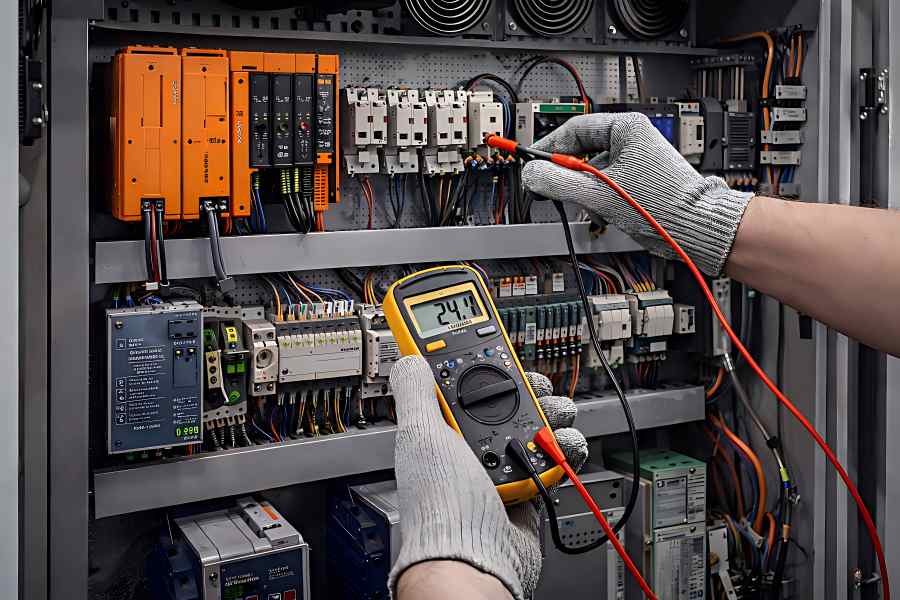
The electrical system is another key area in long-term maintenance. Modern pipe bending machines often depend on PLC controls, sensors, relays, touchscreens, heaters, motors, and safety circuits. Even minor electrical issues can affect both performance and safety.
Maintenance teams should inspect:
- Wiring condition
- Loose terminals
- Sensor response
- PLC alarms or abnormal signals
- Motor behavior
- Electrical cabinet cleanliness
- Cooling fans or ventilation passages
Dust, heat, moisture, and vibration can all affect electrical reliability over time. Poor connection quality may cause unstable heating, inaccurate movement, or sudden stoppage.
Electrical maintenance should always be performed by trained personnel. It is also good practice to keep records of recurring alarms or replaced components, as these can reveal underlying trends.
Tighten Fasteners and Check Structural Stability
Pipe bending machines operate under repeated motion and force. Over time, vibration and continuous use can loosen bolts, mounting points, clamping structures, and frame connections.
If structural parts lose stability, the machine may experience:
- Alignment drift
- Inconsistent bending position
- Additional vibration
- Reduced accuracy
- Accelerated wear on other components
Routine inspection should include:
- Base mounting bolts
- Frame connections
- Mold fixing points
- Support arm fasteners
- Drive system hardware
- Guard and cover attachments
This step is often overlooked because loose fasteners may not be obvious at first. However, small structural instability can gradually affect the whole machine.
Calibrate Sensors and Control Settings
Modern machines often use sensors for position control, temperature monitoring, limit detection, and process synchronization. If these sensors become dirty, misaligned, or inaccurate, machine performance may decline.
Sensor-related issues can lead to:
- Incorrect pipe positioning
- Irregular heating cycles
- Wrong bend starting points
- Faulty alarm behavior
- Reduced repeatability
Calibration checks should be part of the maintenance routine, especially for machines running demanding or high-volume production. Operators should also be trained to notice early signs of sensor problems, such as unexplained cycle interruptions or drifting output quality.
Control settings also deserve regular review. If parameters have been adjusted many times for different products, it is important to confirm that standard programs remain organized and accurate. Poor parameter management can cause production inconsistency even if the hardware is in good condition.
Maintain Proper Cooling and Ventilation
Many manufacturers pay attention to heating but overlook cooling and ventilation. Yet cooling performance can also influence machine life and process stability.
Electrical cabinets, motors, and heating control systems may need adequate ventilation to avoid overheating. If air pathways become blocked by dust or poor factory conditions, component life may be reduced.
Maintenance should include:
- Cleaning cabinet fans and filters
- Ensuring ventilation openings remain clear
- Checking cooling devices for proper operation
- Monitoring ambient heat around the machine
In hot workshops, this becomes even more important. High environmental temperature can increase stress on both electrical and mechanical systems.
Train Operators in Basic Maintenance Awareness
Long-term machine performance depends not only on technicians but also on operators.
Operators are typically the first to observe:
- Unusual noise
- Temperature irregularities
- Slower cycle time
- Product defects
- Abnormal vibration
- Control panel warnings
If operators are trained to recognize and report these early signs, small issues can be addressed quickly. Without this awareness, problems may continue unnoticed until production quality suffers.
Basic operator training should include:
- Daily inspection points
- Safe cleaning procedures
- Common warning signs
- Proper startup and shutdown methods
- Simple lubrication awareness
- When to stop the machine and request technical support
Well-trained operators help protect equipment and reduce avoidable damage caused by improper use.
Keep Maintenance Records
Maintenance becomes more effective when it is documented.
A maintenance log helps factories track:
- Inspection dates
- Lubrication history
- Replaced parts
- Heating system checks
- Calibration results
- Repeated issues
- Downtime causes
These records make it easier to identify patterns. For example, if the same sensor fails every few months, there may be a deeper issue with heat exposure, vibration, or incorrect installation.
Documentation also helps with planning spare parts, scheduling service, and improving long-term equipment management. In larger factories, this is especially valuable for standardizing maintenance across multiple machines.
Replace Worn Parts Before Failure
Waiting for a part to fail completely is rarely the best maintenance strategy. Components such as bearings, belts, heaters, seals, molds, and sensors often show signs of wear before total failure occurs.
Timely replacement helps avoid:
- Emergency stoppages
- Secondary damage to other parts
- Higher repair cost
- Product quality problems
- Delivery delays
A strong spare parts plan is important here. Critical wear parts should be identified in advance and kept available whenever possible. This reduces response time and helps avoid long production interruptions.
Work with the Original Manufacturer or Qualified Support Team
For long-term performance, technical support quality matters.
The original manufacturer or an experienced support team can help with:
- Correct maintenance intervals
- Troubleshooting recurring issues
- Recommended spare parts
- Software or parameter support
- Upgrade suggestions
- Calibration guidance
When buyers choose a pipe bending machine, after-sales service should be seen as part of the machine’s long-term value. Good support can significantly reduce maintenance risk and improve equipment lifespan.
Review Maintenance Strategy as Production Changes
Maintenance needs are not always fixed. As production volume, pipe materials, or product designs change, the maintenance strategy may also need adjustment.
For example:
- Higher production volume may require more frequent inspections
- New materials may increase heating system demands
- Larger pipe sizes may create more tooling wear
- Continuous operation may require more structured spare parts planning
Factories should periodically review whether their maintenance schedule still matches real machine use. A plan that worked well during low-volume operation may not be enough after production expansion.