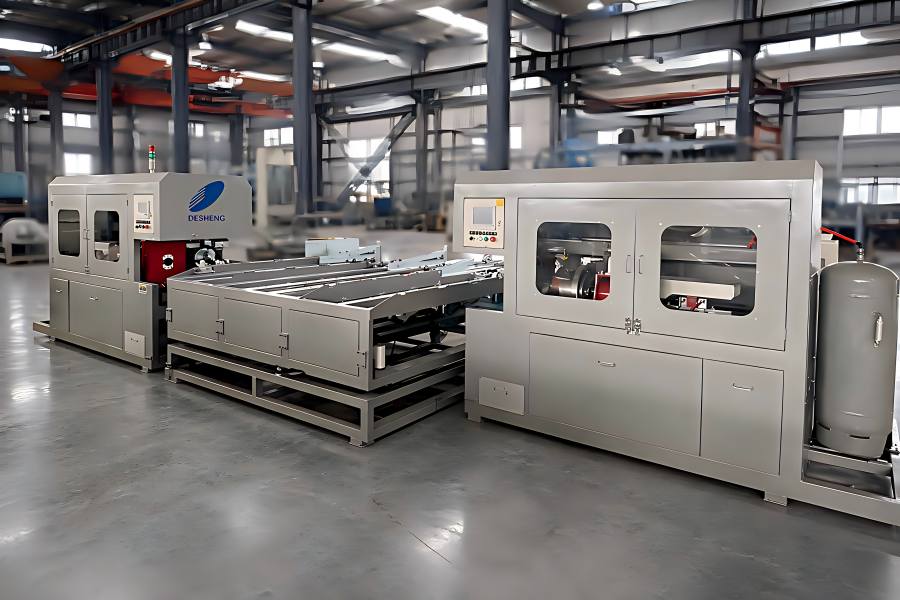
In pipe processing, thread cutting is essential for secure connections, reliable installation, and consistent product quality. A pipe thread cutting machine helps solve common production problems such as poor thread accuracy, leakage risks, low efficiency, and high labor dependence, making pipe manufacturing more stable and efficient.
Solving Inconsistent Thread Quality
One of the most common problems in pipe processing is inconsistent thread quality. When threads vary from one pipe to another, the product becomes unreliable. Some pipes may fit tightly, some may fit loosely, and some may not fit at all. This inconsistency creates trouble in assembly, inspection, and end-use performance.
Inconsistent thread quality often comes from:
- Manual processing errors
- Poor tool alignment
- Unstable cutting depth
- Operator skill differences
- Worn cutting dies
- Poor machine rigidity
- Unstable pipe clamping
A pipe thread cutting machine helps by:
- Maintaining stable cutting parameters
- Keeping the pipe aligned during processing
- Controlling thread depth more precisely
- Reducing variation caused by manual handling
- Producing more uniform threads across large quantities
This consistency is especially important for manufacturers supplying pipes that must match standardized fittings in local or export markets.
Solving Poor Connection Fit with Fittings
Another major issue in pipe processing is poor compatibility between the finished pipe and the mating fitting. A pipe may look correct visually, but if the thread is slightly wrong, it may fail during installation. This is a serious commercial problem because customers often judge product quality based on ease of assembly.
Poor thread fit can result in:
- Connections that feel too tight
- Threads that slip or loosen
- Cross-threading during installation
- Sealing failure
- Cracked fittings due to excessive force
- Rejected products at the customer site
A properly configured pipe thread cutting machine helps ensure that each thread is cut to the correct standard. This improves compatibility with:
- Couplings
- Elbows
- Unions
- Valves
- Adapters
- Threaded connectors
By improving thread accuracy, the machine reduces assembly problems and helps manufacturers deliver products that are easier for customers to install and trust.
Solving Leakage Risks Caused by Poor Thread Formation
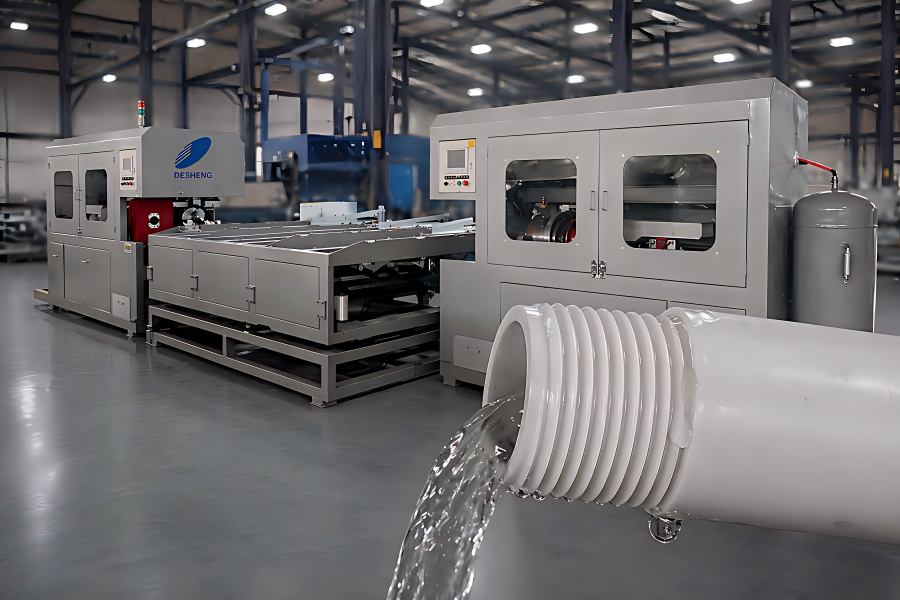
In pipe systems, leakage is one of the most serious end-use problems. Even when the pipe material is strong and the fitting is good, poor thread formation can still lead to sealing failure.
Leakage may be caused by:
- Incomplete thread profile
- Uneven thread depth
- Damaged thread crests
- Incorrect taper or pitch
- Rough thread surfaces
- Inaccurate thread length
When threads are not formed correctly, the connection may not engage properly or may fail to seal under pressure.
A pipe thread cutting machine improves thread precision and surface consistency, helping to reduce leakage risks by:
- Forming cleaner and more accurate threads
- Maintaining consistent dimensions
- Supporting repeatable production standards
- Reducing thread damage caused by unstable cutting
For manufacturers in plumbing, irrigation, or water-related pipe markets, this directly improves product reliability and customer confidence.
Solving Low Production Efficiency
Manual or poorly designed thread cutting processes often slow down the entire production line. Even when thread quality is acceptable, the output may be too low to meet growing demand. In competitive markets, low productivity increases cost and weakens delivery performance.
Low efficiency in pipe threading can result from:
- Too much manual labor
- Long setup times
- Slow thread cutting speed
- Frequent operator adjustment
- Repeated rework
- Tool replacement delays
- Poor machine ergonomics
A pipe thread cutting machine helps improve productivity by:
- Automating or simplifying the thread cutting process
- Reducing cycle time per pipe
- Improving repeatability, which reduces rework
- Supporting faster output for standardized products
- Reducing dependence on individual operator speed
In high-volume production, this can significantly improve manufacturing efficiency and help companies meet tighter delivery schedules.
Solving High Labor Dependence
Many pipe processors struggle with labor-related issues, including high labor cost, inconsistent operator skill, and difficulty training new workers. When thread quality depends too heavily on manual skill, production becomes unstable.
Heavy reliance on manual operation can create:
- Quality variation between shifts
- Higher labor cost
- Longer training cycles
- Greater risk of human error
- Lower scalability when production expands
A modern pipe thread cutting machine reduces labor dependence by making the process more standardized. Even semi-automatic models can help by:
- Simplifying setup and operation
- Making results less dependent on operator experience
- Improving consistency across different workers
- Reducing the number of manual correction steps
Automatic pipe thread cutting machines go even further by improving output while lowering the variability associated with manual processing.
Solving Thread Damage Caused by Improper Manual Handling
When threads are cut manually or with unstable equipment, the finished pipe ends may suffer from physical damage. This damage may include chipped threads, rough surfaces, burrs, incomplete profiles, or deformed pipe ends.
Thread damage may happen because of:
- Poor clamping
- Incorrect feed rate
- Misaligned cutting tools
- Excessive force during cutting
- Inadequate machine stability
- Worn dies or blades
A pipe thread cutting machine is designed to control the cutting process more reliably. It helps protect the pipe end by:
- Holding the pipe more securely
- Maintaining proper alignment
- Cutting with consistent force
- Reducing sudden movement during machining
- Producing cleaner thread edges
This improves both the appearance and function of the finished product.
Solving Problems with Different Pipe Sizes
Pipe manufacturers often process a range of pipe diameters, wall thicknesses, and product types. One challenge is maintaining thread quality across different pipe specifications. A process that works for one size may not work well for another.
Different pipe sizes require different:
- Clamping force
- Thread depth
- Tool settings
- Feed speed
- Support methods
Without suitable equipment, changing from one size to another can increase setup errors and reduce efficiency.
A versatile pipe thread cutting machine can be configured for different pipe sizes more easily. This helps manufacturers:
- Switch between product specifications more efficiently
- Maintain thread quality across multiple sizes
- Reduce setup-related errors
- Improve flexibility for customized orders
This is particularly valuable for manufacturers serving diverse customer needs or export markets.
Solving Problems Related to Thread Standards
Different industries and regions use different thread standards. If the thread does not match the required standard, the pipe may be unusable even if the material and dimensions are otherwise correct.
Problems often occur when manufacturers:
- Use the wrong tooling
- Confuse thread standards
- Fail to adjust machine settings properly
- Produce threads that do not match customer fittings
A pipe thread cutting machine designed for standard compliance can help manufacturers produce threads according to required specifications, such as:
- Different pitch requirements
- Different thread profiles
- Tapered or straight thread forms
- Market-specific standards
This reduces the risk of rejected export orders or field installation problems caused by thread mismatch.
Solving Excessive Rework and Scrap
Poorly cut threads often lead to rework. In some cases, the pipe can be reprocessed. In other cases, it must be scrapped completely. Both situations increase cost and reduce production efficiency.
Common causes include:
- Wrong thread depth
- Damaged thread profile
- Inconsistent dimensions
- Misalignment during cutting
- Poor fit with mating parts
A pipe thread cutting machine reduces rework and scrap by improving first-pass accuracy. When threads are cut correctly the first time, manufacturers benefit from:
- Less material waste
- Lower labor cost for corrections
- Higher usable output
- Better production flow
Over time, this can have a major impact on profitability, especially in large-scale production.
Solving Poor Surface Finish on Threaded Ends
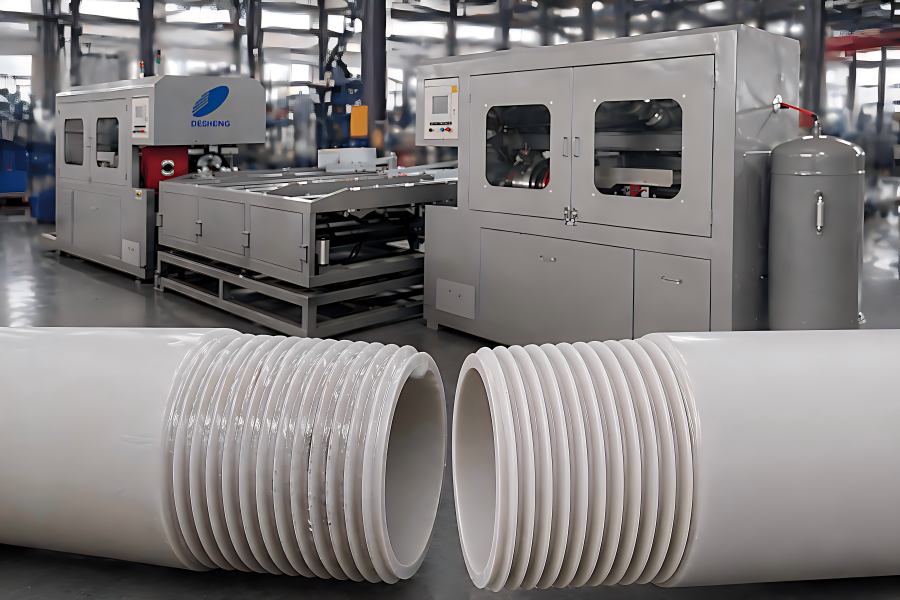
The quality of the thread is not only about dimensions. Surface finish also matters. Rough or damaged thread surfaces can create installation resistance, sealing issues, or a poor product appearance.
This problem may come from:
- Dull cutting tools
- Incorrect speed settings
- Pipe vibration during cutting
- Poor material support
- Improper die condition
A stable pipe thread cutting machine helps create a cleaner thread finish by:
- Holding the pipe steadily
- Using controlled cutting action
- Supporting better tool positioning
- Reducing vibration and chatter
A smoother, cleaner thread improves both function and perceived product quality.
Solving Downtime Caused by Unstable Threading Operations
Unstable threading operations can interrupt production frequently. Jams, cutting defects, poor alignment, and repeated adjustments all reduce effective operating time.
Downtime affects:
- Output volume
- Delivery schedules
- Labor utilization
- Production cost
- Machine availability
A well-designed pipe thread cutting machine helps reduce downtime through:
- More stable operation
- Better mechanical alignment
- Easier parameter control
- Reduced manual intervention
- Faster and more predictable workflow
When combined with good maintenance practices, the machine helps support smoother day-to-day production.
Solving Production Bottlenecks in Secondary Processing
In many factories, pipe extrusion may run efficiently, but downstream operations such as thread cutting become bottlenecks. This creates an imbalance in the production line.
A threading bottleneck may show up as:
- Pipe accumulation before thread cutting
- Idle time in downstream packing or inspection
- Delayed order completion
- Excessive overtime in finishing stages
A higher-efficiency pipe thread cutting machine helps align secondary processing capacity with the rest of the line. This improves:
- Workflow balance
- Line productivity
- Space utilization
- Order handling capacity
The result is a smoother and more scalable production process.
Solving Problems in High-Volume Standardized Production
For manufacturers producing large volumes of the same threaded pipe products, consistency and speed are both essential. Small quality fluctuations become much more costly when repeated across thousands of units.
Typical problems include:
- Quality drift over long runs
- Tool wear affecting thread consistency
- Operator fatigue in repetitive work
- Slow output compared with market demand
A pipe thread cutting machine designed for continuous production can help maintain quality over longer runs. This allows manufacturers to:
- Produce standardized products more reliably
- Reduce fatigue-related variation
- Improve batch consistency
- Support larger order volumes more confidently
This is particularly important for OEM supply, wholesale markets, and export manufacturing.
How to Maximize the Problem-Solving Value of a Pipe Thread Cutting Machine
Buying the right machine is important, but getting the most value from it also depends on proper use. Manufacturers should focus on:
- Choosing the correct tooling
- Training operators well
- Maintaining dies and clamping systems
- Verifying thread quality regularly
- Matching settings to each pipe specification
- Monitoring wear before defects appear
A good machine performs best when it is part of a disciplined production and quality control system.