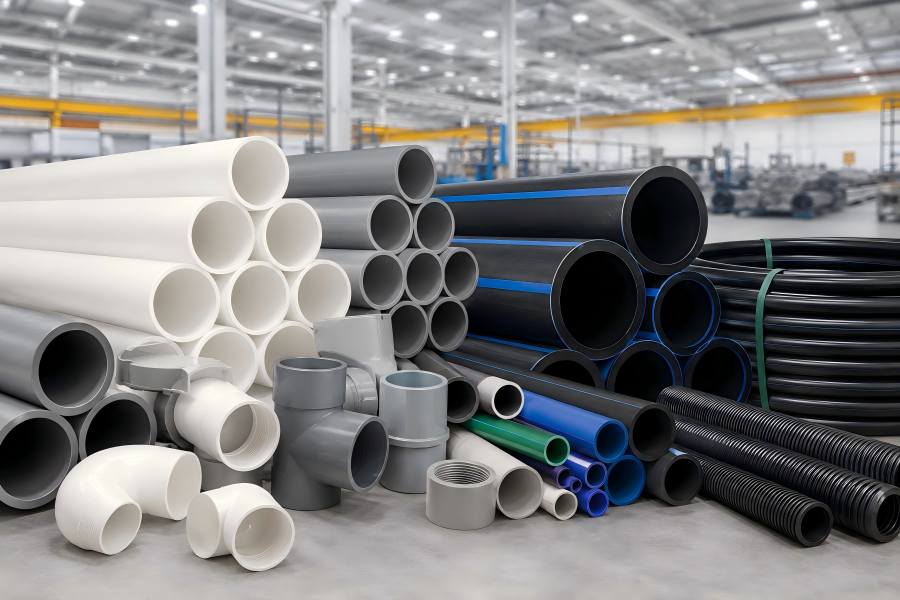
Plastic pipes are used in plumbing, infrastructure, irrigation, and industry due to their lightweight, corrosion resistance, and low cost. However, different materials vary in strength and performance, and incorrect selection may cause leaks, deformation, or safety issues.
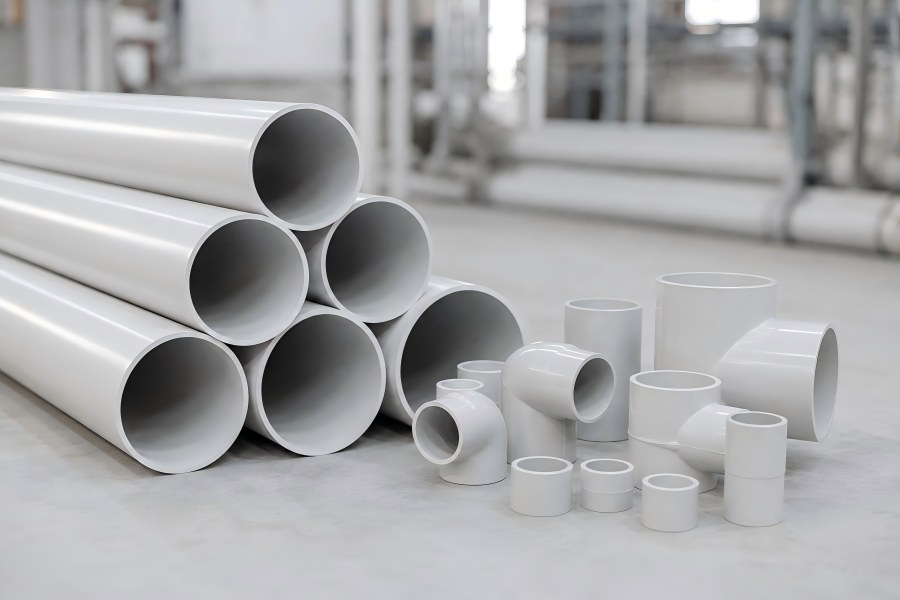
PVC Pipes
PVC, or polyvinyl chloride, is a widely used plastic pipe material for water supply, drainage, sewer systems, electrical conduit, irrigation, and construction applications.
PVC pipes are rigid, lightweight, corrosion-resistant, and relatively easy to install. They are especially popular for non-pressure drainage systems and cold-water applications. Depending on the formulation and pressure rating, PVC pipes can be used for both above-ground and underground piping systems.
Common Applications of PVC Pipes
| Application | Description |
| Drainage systems | Used for residential, commercial, and municipal drainage |
| Sewer pipes | Suitable for underground wastewater transport |
| Irrigation | Common in agricultural and landscape irrigation |
| Electrical conduit | Protects electrical cables and wiring |
| Cold water supply | Used in some pressure-rated water systems |
Advantages of PVC Pipes
PVC pipes are cost-effective, easy to cut, and corrosion-resistant. They do not rust like metal pipes and are suitable for many construction and infrastructure projects. Their smooth inner wall also helps reduce flow resistance.
Limitations of PVC Pipes
PVC pipes are not suitable for high-temperature hot water systems and may become brittle under prolonged UV exposure without protection. They also require proper fittings, adhesives, and installation conditions for reliable performance.
CPVC Pipes
A modified form of PVC with improved heat resistance is called CPVC, or chlorinated polyvinyl chloride. Because CPVC can tolerate higher temperatures than ordinary PVC, it is commonly used for hot and cold water plumbing systems.
In both residential and commercial structures, CPVC pipes are frequently encountered, particularly in hot water distribution lines. They are still lightweight and resistant to corrosion, but they are more heat-resistant than PVC.
Common Applications of CPVC Pipes
| Application | Description |
| Hot water plumbing | Suitable for domestic hot water systems |
| Cold water plumbing | Used in residential and commercial water lines |
| Industrial fluid transport | Used for certain chemical fluids |
| Fire sprinkler systems | Used in selected approved systems |
Advantages of CPVC Pipes
CPVC offers better temperature resistance than PVC and is easier to install than many metal piping systems. It also resists corrosion and scaling, making it useful for plumbing applications.
Limitations of CPVC Pipes
CPVC is generally more costly than PVC. It can become brittle in certain conditions and may require specific solvent cement and compatible fittings. It is also less flexible than PEX or PE pipes.
HDPE Pipes
HDPE, or high-density polyethylene, is a strong, flexible, and durable plastic pipe material used in water supply, gas distribution, mining, drainage, irrigation, cable protection, and industrial pipelines.
Known for excellent impact resistance, chemical resistance, and flexibility, HDPE pipes can be joined by heat fusion to create strong, leak-resistant connections. Their toughness makes them suitable for underground installation and demanding environments.
Common Applications of HDPE Pipes
| Application | Description |
| Water supply | Used for municipal and rural water systems |
| Gas distribution | Common for natural gas pipelines |
| Mining pipelines | Transports slurry, chemicals, and process water |
| Drainage systems | Used for stormwater and culverts |
| Cable protection | Protects power and communication cables |
| Irrigation | Used in agricultural water delivery |
Advantages of HDPE Pipes
HDPE pipes are flexible, impact-resistant, and highly resistant to corrosion and chemicals. They are appropriate for trenchless installation techniques and are more resilient to ground movement than rigid pipes. Heat-fused joints also reduce leakage risk.
Limitations of HDPE Pipes
HDPE pipes may require specialized welding equipment and trained operators for fusion joining. It may not be compatible with all chemical exposure conditions. Long-term UV exposure may also require UV-stabilized material or protection.
LDPE Pipes
Compared to HDPE, LDPE, or low-density polyethylene, is more flexible and softer. LDPE pipes are commonly used in low-pressure applications, especially irrigation, garden watering, drip systems, and small agricultural pipelines.
Because LDPE is simple to install and bend, it can be used in situations where flexibility is more crucial than high pressure strength.
Common Applications of LDPE Pipes
| Application | Description |
| Drip irrigation | Used for agricultural and garden watering |
| Low-pressure water lines | Suitable for light-duty water delivery |
| Greenhouse systems | Used in horticultural irrigation |
| Flexible tubing | Used in small fluid transfer systems |
Advantages of LDPE Pipes
LDPE pipes are lightweight, incredibly flexible, and manageable. They work well with straightforward installs and curved layouts. They are also impervious to dampness and a variety of substances.
Limitations of LDPE Pipes
LDPE pipes are not suitable for high-pressure systems. Compared to HDPE, their strength and resilience to temperature are lesser. For larger infrastructure projects, HDPE is usually preferred.
PEX Pipes
Plumbing systems in homes and businesses frequently use cross-linked polyethylene, or PEX. PEX pipes are adaptable, simple to set up, and appropriate for both hot and cold water supplies.
Because it requires fewer fittings in plumbing systems, PEX has grown in popularity. Because of its flexibility, it can bend around corners to decrease potential leakage spots and shorten installation times.
Common Applications of PEX Pipes
| Application | Description |
| Hot and cold water plumbing | Common in residential buildings |
| Heating with radiant floors | Utilized in underfloor heating systems |
| Snow melting systems | Used in outdoor heating applications |
| Building water distribution | Suitable for flexible water supply layouts |
Advantages of PEX Pipes
PEX pipes are simple to install, flexible, and resistant to freezing temperatures. They are appropriate for quick plumbing installation and require fewer joints than rigid pipes. Additionally, PEX is resistant to corrosion and scale accumulation.
Limitations of PEX Pipes
PEX is generally not suitable for outdoor applications with direct sunlight unless protected. It may not be compatible with all chemical exposure conditions. Some systems also require specific fittings, crimp rings, expansion fittings, or press connections.
PP Pipes
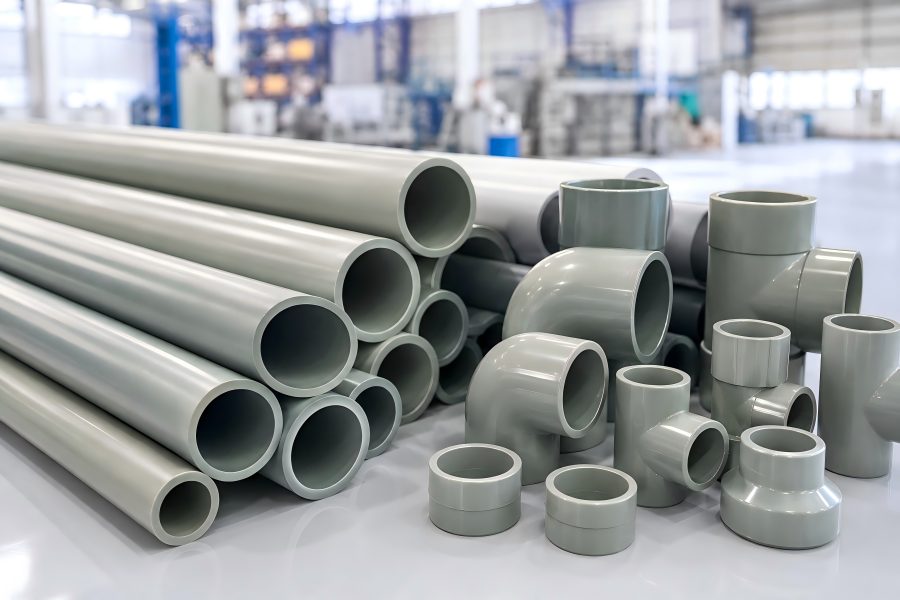
Polypropylene, or PP, is a plastic pipe material that is renowned for its durability, heat resistance, and resistance to chemicals. Chemical drainage, laboratory waste systems, hot and cold water systems, and industrial piping all use PP pipes.
PP pipes come in a variety of forms, such as PP-R, PP-H, and PP-B. Among these, PP-R pipes are frequently employed in buildings to supply hot and cold water.
Common Applications of PP Pipes
| Application | Description |
| Hot and cold water systems | Common for PP-R plumbing |
| Chemical piping | Used for acids, alkalis, and industrial fluids |
| Laboratory drainage | Suitable for corrosive waste systems |
| Industrial ventilation | Used in certain exhaust systems |
| Food and beverage systems | Used where material compatibility allows |
Advantages of PP Pipes
PP pipes have good heat resistance, chemical resistance, and long service life. PP-R pipes are often joined by heat fusion, creating strong and leak-resistant joints. Additionally, PP is resistant to a wide range of acids and alkalis.
Limitations of PP Pipes
Because PP pipes expand in response to temperature variations, thermal movement must be accommodated during installation. They may also require professional heat fusion tools. In some markets, PP systems may be less common than PVC, PEX, or HDPE.
ABS Pipes
ABS, or acrylonitrile butadiene styrene, is a rigid plastic pipe material commonly used for drain, waste, and vent systems. ABS pipes are usually black and are known for impact resistance and simple installation.
ABS is often used in residential and commercial drainage systems, especially where lightweight and easy handling are important.
Common Applications of ABS Pipes
| Application | Description |
| Drainage piping | Used for building wastewater systems |
| Waste pipes | Carries non-pressure waste flow |
| Vent pipes | Used in plumbing vent systems |
| Underground drainage | Used in some building drainage projects |
Advantages of ABS Pipes
ABS pipes are simple to install, lightweight, and resistant to impact. They are frequently utilized in non-pressure drainage systems and can function effectively in low temperatures.
Limitations of ABS Pipes
Pressurized water supplies often do not employ ABS. High temperatures may cause it to distort, and UV protection may be necessary. The preference for PVC or ABS may also be determined by local construction codes.
PVDF Pipes
High-performance plastic pipes made of polyvinylidene fluoride, or PVDF, are utilized in demanding industrial settings. PVDF pipes offer excellent chemical resistance, high purity, and good temperature resistance.
PVDF is often used in chemical processing, semiconductor manufacturing, pharmaceutical production, water treatment, and high-purity fluid systems.
Common Applications of PVDF Pipes
| Application | Description |
| Chemical processing | Handles aggressive chemicals |
| Semiconductor industry | Used for high-purity fluid transport |
| Pharmaceutical systems | Suitable for clean processing environments |
| Water treatment | Used in special chemical dosing systems |
| Industrial fluid handling | Suitable for demanding process lines |
Advantages of PVDF Pipes
PVDF pipes have excellent resistance to many chemicals and can handle higher temperatures than many standard plastic pipes. They also offer good mechanical strength and purity.
Limitations of PVDF Pipes
PVDF is much more expensive than common plastic pipe materials such as PVC, HDPE, or PP. It is usually selected only when performance requirements justify the higher cost.
PE-RT Pipes
Polyethylene of higher temperature resistance, or PE-RT, is a kind of polyethylene pipe intended for heating and hot and cold water systems. It is commonly used in underfloor heating and plumbing systems.
PE-RT pipes are flexible like PEX but do not require cross-linking. They are designed to resist higher operating temperatures compared with standard polyethylene pipes.
Common Applications of PE-RT Pipes
| Application | Description |
| Underfloor heating | Common in radiant heating systems |
| Hot and cold water | Used in building plumbing systems |
| Heating pipelines | Suitable for low-temperature heating systems |
| Multilayer composite pipes | Used as part of aluminum-plastic composite structures |
Advantages of PE-RT Pipes
PE-RT pipes are flexible, easy to install, and suitable for heating systems. They can be welded or used in multilayer pipe designs. Their flexibility allows easy installation in building systems.
Limitations of PE-RT Pipes
PE-RT pipes may have lower long-term temperature and pressure performance than some higher-grade piping materials, depending on the application. Proper pressure rating and temperature rating must be checked before use.
Composite Plastic Pipes
Composite plastic pipes combine plastic materials with reinforcement layers to improve strength, temperature resistance, pressure resistance, or dimensional stability. A common example is PEX-AL-PEX or PE-RT-AL-PE-RT, which includes an aluminum layer between plastic layers.
Composite pipes are often used in plumbing, heating, gas, and building water systems.
Common Applications of Composite Pipes
| Application | Description |
| Hot and cold water plumbing | Used in building water distribution |
| Heating systems | Common in radiator and floor heating systems |
| Gas distribution inside buildings | Used where approved by standards |
| Industrial fluid systems | Used for selected medium-pressure applications |
Advantages of Composite Pipes
Composite pipes offer better shape stability than flexible plastic pipes. The aluminum layer can reduce oxygen diffusion and thermal expansion. They are also easier to bend and shape compared with rigid metal pipes.
Limitations of Composite Pipes
Composite pipes require compatible fittings and installation tools. Damage to the layers may affect performance. They are also usually more expensive than standard single-material plastic pipes.
Plastic Pipe Comparison Table
| Pipe Type | Flexibility | Heat Resistance | Pressure Use | Common Applications |
| PVC | Low | Low to medium | Yes, depending on rating | Drainage, conduit, irrigation, cold water |
| CPVC | Low | Higher than PVC | Yes | Hot and cold water plumbing |
| HDPE | High | Medium | Yes | Water, gas, drainage, mining, cable protection |
| LDPE | Very high | Low to medium | Low pressure | Drip irrigation, flexible tubing |
| PEX | High | Good | Yes | Plumbing, heating systems |
| PP / PP-R | Medium | Good | Yes | Hot water, chemical piping, industrial systems |
| ABS | Low | Medium | Usually non-pressure | Drain, waste, vent systems |
| PVDF | Medium | High | Yes | Chemical, pharmaceutical, high-purity systems |
| PE-RT | High | Good | Yes, depending on rating | Floor heating, hot and cold water |
| Composite Pipe | Medium to high | Good | Yes | Plumbing, heating, gas systems |
How to Choose the Right Plastic Pipe
Choosing the right plastic pipe depends on the working environment, fluid type, pressure, temperature, installation method, and project standards.
Consider the transported medium
For clean water, PVC, CPVC, PEX, PP-R, HDPE, and PE-RT may all be options depending on temperature and pressure. Based on chemical compatibility, PP, PVDF, PVC, or CPVC may be chosen for chemical fluids.
Check temperature requirements
For cold water and drainage, PVC or HDPE may be suitable. For hot water, CPVC, PEX, PP-R, or PE-RT are more common. For high-temperature industrial fluids, PVDF or special PP systems may be required.
Evaluate pressure rating
Not all plastic pipes are pressure pipes. ABS drainage pipe and many PVC drainage pipes are used for non-pressure flow. For pressurized systems, choose pipes with proper pressure ratings and certified fittings.
Consider installation conditions
Underground installation may require impact resistance, flexibility, and resistance to soil movement. HDPE is often preferred for underground water, gas, and cable protection systems. Indoor plumbing may use PEX, CPVC, PP-R, or composite pipes.
Think about joining methods
Different plastic pipes use different joining methods, including solvent cement, heat fusion, mechanical fittings, crimp fittings, compression fittings, and electrofusion. The available tools and installer experience can influence pipe selection.