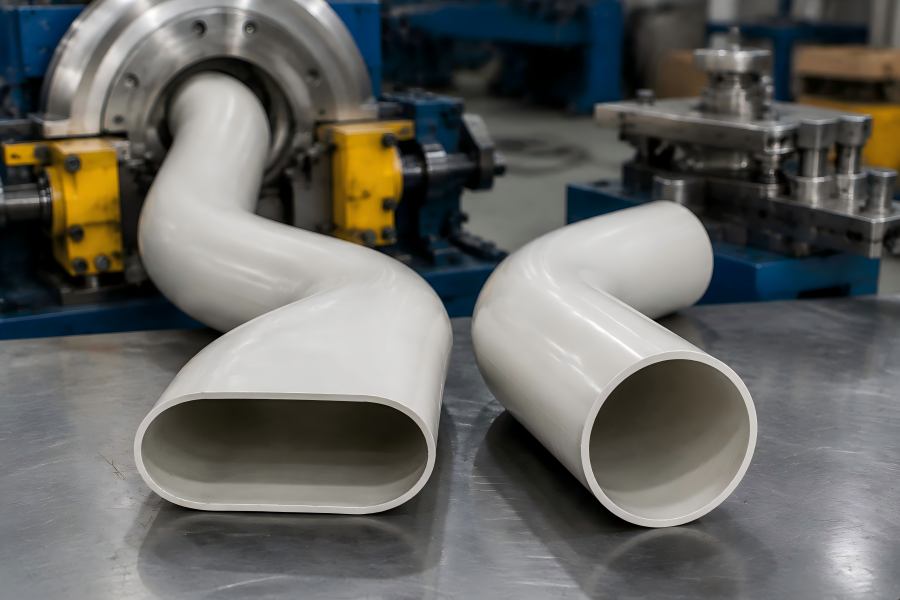
PVC pipe flattening is a common defect during bending, especially with thin walls, tight radii, or uneven heating. Excessive ovality can reduce flow area, dimensional accuracy, and installation reliability.
Understanding the causes helps manufacturers optimize heating, support, tooling, bending speed, and cooling for more consistent production.
What Does PVC Pipe Flattening Mean?
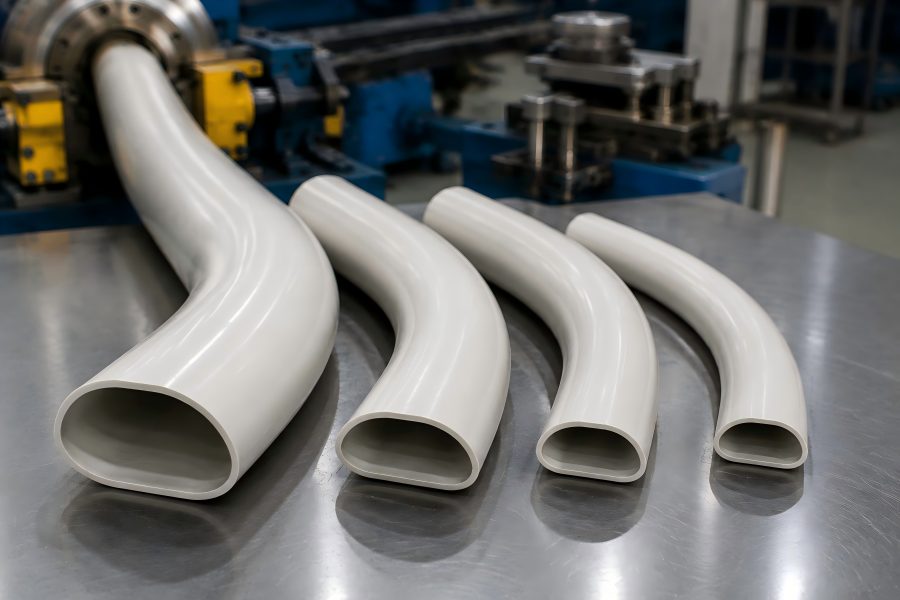
PVC pipe flattening occurs when the circular cross-section becomes oval or partially collapsed during bending. It is most noticeable at the bend center, where tensile, compressive, and radial forces are strongest.
When bending occurs, the outer wall stretches while the inner wall compresses, leading to inward deformation of the cross-section. Some ovality is unavoidable, so the goal is to keep deformation within the required dimensional limits.
A simple way to evaluate ovality is to compare the maximum and minimum outside diameters at the bent section:
Ovality (%) = (Maximum OD − Minimum OD) / Original OD × 100
For example, if a 50 mm PVC pipe measures 52 mm across its widest direction and 48 mm across its narrowest direction after bending:
Ovality = (52 − 48) / 50 × 100 = 8%
The acceptable value depends on the pipe design, application, customer specification, and relevant product standard.
Why Does PVC Pipe Flatten During Bending?
PVC pipe flattening is mainly caused by bending radius, wall thickness, heating conditions, support methods, tooling, bending speed, and cooling. These factors affect how the softened pipe responds to tensile, compressive, and radial forces.
Understanding each factor helps manufacturers identify deformation causes and optimize the bending process.
Tight Bending Radius
Bending radius is one of the most important factors affecting PVC pipe flattening.
When the bending radius becomes smaller, deformation is concentrated within a shorter section of pipe. The outside wall must stretch further, while the inside wall experiences stronger compression.
These forces also create greater cross-sectional distortion.
A larger bending radius distributes deformation across a longer pipe section, making it easier to maintain roundness.
Bending radius is commonly expressed as a multiple of pipe outside diameter:
- 3D = three times the outside diameter
- 4D = four times the outside diameter
- 5D = five times the outside diameter
For example, a 50 mm pipe with a 4D bending radius would have a centerline radius of approximately 200 mm.
As a general process reference, PVC pipe bending may use radii around 3D–8D, depending on wall thickness, material formulation, heating conditions, and required geometry. Tight-radius products usually require better internal support and more precise process control.
Thin Pipe Walls
Wall thickness directly affects the pipe’s ability to resist collapse.
A thick-wall PVC pipe generally has greater radial stiffness and can better maintain its circular cross-section during bending. A thin-wall pipe is more sensitive to forming pressure and may flatten even when the bending angle appears correct.
Consider two pipes with the same 100 mm outside diameter:
| Pipe | Outside Diameter | Wall Thickness | OD/Wall Ratio |
| Pipe A | 100 mm | 3 mm | 33.3 |
| Pipe B | 100 mm | 6 mm | 16.7 |
Pipe A has a much thinner wall relative to its diameter and generally requires greater support during bending.
For thin-wall products, manufacturers may need to use:
- Internal mandrels
- Flexible support cores
- Improved external dies
- Lower forming speeds
- More carefully controlled heating
Excessive Heating
PVC must be heated sufficiently before bending, but excessive softening can increase flattening.
When the bending section becomes too soft, its ability to resist radial compression decreases. Even moderate clamping or forming force can then distort the cross-section.
Possible signs of overheating include:
- Excessive flattening
- Surface impressions
- Local wall distortion
- Irregular bend geometry
- Loss of dimensional stability
PVC bending temperatures may commonly be controlled within approximately 120–160°C for certain production processes, but this should not be treated as a universal setting. PVC formulations, wall thicknesses, machine designs, and heating methods differ significantly.
The correct temperature is the lowest stable process temperature that provides sufficient flexibility without causing excessive softening or material degradation.
Uneven Heating
Temperature uniformity is just as important as the target temperature.
If one side of the pipe becomes significantly softer than another, the softer area will deform more easily during bending. This can produce an asymmetrical cross-section rather than uniform ovality.
Uneven heating may result from:
- Incorrect heater positioning
- Damaged heating elements
- Inconsistent pipe rotation
- Excessive distance from the heater
- Poor heating-zone design
Multi-zone or circumferential heating can provide better temperature distribution for larger pipes and demanding bends.
Manufacturers should also ensure that the entire bending section is heated rather than concentrating heat only at the center of the bend.
Insufficient Internal Support
Lack of internal support is one of the most direct causes of PVC pipe flattening.
When a softened hollow pipe is bent without internal resistance, the cross-section can collapse inward under forming forces.
Internal support helps counteract this deformation.
Common methods include:
Internal Mandrels
A mandrel is positioned inside the pipe near the bending area. It supports the inner wall and helps maintain the original diameter.
Mandrels are particularly useful for:
- Thin-wall PVC pipes
- Tight bending radii
- Products requiring low ovality
Flexible Support Cores
Flexible cores can follow the curved geometry during bending while supporting the internal surface.
They are useful when rigid support cannot follow the required bend.
Internal Inserts
Customized inserts can be designed according to specific pipe diameters and bend geometries.
They provide localized support in areas where deformation is most likely to occur.
The correct internal support should provide sufficient resistance without damaging the heated inner pipe surface.
Incorrect External Tooling
Internal support alone cannot guarantee good bending quality. External dies, clamps, rollers, and guides must also match the pipe dimensions.
If a bending die is too large, the pipe may not receive sufficient support.
If it is too small, excessive local pressure may produce:
- Surface marks
- Wall indentation
- Local flattening
The tooling should match:
- Pipe outside diameter
- Wall thickness
- Bend radius
- Bending angle
Precision tooling distributes forming pressure more evenly and helps the pipe retain its intended geometry.
Excessive Clamping Pressure
The pipe must be held securely during bending, but excessive clamping force can deform softened PVC before the actual bend is completed.
This problem becomes more serious when:
- Pipe walls are thin
- Heating temperature is high
- Clamp contact area is small
Clamping pressure should therefore be sufficient to prevent slipping without compressing the pipe unnecessarily.
Wider contact surfaces and correctly shaped clamping profiles can also distribute pressure more evenly.
Improper Bending Speed
Bending too quickly can cause the pipe material to deform unevenly.
The softened PVC needs enough time to redistribute stress during forming. Excessive bending speed can increase:
- Flattening
- Wrinkling
- Angle instability
- Surface deformation
However, extremely slow bending is not always better. If the forming cycle is too long, the pipe may cool unevenly during bending, resulting in inconsistent material behavior.
A programmable PVC pipe bending machine allows bending speed to be matched to pipe diameter, wall thickness, heating condition, and required radius.
Incorrect Heating Length
Heating only a very short section concentrates deformation within a limited area.
Even when the target temperature is correct, insufficient heating length can create a sharp transition between softened and rigid pipe sections.
This may cause:
- Local flattening
- Sharp bend transitions
- Wrinkles
- Excessive wall stretching
The heated zone should correspond to the required bending radius and angle.
A larger-radius or larger-angle bend normally requires a longer controlled heating zone than a small-angle bend.
Improper Cooling and Shape Stabilization
The bending process does not end when the pipe reaches the required angle.
After forming, PVC remains relatively soft until its temperature falls sufficiently. Removing the pipe from the mold or support too early can allow the cross-section to change.
Possible problems include:
- Increased ovality
- Springback
- Angle deviation
- Local distortion
The pipe should remain properly supported during the initial cooling stage.
Depending on machine configuration, manufacturers may use:
- Natural air cooling
- Forced air cooling
- Water cooling
- Combined cooling systems
The cooling method should stabilize the pipe without creating excessive temperature gradients.
How Bending Radius Affects PVC Pipe Flattening
Bending radius deserves particular attention because it influences almost every other process parameter.
As the radius decreases:
- Outer-wall elongation increases
- Inner-wall compression increases
- Radial deformation becomes stronger
- Internal support becomes more important
A simplified production reference is shown below:
| Bending Radius | Relative Forming Difficulty | Support Requirement | Flattening Risk |
| 6D–8D | Low | Low–Medium | Lower |
| 4D–6D | Medium | Medium | Moderate |
| 3D–4D | High | Medium–High | Higher |
| Below 3D | Very High | High | Very High |
These ranges are process references rather than universal design limits. Actual performance depends on pipe material, wall thickness, temperature, tooling, and machine capability.
How to Prevent PVC Pipe Flattening
Preventing flattening requires controlling the entire process rather than adjusting a single parameter.
Select an Appropriate Bending Radius
Whenever product design permits, increasing the bending radius is one of the simplest ways to reduce deformation.
A larger radius distributes forming stress over a longer pipe section and reduces cross-sectional collapse.
When a tight radius is unavoidable, manufacturers should compensate with:
- Better internal support
- More accurate heating
- Precision dies
- Controlled forming speed
Optimize Heating Temperature and Time
The objective is to soften the pipe enough for bending while maintaining sufficient structural resistance against collapse.
Manufacturers should establish different parameter recipes according to:
- Outside diameter
- Wall thickness
- PVC formulation
- Bend radius
- Bend angle
A thick-wall 110 mm pipe should not automatically use the same heating time as a thin-wall 50 mm pipe.
Improve Heating Uniformity
Heating should cover the complete forming zone as evenly as possible.
Manufacturers can improve uniformity through:
- Multi-zone heaters
- Controlled pipe rotation
- Accurate temperature sensors
- Proper heater positioning
- Regular heating-element inspection
Reducing temperature differences around the circumference helps produce more symmetrical bends.
Use Internal Support
Internal support is particularly important for demanding products.
Mandrels or flexible cores can significantly improve cross-sectional stability when processing:
- Thin-wall pipes
- Large-diameter pipes
- Tight-radius bends
- High-accuracy components
Support geometry should be matched carefully to the pipe’s internal diameter.
Match Tooling to the Pipe
Dies and clamps should correspond closely to the pipe diameter and required radius.
Properly matched tooling provides more uniform external support and reduces concentrated pressure.
For manufacturers processing multiple sizes, interchangeable tooling can provide a balance between production flexibility and dimensional control.
Control Bending and Clamping Force
More force does not necessarily produce better bends.
Excessive forming or clamping pressure can increase flattening, particularly after the PVC has been softened.
Servo or hydraulic control allows the machine to apply stable, repeatable movement rather than relying entirely on operator judgment.
Stabilize the Pipe During Cooling
The pipe should remain supported until the bend has developed sufficient dimensional stability.
For high-volume production, controlled air or water cooling can shorten cycle time while maintaining consistent geometry.
Recommended Process Parameters for Reducing Flattening
The following table provides general starting references for process development:
| Parameter | Typical Reference | Main Purpose |
| Heating Temperature | 120–160°C | Provide controlled softening |
| Bending Radius | 3D–8D | Control forming stress |
| Temperature Variation | Approx. ±5°C or better | Improve uniform deformation |
| Angle Accuracy | Approx. ±1°–2° | Maintain bend consistency |
| Ovality Target | Often 5–10% or project-specific | Control cross-sectional deformation |
| Cooling Time | 30–120 sec | Stabilize final geometry |
These values should be validated for each PVC formulation and product specification before mass production.
How PVC Pipe Bending Machines Reduce Flattening
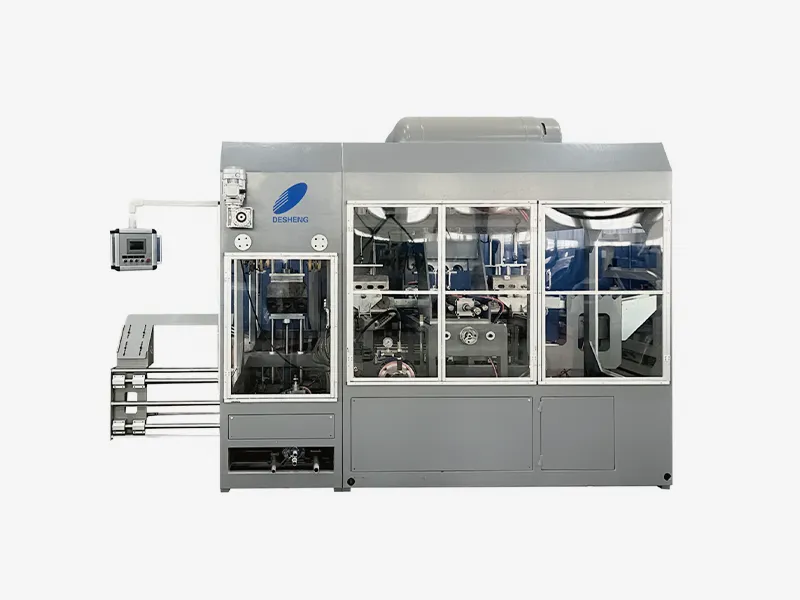
Modern PVC pipe bending machines combine several systems to control pipe deformation more effectively than uncontrolled manual forming.
Precise Temperature Control
Digital temperature controllers allow operators to set and monitor heating conditions for different pipe specifications.
More consistent temperature means more predictable material behavior during bending.
Programmable Bending Movement
PLC and servo-controlled systems can control:
- Bending angle
- Forming speed
- Position
- Holding time
This reduces variation between operators and production batches.
Adjustable Supporting Systems
Depending on the machine configuration, support may include:
- Mandrels
- Rollers
- Guide blocks
- Clamps
- Forming molds
Adjustable systems allow manufacturers to optimize support according to pipe dimensions.
Interchangeable Bending Tooling
Different bending radii and pipe diameters require different tooling geometry.
Interchangeable dies and molds allow the machine to handle several product specifications while maintaining proper external support.
Controlled Cooling
Integrated cooling allows the pipe to remain in a controlled position while the material stabilizes, reducing post-forming deformation.
Troubleshooting PVC Pipe Flattening Problems
When flattening appears during production, manufacturers can identify the likely cause by examining the defect pattern.
| Observed Problem | Possible Cause | Recommended Adjustment |
| Entire bend becomes oval | Insufficient internal support | Add or improve mandrel/core |
| Local collapse at bend center | Radius too tight or heating zone too short | Increase radius or heating length |
| One side deforms more | Uneven heating | Improve temperature distribution |
| Clamp area becomes flat | Excessive clamping pressure | Reduce force or improve clamp profile |
| Pipe deforms after removal | Insufficient cooling | Extend supported cooling time |
| Wrinkles plus flattening | Excessive compression | Adjust radius, support, and speed |
| Random variation between parts | Unstable process parameters | Use programmable machine settings |
Production Tips for Maintaining Pipe Roundness
Manufacturers can further improve bending consistency through several practical production controls.
Before each production batch, check:
- Pipe outside diameter
- Wall thickness
- Material batch consistency
- Heater condition
- Tooling dimensions
- Mandrel position
During production, monitor:
- Heating temperature
- Heating time
- Bending speed
- Clamping pressure
- Cooling time
After bending, inspect:
- Maximum outside diameter
- Minimum outside diameter
- Bending angle
- Bend radius
- Surface condition
Recording these values makes it easier to identify trends and establish optimized machine recipes for repeated orders.
When Is Internal Support Especially Necessary?
Not every PVC pipe requires the same level of internal support.
Internal support becomes increasingly important when:
- The pipe wall becomes thinner relative to its diameter
- The required bending radius becomes smaller
- The pipe diameter increases
- Ovality tolerance becomes stricter
- The bending angle increases
- Product appearance requirements become higher
For a large-radius bend in a thick-wall pipe, external tooling may provide sufficient shape control.
For a thin-wall pipe requiring a tight 90° bend, however, an internal mandrel or flexible support system may be necessary to achieve acceptable roundness.
Manufacturers should therefore select support methods according to the actual product rather than using one configuration for every PVC pipe.
Balancing Roundness and Production Efficiency
Maintaining extremely low ovality often requires additional tooling, longer heating control, stronger support, and longer cooling time.
This can increase:
- Cycle time
- Tooling cost
- Machine complexity
Therefore, manufacturers should define the actual dimensional requirements of the finished product before optimizing the process.
A product that allows 8% ovality does not necessarily require the same tooling and process controls as a component requiring less than 3% ovality.
For large-volume orders, even small cycle-time improvements can have a significant effect on output. Manufacturers should therefore optimize heating, bending, holding, and cooling as an integrated cycle rather than focusing only on the bending movement.