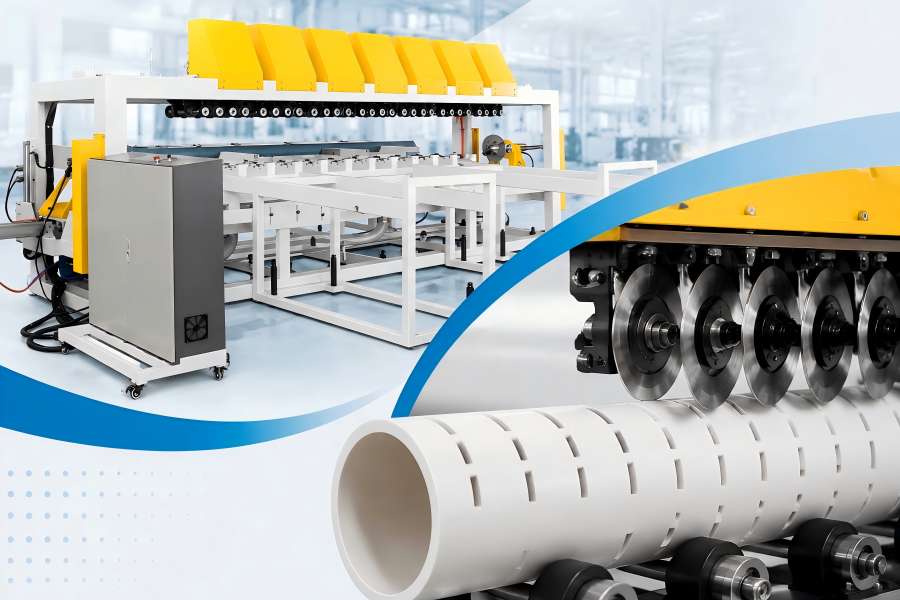
PVC pipes are widely used in drainage, irrigation, and industrial applications. A PVC pipe slotting machine relies on advanced blade systems to achieve precise cutting, stable performance, and efficient production. Understanding blade types helps manufacturers select suitable equipment and optimize processing results.
Working Principle of PVC Pipe Slotting Blade Systems
The blade system in a PVC pipe slotting machine works through controlled rotary cutting. During operation, the PVC pipe is fixed by a clamping or positioning system, while rotating blades move along the pipe surface according to a preset slotting pattern.
The cutting process involves three main movements:
- Blade rotation
The motor drives the blade at a controlled speed. The rotational speed must be optimized because excessive speed can generate heat, while insufficient speed may reduce cutting efficiency.
- Blade feeding movement
The blade moves gradually into the pipe wall to create slots with a specific depth and width. The feeding speed determines the smoothness of the slot edges.
- Pipe movement or blade positioning
Depending on machine design, either the pipe rotates/moves while the blade remains fixed, or multiple blades move around the pipe to complete slotting operations.
A high-quality blade system must achieve several objectives:
- Accurate slot dimensions
- Smooth cutting edges
- Low heat generation
- Long service life
- Stable performance during continuous operation
For industrial PVC pipe production, especially large-diameter drainage or filtration pipes, blade stability becomes a critical factor because thousands of slots may need to be produced continuously.
Main Types of Blade Systems Used in PVC Pipe Slotting Machines
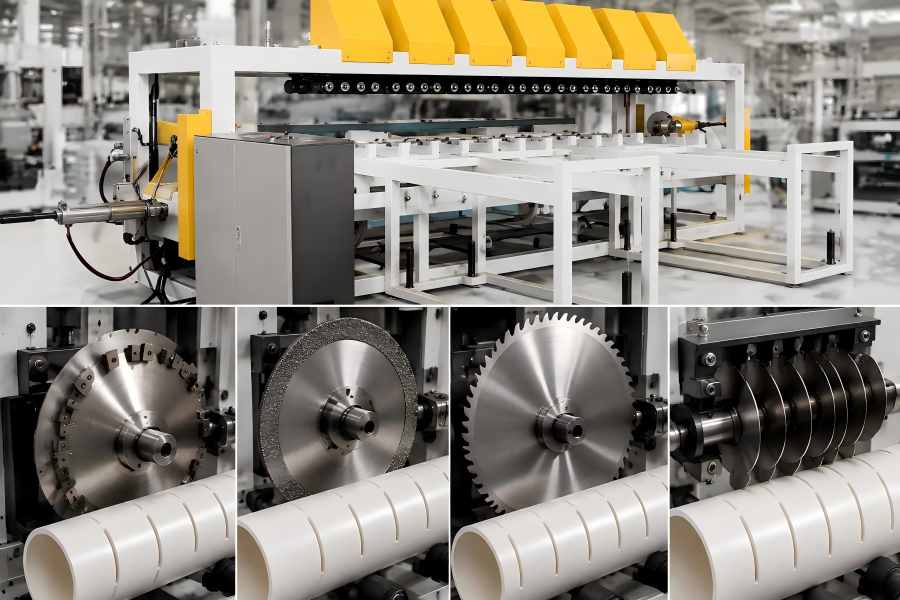
Different PVC pipe slotting machines use different blade structures according to production requirements. The most common blade systems include carbide-tipped blades, diamond cutting blades, high-speed steel blades, and multi-blade slotting systems.
The following table summarizes the major blade types used in PVC pipe slotting applications.
| Blade Type | Main Material | Advantages | Typical Applications |
| Carbide Tipped Blade | Tungsten carbide + steel body | High hardness, long service life, stable cutting | General PVC pipe slotting, continuous production |
| Diamond Blade | Diamond segments or coating | Excellent wear resistance, precise cutting | Thick-wall pipes, high-volume production |
| HSS Blade | High-speed steel | Good toughness and flexibility | Small pipes and customized slot designs |
| Multi-Blade System | Multiple cutting blades | High efficiency, simultaneous slotting | Large-scale automated production |
Carbide Tipped Blade System
Among different blade options, carbide-tipped blades are one of the most widely used systems in PVC pipe slotting machines.
A carbide-tipped blade consists of a steel blade body with tungsten carbide cutting teeth attached to the edge. Tungsten carbide combines excellent hardness and wear resistance, enabling blades to maintain sharpness throughout prolonged operation.
For PVC processing, carbide blades offer several advantages.
High Cutting Stability
PVC is softer than metal materials but can create problems such as melting, deformation, and rough edges if cutting conditions are unsuitable. Carbide blades maintain a stable cutting edge, reducing vibration and improving slot consistency.
Longer Service Life
Tungsten carbide offers excellent hardness and wear resistance, helping the blade retain its sharpness during extended operation. This reduces frequent blade replacement and improves machine availability.
Suitable for Continuous Production
Many industrial PVC pipe manufacturers operate automatic slotting lines requiring continuous processing. Carbide blade systems are well suited to these environments, offering an effective balance of cost efficiency and durability.
Diamond Blade System
Diamond blade systems represent a higher-performance option for demanding PVC pipe slotting applications.
Although diamond blades are commonly associated with hard materials, specially designed diamond cutting systems can also be applied to plastic pipe processing where extremely precise cutting and extended blade life are required.
The main advantage of diamond blades is their exceptional wear resistance.
Advantages of Diamond Blade Systems
Superior Edge Quality
Diamond cutting surfaces maintain sharpness for longer periods, helping produce cleaner slot edges with reduced deformation.
Reduced Blade Replacement Frequency
For manufacturers producing large quantities of slotted pipes, longer blade life can significantly reduce downtime.
Better Performance on Thick-Wall Pipes
When processing thick PVC pipes or reinforced plastic pipes, diamond blades can provide improved cutting stability.
However, diamond blade systems usually have higher initial costs compared with carbide blades. Therefore, manufacturers need to evaluate production volume and application requirements before selecting this solution.
High-Speed Steel Blade System
High-speed steel (HSS) blades are another option used in certain PVC pipe slotting applications.
HSS blades provide good durability and resistance to impact. Although they generally have lower wear resistance than carbide or diamond blades, they can be useful for applications requiring flexible processing.
Typical advantages include:
- Lower tooling cost
- Good resistance to mechanical impact
- Easy customization of slot shapes
- Suitable for smaller production requirements
HSS blades are often selected when manufacturers need customized slot geometries rather than maximum production speed.
Multi-Blade Slotting Systems
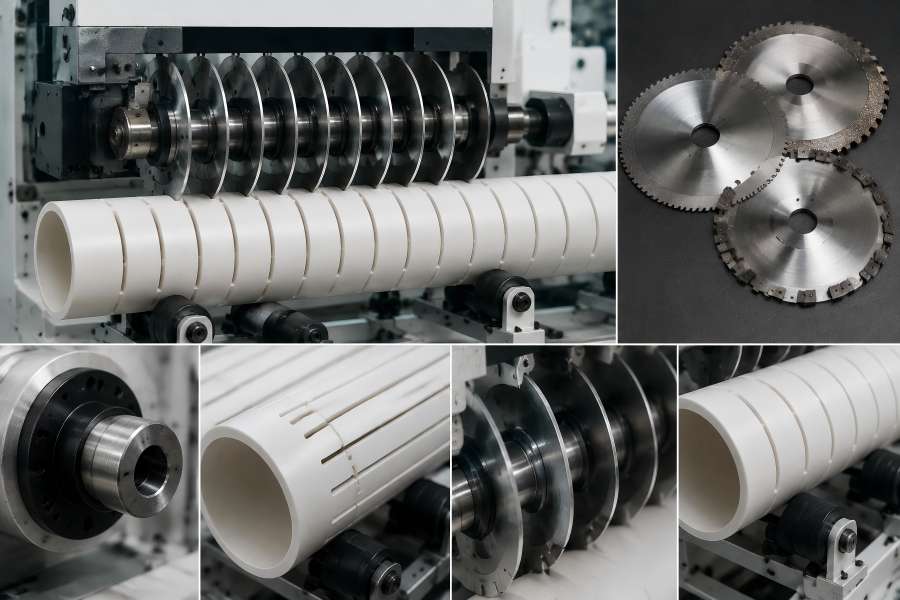
Modern PVC pipe slotting machines increasingly adopt multi-blade systems to improve productivity.
Instead of using a single blade to complete all slots sequentially, multiple blades can operate simultaneously. This design significantly increases processing speed.
A typical multi-blade system may include:
- Multiple rotary cutting heads
- Adjustable blade spacing
- Independent blade positioning
- Automatic control systems
For example, some industrial slotting machines use several slotting heads to process multiple grooves during one production cycle, improving efficiency for large-volume applications.
The advantages of multi-blade systems include:
| Feature | Benefit |
| Multiple cutting points | Higher production speed |
| Adjustable spacing | Flexible slot patterns |
| Balanced cutting force | Reduced pipe deformation |
| Automated control | Improved consistency |
Blade Structure and Key Components
A complete blade system is not only determined by the cutting material. Its structure also influences slotting performance.
The main components include:
Blade Body
The blade body provides mechanical strength and supports the cutting edge. A strong blade body reduces vibration during high-speed rotation.
Cutting Teeth
The tooth design affects cutting efficiency. Important parameters include:
- Tooth shape
- Tooth angle
- Tooth spacing
- Cutting edge thickness
Different PVC pipe thicknesses require different tooth configurations.
Blade Diameter
Blade diameter influences cutting depth and machine compatibility. Larger blades are generally used for larger pipes or deeper slots.
Blade Thickness
Blade thickness determines slot width. Manufacturers must select blade thickness according to required slot dimensions.
How Blade Material Affects PVC Slotting Performance
Blade material directly affects processing quality. Choosing an unsuitable blade may cause problems such as rough slot edges, excessive heat generation, or frequent replacement.
The relationship between blade materials and performance can be summarized below.
| Performance Factor | Carbide Blade | Diamond Blade | HSS Blade |
| Wear Resistance | High | Very High | Medium |
| Cutting Accuracy | High | Excellent | Good |
| Cost | Medium | High | Low |
| Production Speed | High | Very High | Medium |
| Maintenance Frequency | Low | Very Low | Higher |
Carbide blades provide most PVC pipe manufacturers with a strong balance between performance and investment. Diamond blades are more suitable for specialized high-volume applications, while HSS blades are commonly used for flexible and customized processing.
Blade Selection Based on PVC Pipe Applications
The correct blade system depends heavily on the final application of the slotted PVC pipe.
Drainage Pipes
Drainage pipes usually require large numbers of evenly distributed slots. Manufacturers often choose carbide or multi-blade systems because production efficiency is important.
Filter Pipes
Filter pipes require precise slot dimensions because opening size directly affects filtration performance. Diamond or high-precision carbide blades may be selected.
Agricultural Irrigation Pipes
Agricultural applications require reliable slot consistency and cost control. Carbide blade systems are commonly preferred.
Industrial Special Pipes
Industrial applications may require customized slot shapes, widths, or patterns. Flexible blade systems with adjustable configurations are often more suitable.
Factors Affecting Blade Service Life
The service life of a PVC pipe slotting machine blade directly affects production efficiency, processing accuracy, and operating costs. Blade durability depends on several factors, including operating parameters, pipe characteristics, machine stability, and maintenance practices.
Cutting Speed
Cutting speed influences friction, heat generation, and blade wear. Excessive speed may accelerate edge damage, while optimized speed helps maintain stable cutting performance and extend blade life.
Feed Rate and Cutting Pressure
The feed rate determines the cutting load applied to the blade. Excessive pressure can increase wear, cause vibration, and reduce slot quality. Proper feeding control ensures smoother operation and longer blade service life.
PVC Pipe Material and Thickness
Pipe material, hardness, diameter, and wall thickness affect cutting resistance. Thicker or harder PVC pipes usually require stronger blades to handle higher cutting forces.
| Pipe Factor | Impact on Blade Life |
| Thick Wall | Higher cutting load |
| Large Diameter | Requires better stability |
| Hard Material | Faster blade wear |
Blade Material and Quality
Blade material determines wear resistance and cutting performance. Carbide-tipped blades are commonly used for standard PVC pipe slotting, while diamond blades are suitable for high-precision and heavy-duty applications.
Machine Stability and Maintenance
Machine vibration, improper blade installation, and poor maintenance can shorten blade lifespan. Regular cleaning, blade inspection, and accurate alignment help maintain stable performance.
Blade Maintenance and Replacement Guidelines
Proper maintenance and timely blade replacement help maintain PVC pipe slotting machine performance, improve cutting stability, reduce downtime, and extend tool life.
Regular Blade Inspection
Routine checks can identify blade wear before it affects product quality. Operators should regularly check the blade condition, including:
- Cutting edge sharpness
- Tooth wear or damage
- Blade deformation
- Unusual vibration during operation
Early detection of problems allows manufacturers to replace or adjust blades before serious processing issues occur.
Cleaning and Lubrication
During PVC pipe slotting, plastic chips and dust may accumulate around the blade area. Regular cleaning prevents material buildup from affecting cutting performance.
Maintenance practices include:
- Removing PVC residues after operation
- Keeping the blade surface clean
- Checking moving parts of the blade system
- Ensuring smooth blade rotation
Proper cleaning helps reduce friction and maintain stable cutting efficiency.
Correct Blade Installation
Incorrect blade installation can lead to uneven wear, vibration, and reduced slot accuracy. When replacing blades, operators should ensure:
- Proper blade positioning
- Secure fastening
- Accurate alignment with the cutting direction
A correctly installed blade distributes cutting forces evenly and improves service life.
Timely Blade Replacement
Using excessively worn blades may result in poor slot quality, increased energy consumption, and higher stress on machine components. Signs that a blade requires replacement include:
- Reduced cutting efficiency
- Rough or uneven slot edges
- Increased operating noise or vibration
- Visible tooth damage
Replacing blades at the right time helps maintain consistent production performance and prevents unexpected downtime.