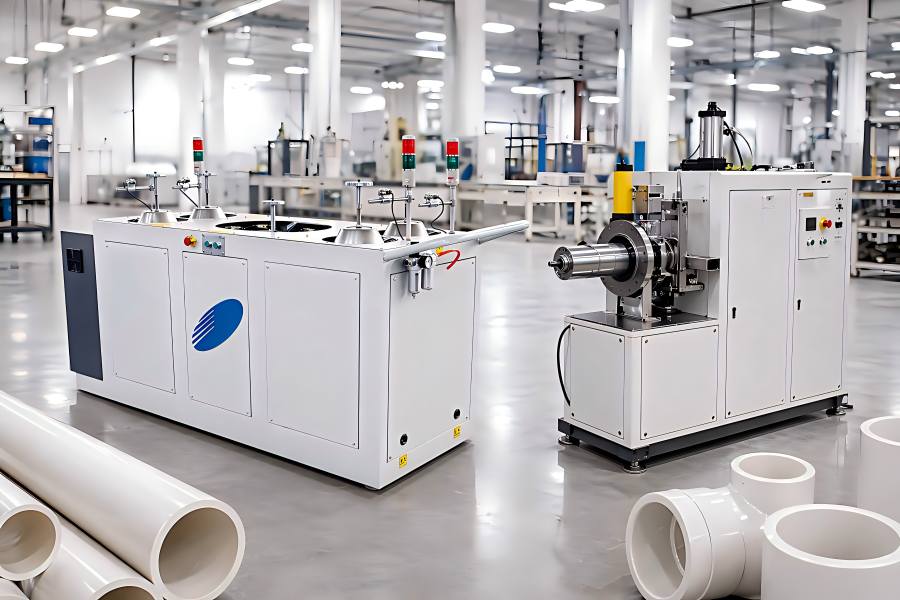
Belling machines and pipe expanding machines may look similar because both enlarge the pipe end, but they serve different purposes. A belling machine forms a connection-ready socket, while a pipe expanding machine mainly enlarges diameter for fit-up or assembly. Choosing the right one improves quality and efficiency.
A Quick Comparison
| Aspect | Belling Machine | Pipe Expanding Machine |
| Main Purpose | Forms a socket end for pipe connection | Enlarges the pipe end diameter |
| End Result | Standardized bell/socket shape | Basic expanded end |
| Connection Use | Ready for direct pipe joining | Mainly for fit-up or assembly |
| Precision Requirement | Higher | Moderate |
| Common Applications | PVC drainage, water supply, conduit pipes | Custom expansion and industrial pipe processing |
| Sealing Performance | Better for sealed connections | Depends on later assembly design |
| Production Focus | Socket quality and consistency | End enlargement flexibility |
| Best For | Standard pipe systems | Non-standard or simple expansion needs |
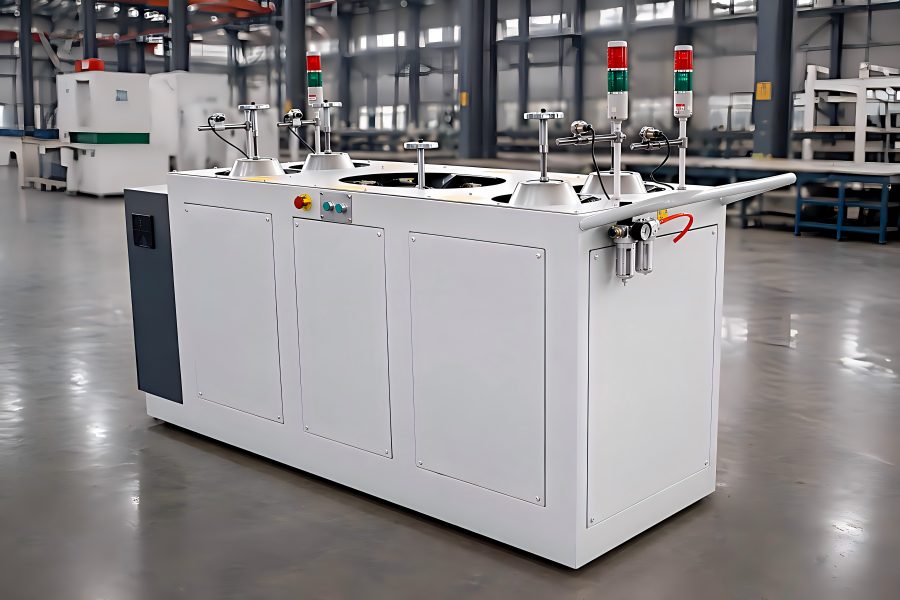
What Is a Belling Machine?
A belling machine is a dedicated pipe-end forming device designed to create a socket or bell-shaped opening on plastic pipes. The purpose of this socket is to allow another pipe spigot end or fitting to be inserted into it for connection.
In most cases, a belling machine does more than simply enlarge the pipe end. It forms the pipe end into a specific socket geometry designed to meet a certain joining standard. Depending on the application, the machine may create:
- Plain sockets
- U-type sockets
- Rieber sockets
- Ring-seal sockets
- Solvent cement sockets
The finished result is usually a controlled, standardized connection end that supports efficient pipe joining in drainage, water supply, sewer, conduit, and infrastructure systems.
In PVC pipe manufacturing, the belling machine is especially important because socket quality directly affects installation convenience and sealing reliability.
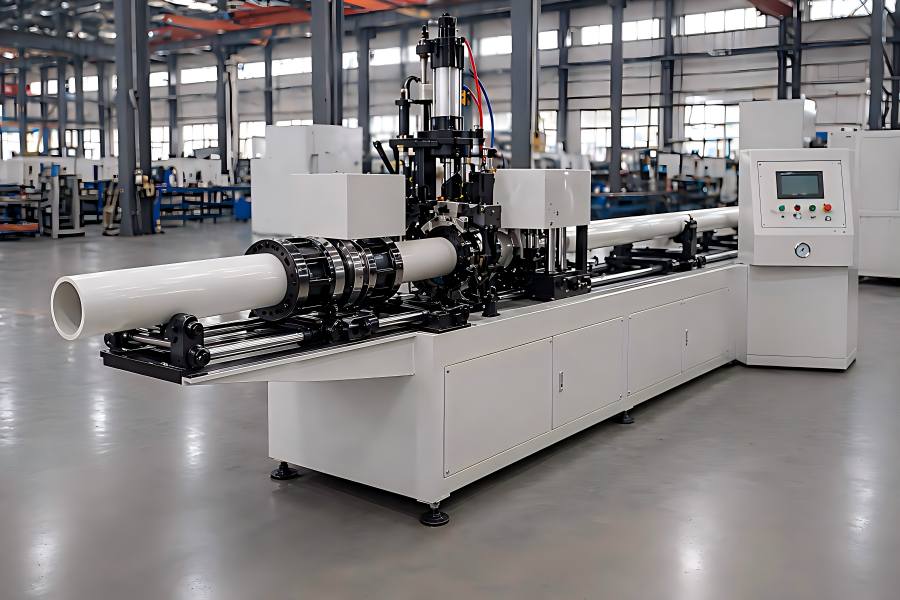
What Is a Pipe Expanding Machine?
A pipe expanding machine is generally used to enlarge the end or section of a pipe so that its diameter becomes larger than the original pipe body. Compared with a belling machine, the term is broader and may apply to different industries and different forming purposes.
A pipe expanding machine may be used to:
- Increase the diameter of a pipe end
- Prepare one pipe end to fit over another
- Create a basic expanded end without a full socket design
- Improve fit for assembly or coupling
- Process certain industrial, structural, or custom plastic pipe products
In many cases, a pipe expanding machine focuses more on diameter enlargement itself, while a belling machine focuses on forming a functional socket connection structure.
This difference may sound small, but in production terms it is very important.
The Simplest Difference
The easiest way to understand the distinction is this:
- A belling machineis mainly used to create a finished socket end for pipe connection.
- A pipe expanding machineis mainly used to enlarge the pipe end diameter, which may or may not form a standard socket.
In other words, all belling involves expansion, but not all expansion is belling.
Difference in Main Purpose
Main purpose of a belling machine
The main purpose of a belling machine is to create a pipe end that supports reliable and standardized connection. The final goal is usually installation performance.
A belling machine is therefore closely related to:
- Socket formation
- Joint sealing
- Pipe connection systems
- Standardized end dimensions
- Fast and reliable field installation
Main purpose of a pipe expanding machine
The main purpose of a pipe expanding machine is usually to enlarge the pipe end diameter for assembly, fit adjustment, or further processing. It may not always produce a socket that is ready for direct use in a standardized pipe system.
A pipe expanding machine is therefore more closely related to:
- Diameter enlargement
- Fit preparation
- General end reshaping
- Custom product processing
- Basic insertion or overlapping structure formation
So while both machines enlarge the pipe end, their intended outcome is often different.
Difference in Finished Pipe-End Structure
Belling machine result
A belling machine usually creates a more complete and functional socket shape. The finished end may include:
- Controlled insertion depth
- Specific socket profile
- Rubber ring groove or seal structure
- Standardized inner diameter and shape
- Precise geometry for matching pipe systems
This means the belled end is usually ready for direct connection use.
Pipe expanding machine result
A pipe expanding machine often creates a simpler enlarged end. Depending on the design, the end may simply be widened enough to fit another component or pipe. The result may not include:
- A standardized socket profile
- A seal groove
- Specific joint geometry
- Standardized installation depth
So the expanded end may be useful, but it is often less specialized than a belled socket.
Difference in Application Focus
Where belling machines are commonly used
Belling machines are commonly used in:
- PVC pipe production
- UPVC and CPVC pipe systems
- Drainage and sewer pipes
- Water supply pipes
- Electrical conduit pipes
- Irrigation pipe systems
- Construction and infrastructure projects
These are applications where pipe connection quality is critical and socketed pipe systems are common.
Where pipe expanding machines are commonly used
Pipe expanding machines may be used in:
- General plastic pipe end enlargement
- Custom pipe product processing
- Industrial assembly applications
- Structural pipe preparation
- Special fit-up operations
- Basic overlapping or insertion-end formation
Their application range can be broader, but often less connection-standard-focused.
Difference in Forming Accuracy Requirements
A belling machine usually requires higher forming precision because the socket must match a specific pipe standard or sealing structure. The final dimensions directly affect field installation and leak resistance.
A pipe expanding machine may also need good accuracy, but in many cases the requirement is less demanding if the goal is simply to enlarge the pipe end for fit-up rather than to create a standardized socket.
For example:
A belling machine may need to control:
- Socket diameter
- Socket depth
- Wall thickness distribution
- Groove shape
- Seal position
- Insertion fit
A pipe expanding machine may mainly focus on:
- Expanded diameter
- Expansion length
- General end shape
- Basic roundness and fit
That is why belling is often considered a more specialized end-forming process.
Difference in Heating and Forming Process
Both machines often use heat when processing thermoplastic pipes, especially PVC and similar materials. However, the way the heat is used may differ based on the final goal.
Belling machine process
A belling machine usually follows a more structured process:
- Pipe feeding and positioning
- Controlled end heating
- Socket forming with specific mold or mandrel
- Cooling and shape fixing
- Discharge of finished socketed pipe
The forming tools are usually designed around a target socket geometry.
Pipe expanding machine process
A pipe expanding machine may use a simpler process:
- Pipe end heating
- Expansion through mandrel, cone, or forming device
- Stabilization or cooling
- Removal of expanded pipe
The focus is usually on enlargement rather than complete socket profiling.
Difference in Connection Performance
Belling machine
Because a belling machine forms a connection-ready socket, it usually offers better performance in:
- Pipe joining efficiency
- Sealing reliability
- Standard compliance
- Installation repeatability
- Joint stability
This makes it more suitable for products that will be installed in standardized piping systems.
Pipe expanding machine
A pipe expanding machine may create an end that allows one component to fit into another, but the connection performance may depend more on additional design factors, such as:
- Adhesive use
- Clamps
- Additional fittings
- Manual adjustment
- Non-standard assembly methods
So if the final product requires a professional socket connection, a belling machine is usually the better choice.
Difference in Market Positioning
From a commercial perspective, the two machines often serve different product strategies.
Belling machine market value
A belling machine usually supports:
- Higher-value finished pipe systems
- Standardized installation products
- Large-scale pipe manufacturing
- Infrastructure and utility markets
- Products where connection quality is a selling point
Pipe expanding machine market value
A pipe expanding machine often supports:
- More basic end-processing tasks
- Flexible custom production
- Specialized industrial components
- Lower-complexity enlargement needs
- Products where a full socket is not required
This means the decision is not only technical. It is also about what kind of products the factory wants to supply.
Difference in Automation Level and Production Integration
Belling machines are often designed as part of a more complete PVC or plastic pipe production line. They are commonly integrated with:
- Pipe cutting machines
- Pipe conveying systems
- Automatic unloading systems
- Online inspection stations
In large factories, automatic belling machines are used to keep up with extrusion output and provide stable socket formation.
Pipe expanding machines can also be automated, but they are sometimes used more flexibly as independent end-processing units rather than as standard line equipment for socket pipe production.
So in a full-scale plastic pipe manufacturing line, the belling machine is often more line-oriented and connection-system-oriented.
Difference in Socket Types and Standards
A belling machine is typically associated with specific socket standards and socket types, such as:
- Plain socket
- U-type socket
- Rieber socket
- Rubber ring socket
This means it is usually selected according to:
- Pipe standard
- Joint structure
- Market requirement
- Ring-seal design
- Installation method
A pipe expanding machine is less likely to be classified in this way because its job is often more general end expansion, not standard socket production.
Difference in Tooling Design
Belling machine tooling
Belling machines usually use tooling designed for a specific socket profile. This tooling may include:
- Heating chamber
- Forming mandrel
- Socket mold
- Seal groove shaping parts
- Cooling fixtures
The tooling is often more specialized and product-specific.
Pipe expanding machine tooling
Pipe expanding machines often use simpler enlargement tooling such as:
- Expansion cones
- Mandrels
- Basic form heads
- Diameter-enlarging tools
The tooling may be easier to adapt for simple expansion tasks, but less specialized for standardized socket forming.
Which Machine Is Better?
Choose a belling machine if:
- You make PVC or plastic pipes with socket ends
- Your product must support standardized joining
- Installation reliability is important
- Sealing performance matters
- You need ring-seal or structured socket types
- You produce drainage, sewer, conduit, or water supply pipes
Choose a pipe expanding machine if:
- You only need end enlargement
- A full socket is not necessary
- The application is custom or non-standard
- The goal is fit-up or insertion rather than socket connection
- You need more general end-forming flexibility