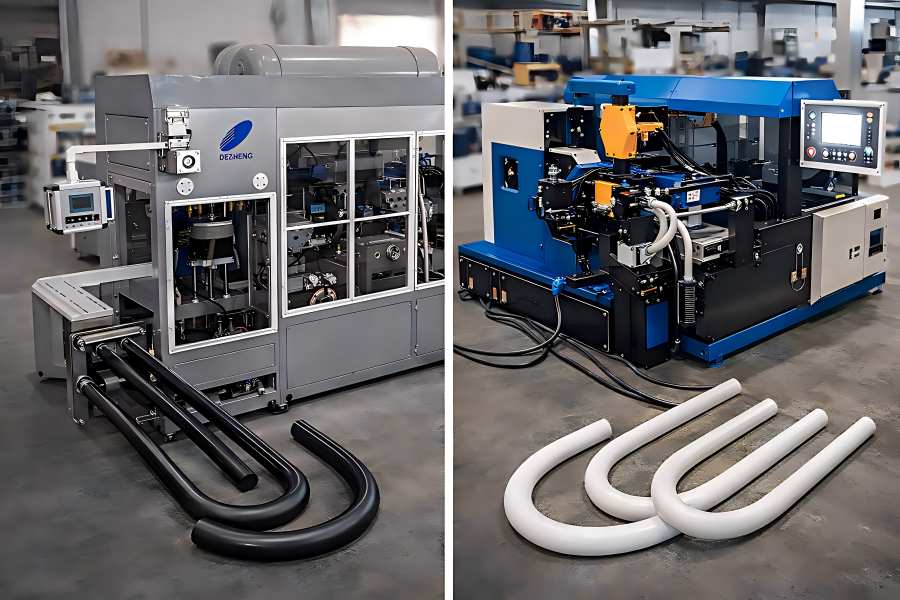
Choosing the right pipe bending machine affects product quality, efficiency, operating cost, and long-term value. Hydraulic and electric pipe bending machines each offer different advantages in force, precision, energy use, and maintenance. The best option is determined by your production needs, automation goals, and budget.
A Quick Comparison
| Factor | Hydraulic Pipe Bending Machine | Electric Pipe Bending Machine |
| Driving Method | Hydraulic pressure | Electric servo or motor drive |
| Bending Force | Strong | Moderate to high, depending on design |
| Precision | Good to high | High |
| Maintenance | Higher | Lower |
| Cleanliness | Risk of oil leakage | Cleaner operation |
| Energy Efficiency | Moderate | Higher |
| Noise Level | Higher | Lower |
| Heavy-Duty Suitability | Excellent | Depends on machine capacity |
| Automation Potential | Good | Excellent |
| Initial Cost | Often lower to medium | Often medium to high |
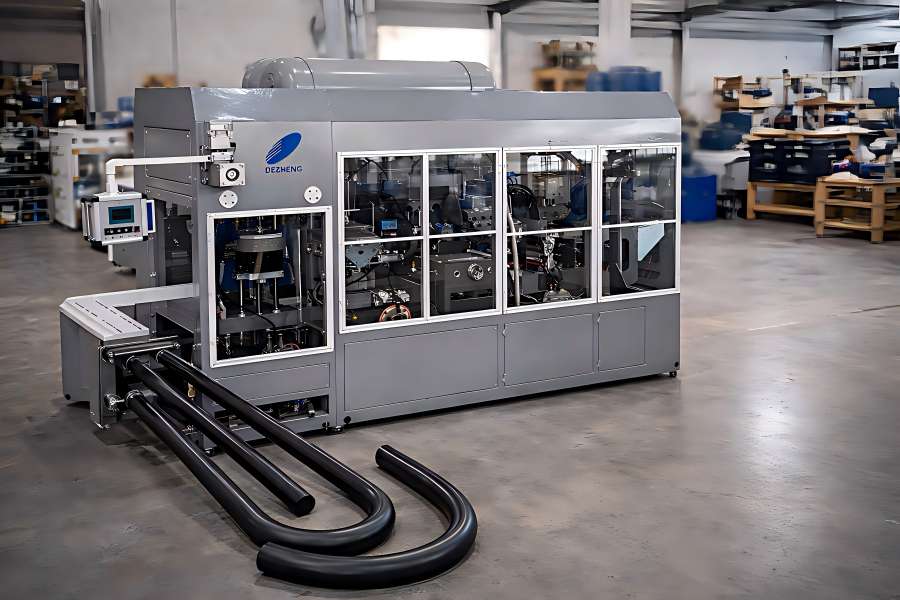
What Are the Primary Advantages of Hydraulic Pipe Bending Machines?
Hydraulic pipe bending machines remain widely used because they offer strong bending capability and dependable performance across many industrial applications.
Strong Bending Force
One of the biggest advantages of hydraulic machines is their ability to deliver high bending force. This makes them especially suitable for:
- Thick-wall pipes
- Larger pipe diameters
- Heavy-duty industrial applications
- Tougher materials in demanding production environments
For businesses that process larger or harder-to-bend pipes, hydraulic systems often provide the strength needed to complete the job reliably.
Proven Industrial Reliability
Hydraulic pipe bending machines have been used in industry for many years. Their operating principle is familiar, and many factories already understand how to maintain them. For businesses that value proven, conventional equipment, this can be a practical advantage.
Suitable for Heavy-Duty Work
In workshops where force matters more than ultra-high precision, hydraulic machines often perform well. They are common in sectors such as:
- Construction components
- Metal fabrication
- Industrial piping
- Structural processing
- Maintenance workshops
Broad Availability
Hydraulic machines are widely available in different price levels and configurations. Buyers can often find manual, semi-automatic, automatic, or CNC-controlled hydraulic bending solutions depending on their budget and production level.
What Are the Primary Limitations of Hydraulic Pipe Bending Machines?
Although hydraulic machines are strong and widely used, they also have limitations that some businesses should consider carefully.
Higher Maintenance Demand
Hydraulic systems include pumps, valves, hoses, seals, cylinders, and hydraulic oil. Over time, these parts may wear, leak, or require inspection and replacement. Compared with electric systems, hydraulic machines often demand more maintenance attention.
Risk of Oil Leakage
Because these machines rely on hydraulic fluid, leakage is always a possible issue. In some production environments, especially those requiring cleaner operation, this can be a disadvantage.
Lower Energy Efficiency in Some Cases
Hydraulic systems may continue consuming energy even when the machine is not actively bending, depending on the design. For businesses focused on reducing energy use, this can affect long-term operating cost.
Noise and Heat
Hydraulic equipment may produce more noise and heat than electric alternatives. In some workshops, this may not be a major issue, but in cleaner or more controlled environments, it may matter more.
Precision May Depend More on Configuration
Hydraulic machines can absolutely deliver accurate bends, especially when combined with CNC control. However, in some cases, pure electric systems offer more refined motion control for highly repeatable, precision-focused work.
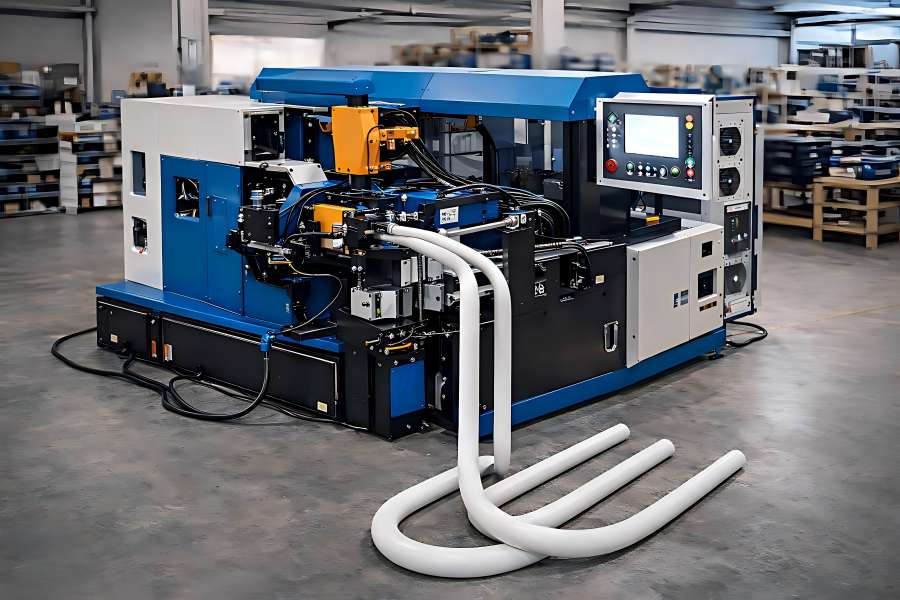
What Are the Primary Advantages of Electric Pipe Bending Machines?
Electric pipe bending machines are becoming more attractive to many manufacturers because they align well with modern production goals such as automation, precision, cleanliness, and energy efficiency.
Higher Precision and Control
Electric systems often provide excellent control over movement, position, and repeatability. Servo-driven technology allows accurate control of:
- Bend angle
- Feeding length
- Rotation
- Multi-step bending sequences
For businesses making precision parts or customized components, this is a strong advantage.
Cleaner Operation
Electric pipe bending machines do not rely on hydraulic oil for bending force in the same way hydraulic machines do. This usually means cleaner machine operation and a lower risk of oil leakage.
Lower Daily Maintenance
Because there are fewer hydraulic components to monitor, electric machines may require less routine maintenance in some applications. This can help reduce downtime and service complexity.
Better Energy Efficiency
Electric drive systems are often more energy-efficient, particularly in start-stop production environments. The machine uses power more directly when motion is needed, which can lower total energy consumption over time.
Quieter Working Environment
Electric machines are often quieter than hydraulic ones. This can improve operator comfort and make them suitable for more controlled production spaces.
Strong Fit for Automation
Electric pipe bending machines are often well suited for automated manufacturing lines. Businesses focused on digital control, repeatable batch production, and smart manufacturing may find them especially attractive.
What Are the Primary Limitations of Electric Pipe Bending Machines?
Electric pipe bending machines provide many advantages, but they are not necessarily the ideal solution for all businesses.
Higher Initial Investment
In many cases, electric machines have a higher purchase price than basic hydraulic alternatives. Businesses with tight capital budgets may find hydraulic systems more accessible at the beginning.
May Be Less Suitable for Some Heavy-Duty Applications
Depending on machine design, some electric models may not be as cost-effective as hydraulic systems for very large-diameter or extremely heavy-duty bending requirements. Buyers in these segments should compare force capability carefully.
More Dependence on Advanced Electronics
Electric machines often depend heavily on servo systems, electronic controls, and software. While this supports precision, it can also mean higher technical requirements for troubleshooting and service.
Component Cost Can Be Higher
When major electronic or servo components require replacement, the cost may be higher than for some traditional hydraulic parts.
Which Machine Is Better for Heavy-Duty Industrial Work?
If your business regularly bends thicker pipes, larger diameters, or products requiring strong forming force, a hydraulic pipe bending machine may be the better choice.
This is especially true if:
- Your products are structurally demanding
- You need strong bending power
- Precision is important, but not at the highest electronic-control level
- Your team is already familiar with hydraulic equipment
- You want a practical and proven machine for industrial production
For many heavy-duty manufacturing businesses, hydraulic systems still offer strong value.
Which Machine Is Better for High-Precision Production?
If your business depends on repeatability, cleaner operation, digital control, and precision bending, an electric pipe bending machine may be more suitable.
This is especially true if:
- You produce custom or high-accuracy components
- You run repeat batch production
- You value low maintenance and clean operation
- You want higher automation capability
- Energy efficiency is part of your long-term strategy
Businesses in modern fabrication environments often prefer electric systems for these reasons.
Which One Fits Small and Medium-Sized Businesses Better?
For small and medium-sized businesses, the answer depends on business model and budget.
A hydraulic machine may be better if:
- You want lower entry cost
- Your work is varied but not extremely precision-sensitive
- You process medium to heavy pipes
- You need a dependable all-purpose machine
An electric machine may be better if:
- You want a cleaner, more modern system
- You expect repeat production of consistent parts
- You want to reduce maintenance workload
- You are planning to scale into higher-value production
In short, small and medium businesses should not choose based on company size alone. They should choose based on product type, quality target, and operating strategy.
Which Machine Has Better Long-Term Value?
Long-term value is influenced by more than just the purchase price.
A hydraulic pipe bending machine may provide greater value under the following conditions:
- The application requires strong bending force
- The business already has hydraulic maintenance capability
- Lower initial investment is important
- Heavy-duty output matters more than energy savings
An electric pipe bending machine may offer better value when:
- Precision and repeatability reduce scrap
- Lower maintenance saves labor and downtime
- Energy efficiency lowers operating cost
- Cleaner operation supports better production conditions
- Automation creates long-term productivity benefits
The key point is that value should be measured across the full life of the machine, not only at the time of purchase.